
How to earn commission referring SMMEs for funding through AffiliateHub
Accountants, brokers and advisors already sit close to SMMEs. This is how AffiliateHub lets you earn commission for referring them to the right funding.
On this page
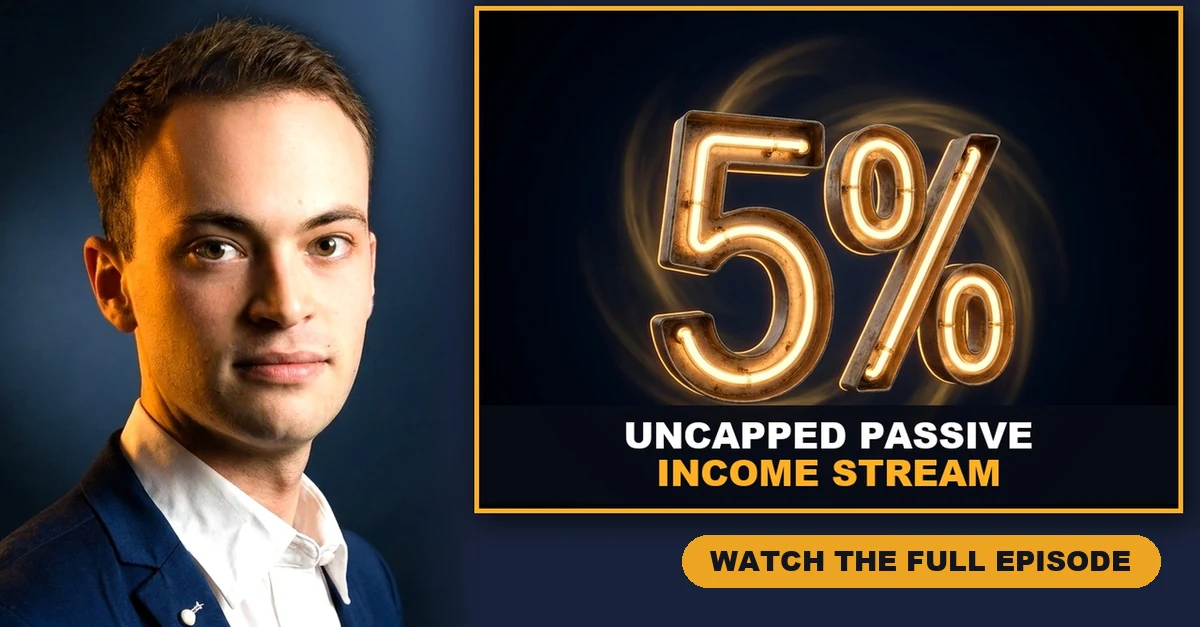
You can earn commission referring SMMEs to Sourcefin through AffiliateHub, its free affiliate programme. According to Justin Blem, who built the platform, affiliates earn 5% of Sourcefin's net profit on a referred client's first funded deal, with no cap, and 2.5% on that client's later deals within 12 months.
Key takeaways
- AffiliateHub is free to join and built for people who already work with SMMEs: accountants, brokers, business advisors and connectors.
- Commission is 5% of Sourcefin's net profit on a client's first funded deal, with no cap, and 2.5% on that client's repeat deals within 12 months.
- A lead needs the client's contact details, the funding they need and the amount, and you can track it from application to payout.
- Sourcefin currently funds deals of R250,000 and up, so qualifying a lead before you submit it saves everyone time.
Why Sourcefin pays affiliates to refer SMMEs
Many SMME owners who need funding are not searching for it. They are on site, delivering, and rarely type "purchase order funding" into a search bar. The people who hear about their cash-flow pressure first are the ones around them: their accountant, their broker, their advisor, the people they meet at tender briefings.
That is the network AffiliateHub is built for. Justin Blem, Sourcefin's commercial innovation specialist, built the platform and walked through how it works on The Great Enabler Podcast.
Justin is clear about why the people closest to SMMEs make the best referrers.
"Word of mouth is such a powerful one that if you have guys who can also earn for themselves off of that while helping you get new leads, I think it's a fantastic win-win."
– Justin Blem, commercial innovation specialist, Sourcefin
How commission for referring SMMEs works
Justin set out the structure on the episode. When you refer a client and Sourcefin funds that client's first deal, you earn 5% of the net profit Sourcefin makes on the deal. There is no cap, so a more profitable deal pays a larger commission.
The commission is calculated on Sourcefin's net profit from the deal, not on the deal's face value. That is worth being clear about when you explain the programme to anyone in your network.
If the same client comes back for a second or third deal within 12 months of the first, you earn 2.5% of the net profit on each of those too, even if the client approaches Sourcefin directly rather than through you.
Payouts follow a simple routine. Once a deal closes and its reconciliation is complete, AffiliateHub prompts you to request your payout. You upload an invoice, and Justin says the finance team generally processes payouts in the last week of the month.
What a good referral looks like
Submitting a lead takes a few details: the client's contact information, the type of funding they need and the amount. The quality of the lead matters more than the volume.
Sourcefin funds businesses that have already won work and need capital to deliver it. In practice that means three products: purchase order funding to buy stock or materials for a confirmed order, tender funding to deliver a public-sector contract, and invoice discounting to release cash tied up in invoices already issued.
Two checks save time before you submit. The first is deal size: Justin notes that Sourcefin cannot currently assist with deals under R250,000. The second is fit: a business that looks like a purchase order deal may turn out to need asset finance, which Sourcefin does not offer. Our Chuck Chilli Foods case study shows what a well-matched deal looks like.

Tracking a referral from lead to payout
Before AffiliateHub, Justin says affiliates had to phone a deal manager or an executive to find out where a deal stood. The dashboard now shows each stage as it happens: application loaded, with a deal manager, vetting and verification, agreements, deal live and reconciliation.
If an application does not go ahead, the dashboard gives the reason, such as a deal below the minimum size or a need Sourcefin's products do not cover. That feedback helps you sharpen your next referral.
What is changing: tiered rewards
On the episode, Justin described a tiered reward programme being added on top of the standard commission. Everyone starts on the first tier. From the second tier, affiliates earn a flat R150 for each lead that becomes a valid application, whether or not it results in a funded deal. Higher tiers add a monthly volume cash bonus and, at the top, uplifted commission rates. Check the current terms in AffiliateHub before relying on them.
How to get started
Joining is free. Sign up on AffiliateHub, complete your profile and submit your first lead. If the businesses in your network are still looking for work to bid on, the National Treasury eTender Publication Portal lists public-sector tenders, and the right funding can follow once they win.
Sources & references
- The Great Enabler Podcast – How AffiliateHub works, with Justin Blem
- National Treasury – eTender Publication Portal
Full episode transcript
Edited for readability. Watch the full episode on YouTube.
Why Sourcefin relies on passive income affiliates
Jedd Harris: Justin, very nice to spend some time with you. There's been a lot of effort and work that you put into the affiliate programme and some of the new systems and tools that have come through to support affiliates. I'd love to unpack and go quite deep into that space within Sourcefin during this conversation. But I think let's start off where most good conversations start. Introduce yourself and who you are and what you are at Sourcefin.
Justin Blem: I am Justin Blem. Within the Sourcefin context, I'm a commercial innovation specialist. What that means is looking at new processes, new products, new tools, and just how we can integrate that into the Sourcefin business to better serve the SMMEs that back up South Africa.
Jedd Harris: It's a very fancy title. How did you come up with that one?
Justin Blem: It's an interesting one. I've been through different roles and even at Sourcefin I was in a different role. I was in your team in the beginning as a special projects associate. Ultimately what I realised was I love being able to problem solve, but I also love being able to problem solve on the commercial side and things that bring value into Sourcefin. We truly believe that affiliates are one of the biggest drivers for value for Sourcefin, for the economy as well. They're on the ground, they're in the sphere, they know where guys are, and ultimately they empower not only their own businesses but other businesses around that. For me, that fits into the commercial sector where if we want to grow Sourcefin from a commercial sphere, you need to be providing guys like that with tools. I've got a lot of emphasis on wanting to grow the business and the industry, but also being able to come up with innovative solutions, not just necessarily doing your typical modelling and strategy around business growth, but rather seeing how can we bring in something completely new and use that to grow the business.
Jedd Harris: Amazing. I think it says a lot about Sourcefin that there's a role like that. And it says a lot about why we're able to grow so quickly, why we're able to innovate so quickly. Now let's double-click into the affiliate side of the business because I think that's where you've spent a lot of time recently. It's by no means the only thing you've been doing. There's been a lot of things on your plate. But for us, there's a big announcement coming through around affiliates and we'll build our way up to that big announcement. I suppose my first question, and perhaps someone at home's first question is, Sourcefin has got a sales team and Sourcefin has got a marketing team. You touched on a little bit, why on earth would it need an affiliate programme or an affiliate team when it's got sales and marketing and it's spending on Google Ads and it's spending on all those types of things? Why on earth do we need an affiliate programme?
Justin Blem: For me, it's quite simple. Your sales and your marketing are obviously doing outreach digitally, they're trying to contact guys telephonically, but with SMMEs operating the way that they do, they're often on site, they're in meetings, they're not necessarily spending time on these platforms where they're going to see us. I think your average person today may not know about Sourcefin off the top of their head. In 10 years' time, we hope that they will, but currently I don't think they do. For us to be able to get to them and to be able to assist them and let them know that there is a company that can assist them, you need guys on the ground. That's where your affiliates come in. They often play in the space, they're on the sites, they're at the tender briefings, they're in the sphere. Word of mouth is such a powerful one that if you have guys who can also earn for themselves off of that while helping you get new leads, I think it's a fantastic win-win.
Why SMME funding in South Africa is hard to access
Jedd Harris: You're 100% right. I didn't think about it that way. A lot of the times SMEs, you're expecting them to be on Google and searching for, you mentioned it, they might not know Sourcefin. But if you take a step back from Sourcefin, the category that Sourcefin sits in, you're hoping they're typing purchase order funding, invoice discounting into Google, and you're hoping Sourcefin pops up there. Unfortunately, a lot of SMEs don't know those types of products exist right now. All they know is they've got a project or they've got a tender or they've got something to deliver on. They're so busy on site that they neglect the point that funding exists for them. What you're saying is an affiliate is there, a brand ambassador, but a knowledge hub of Sourcefin and a knowledge hub of the products Sourcefin has. They're able to link that individual with the product that Sourcefin is able to offer them, which is a powerful one. You mentioned it a little bit earlier, but talk me through SMEs, your experience of SMEs at Sourcefin. They're obviously very important to Sourcefin. Tell me why they are so important. And because they're so important, why it's so hard for us to reach them at times.
Justin Blem: SMEs, and I think there are some stats out there, unfortunately, I don't know them off the top of my head, are fundamental to not only the current economy, but a lot of new jobs are coming from the SME sector, more so than the corporate sector. These guys are often starting with a very, very small business that could provide massive value, not only to them, to their families, to the economy as a whole, but ultimately they are somewhat capacity constrained. They're not too sure where to necessarily find what they need. If they can't find what they need, ultimately they can't continue where they're going. If they have got somebody like Sourcefin where they can come to us, we can give them not only the funds to help them deliver, but also the knowledge and the experience in the sector that we've built up over the past couple of years, that helps them grow significantly. For me, they are important to Sourcefin, they are important to growing us, but more importantly, they're fundamental to growing the South African economy. I'm very passionate about South Africa. We've got a wealth of resources, potential for a massive economy. If we can start building that literally one small business at a time, the growth that's going to compound over the years, it's going to be insane.
Jedd Harris: Amazing answer. You're right, engines of economic growth. The stats, I think I've got them off the top of my head. 30 to 40% contribution to South Africa's GDP. They make up about 60% of employment, 11 to 12 million jobs are created by the sector. Unfortunately, only 6 to 10% of SMEs can qualify for bank funding. There's a R350 billion funding gap, and alternative funding has become an important part of the ecosystem to support those SMEs that can't qualify for bank funding, but still have great opportunity.
What makes a successful tender funding affiliate
Jedd Harris: You obviously work a lot with affiliates. You've got to know a few of them. Tell me a little bit about what makes a good affiliate. What are some of the attributes that you've seen? You've obviously seen deals go through and be converted when an affiliate refers them. What do those affiliates have in common?
Justin Blem: I think the first thing is the hustler mindset. For me, that's not necessarily hustle in its typical sense, but it's the drive to get something done, the drive to be able to take something that they know and actually turn it into something, be it a business, be it an income stream, whatever it is like that. They've got the drive and the hunger to not just have this thing, send off an email and hope that something happens. They want to know what's happening with it. They've got that focus behind it that they want to be involved at all the various stages. They want to know what's happening because if they can also help to speed it up, it ultimately benefits them. So first for me would be that hustle mindset. The next would be knowledge of Sourcefin product, and that's a weird one because what we've seen is it either comes from two sides. It's either guys who have spent time in the industry, be it at competitors or they just know the finance space, or there are guys who've actually come to Sourcefin before, seen how we helped them, and then realised there's a mass of people who don't actually know this. If I can help two or three of my friends, it's going to benefit them significantly. They've got that knowledge around the sphere. So what goes into purchase orders, what invoice discounting is, but they also know the Sourcefin touch. I think that's where a lot of the value comes in.
How the Sourcefin affiliate hub streamlines referrals
Jedd Harris: Amazing. Now, we can characterise Sourcefin into two phases. There was a phase before the AffiliateHub and there was a phase after the AffiliateHub. Maybe give a brief introduction to what the AffiliateHub is, just high level. And then I suppose tell us about the dark days at Sourcefin when there wasn't an AffiliateHub.
Justin Blem: AffiliateHub is a single platform that handles everything from onboarding as an affiliate to submitting your leads, tracking your leads, and ultimately processing your payouts at the end of the day as well to ensure that you get your fee for that referral. In the previous days, there were a lot of guys who wanted to be affiliates and they were coming in from various different contact points, be it deal managers, EXCO members, sales agents, and there was no defined journey for them. They would come in somewhere and then it would take a couple of days, maybe weeks before guys could realise, for me to actually get this guy on as an affiliate, I need to speak to this department to get this contract drawn up. I then need to notify finance of these rates. We need to make sure it sits in the deal team's knowledge. There are just so many disjointed parts that from an affiliate point of view, there's no reason for them to actually want to partake in it. It's slow off the bat. You're not getting transparency per se on where your deal is. If you want to know what's happening with the deal, you've got to phone a deal manager, or you've got to phone your EXCO member that you know, and he's then got to pass it on to sales or to a deal manager to get an answer. Everything was just slow. There was nothing smooth around it. Obviously we know if things are slow and there's a lot of roadblocks to just being able to get the task done, you don't really want to do it. From there we decided that if we want to make this work, we need to make it scalable. The way to do that was having a consolidated platform.
Jedd Harris: What an amazing answer. Let's maybe double-click into the affiliate journeys before AffiliateHub. What were some of the frustrations or comments that were coming through from the affiliates?
Justin Blem: I think the single biggest complaint was, I gave you this referral, where is it? What's happened with it? Maybe they know the client, the client said to them, we did the deal, it's closed, why haven't I been paid? Just wanting visibility of every step. At the time, I know one of the EXCO members raised it, they were literally getting upwards of 15 emails a day just from affiliates saying, I sent you guys this thing a month ago. Has anything happened with it? Or where is it? Or I've heard this has happened, why haven't I been alerted? Just complaints around what's actually happening with it.
Jedd Harris: And tell me about the moment you decided a change was needed.
Justin Blem: It's a bit of a difficult one to answer that. I'd obviously been in a bunch of meetings where we were discussing the challenges around affiliates, and we'd known that there was a need for something, but we haven't quite known what it was. One day I was sitting down in a meeting with Jordan, and Jordan was just re-emphasising the importance of it and how we need to come up with some way of dealing with this in a standardised process that no matter what it is, we know these are the steps and the guys are going to get their answers. Following on from that, I was having a chat to Marom about a couple other things and we started getting onto the topic and we started tapping deeper into it. We saw that not only is this actually a massive potential revenue driver for Sourcefin, it's an opportunity to build an industry-leading platform that will actually not only deliver value to us, but set a standard for a programme. At that point, we saw the click between the challenge we were experiencing on affiliates and the need for a piece of software around it that would allow it to be smoother for both parties. Yes, there were challenges for affiliates, and that's obviously a lot more important to us because we need to keep them informed, keep them happy. But internally as well, there was just a lot of unnecessary back and forth. If we could streamline both sides of that, the potential was massive.
How to use AI to build an MVP faster
Jedd Harris: Agreed. But that's a massive undertaking, building a piece of software like that. Take me through the steps. How did you go about solving it?
Justin Blem: We started off with a brainstorming session. Myself and George spent upwards of three hours in one of the boardrooms with a whiteboard. I think it was actually an early morning session. We started at half past six, possibly seven. We sat there for three and a half hours, and on that whiteboard, we mapped out the challenges, what potential solves were there for them, and then also what we would need to do to rectify each of those challenges. We started putting some thoughts into it, and initially the plan was, let's take everything we've brainstormed and put together a project proposal that could ultimately be handed off to the tech team. As we started going through that, and as we saw how long the list was actually getting, there was obviously a lot of nervousness around, are we going to have capacity to do this? How are we going to do it? It could be months of build, could even be years before something like this comes to life. It was an intimidating task at first, but we came up with a way around it.
Jedd Harris: What was the way around it? You mentioned capacity. Anyone that's worked at a fintech like Sourcefin understands that backlog is a real thing. There's a never-ending list of things. There's technical debt, there's prioritisation, there's all these things. How did you get around it? Obviously, I'm assuming there wasn't capacity for this one at that point in time. So since there was no capacity, how did Justin and the team solve for that?
Justin Blem: Again, it was actually the same chat that I'd had with Marom, and he mentioned a certain AI tool to me and the potential of just AI use in general. He said, just have a look into it and see, maybe it's a possible solution, maybe it's not. I spent a bit of time looking into that tool and after looking into it for a bit, I realised this is actually the perfect use case for this AI tool to help us achieve our goal of having a centralised affiliate platform. From there we started with a small thing, let's build one component of it. We saw the speed that AI allowed us to do just for a single component and slowly realised, if we dedicate maybe a couple of weeks to this, we can actually build up the entire thing. Suddenly your backlog of months or years turned into weeks. I think it was around five or six weeks, we had a working prototype of something that had been a vision for an insanely long amount of time. From that working prototype, we iterated, we went through different user testings, we tested it with different internal members, we got some opinions from external affiliates as well. Slowly but surely just continued refining it to a point that we thought, this is actually a solution that we can put in the market and that we can start using. We can use this platform to enable affiliates to not only find us, but to enable the greater SMME space.
Jedd Harris: If this AI tool that you used didn't exist, what type of process would you have needed to follow in order to get something like this out there? Talk to me about the length, the speed, the capabilities you would've needed.
Justin Blem: If we didn't have an AI tool, what would've happened is we would've put together that initial document requirement pack we were speaking about. That would've gone into a tech team that would've then been broken down into user stories, features, put onto a backlog. It would've then had to have gone to prioritisation where the tech team would've looked at it in relation to the rest of their priorities. EXCO would've looked at it. Then tech would've started scoping timeframes around each of these features, each of these user stories. What would've happened is the user stories would've been put onto a backlog. Maybe tech could start working on it in two weeks. Maybe they could only start looking at it once their current priorities were done in six months. Each of those features would undergo a cycle where they'd develop it, it would go into a testing environment, it would have testing, it would then go from testing into production environment. Ultimately, they're building block on block on block, and if there's anything stopping the next block from happening, it starts the process again. That cycle takes a lot of time. What we saw was with AI, you can do all of these steps but in a much faster way where you don't necessarily have to go as deep on your user stories, your backlogging, your feature buildouts. You can have the general idea, get something built, and start iterating with it to get to exactly what you need without necessarily having to follow that rigid process. You can actually just come up and ideate really quickly and take something from a concept to a working prototype that you can then adjust. The biggest thing with the tech backlog from my experience, or not even a tech backlog, just having your user stories, your feature requests, all of that, you're building it around hypotheticals, and ultimately you always forget something. You can have this fantastically scoped out item, you're going to start building it, you're going to have it ready, you're going to go demo to someone, and they're going to say, well, actually, that's nothing what we wanted, completely misunderstood it, or you missed this element, we need this element. What happens with AI is because you can get to that working prototype so quickly, you discover a lot quicker what you don't know or what you've gone in the wrong direction on. Then to change that significantly faster because you haven't committed time to doing the seven other things that followed it. You've done one element, you've tested it, you've played around with it, you've tweaked it, and you've got it where you need to be without relying on necessarily going back or having to stop here, send it back to a BA to respec it, and then read through the process back to a dev and just repeating that. Just your efficiency of being able to iterate through things.
Jedd Harris: How did you know it was ready for market?
Justin Blem: We spent a lot of time playing around with it. We did a lot of internal testing. As I said, we got some external affiliates' opinions on it as well. It was at a point where we were doing these tests and it was performing as expected. There was nothing weird happening and we could see that it had solved exactly what we wanted to solve. Yes, it may not have all the bells and whistles immediately, but just giving that value off the bat of being able to onboard as an affiliate, submit leads, view your leads, and process your payouts on a single platform. Maybe you can't see as much information as you want to see, but you can still see information. The value of that alone would outweigh any potential negative of maybe not having the bells and whistles. At that point, we decided, let's put it out there and see what happens.
Jedd Harris: I suppose this is a good point for you to teach the audience what an MVP is.
Justin Blem: An MVP is a minimum viable product or project. Ultimately, that is, take the bare-bones features that you need to have something up and running. You can make it pretty down the line, or you can add in more information later, but just get something out there. You're never going to know everything, and the only way you're going to know what you don't know is by having something in the space. That's honestly the true benefit of an MVP, to just get real-world knowledge from the guys using it and see where they may be struggling or where things could be smoother for them is a lot more beneficial than anything you could hypothetically think up before without getting any actual on-the-ground experience of it.
Jedd Harris: I'm assuming you put the MVP out to market. Talk me through the moment someone signed up for the first time. How did it feel?
Justin Blem: Fantastic. To have something that went from a concept in our head and only ever having test accounts on it for us playing around with it internally, to having real people on there and to see what they were doing, where they were clicking, what they were finding was insane. A really, really cool feeling.
Jedd Harris: Now, tell me about the moment the first payout went through.
Justin Blem: Oh, even better. It wasn't only a, the system's doing what it is. It's a, this whole thing we've spent weeks building, thinking about seeing where to build out value and having actual money go to an individual on the ground that's actually in the space. Insane. Really, really cool feeling.
Jedd Harris: Amazing. Now, you've said a lot about AffiliateHub. Let's talk a little bit about the people using AffiliateHub. Right now, how many users are on AffiliateHub?
Justin Blem: As of yesterday, just upwards of about 700 users.
Jedd Harris: Amazing. And I'm guessing there's a big milestone coming up that you're pushing for?
Justin Blem: 100%.
Jedd Harris: And what's the upper limit? How many affiliates are you looking to have on AffiliateHub?
Justin Blem: For me, as many as possible. I would love to break that 1,000 barrier. But I don't really have a top number in my head. We've built the system that it can go for multiple hundreds of thousands, if not millions of users. For me, it's not about a single number. It's about being able to have those affiliates on book, but to have them being able to assist the SMMEs. It's a difficult one to put a number to because you could have 700 affiliates as we do that are helping thousands of affiliates where you could have multiple thousands of affiliates who actually aren't helping. For me, it's not necessarily the number of affiliates that matter, it's more the deals and clients that come from that where we can see SMMEs getting helped.
Jedd Harris: Love the answer. So, your answer is one affiliate helping one SME is enough. It's worth the effort.
Justin Blem: For sure. It doesn't matter. Even if you're helping one guy out there, that's still moving the economy forward by one deal. I think we've seen it throughout Sourcefin, one deal can literally change the entire livelihood of a business.
How to sign up for the Sourcefin affiliate hub
Jedd Harris: Amazing. Now, let's get some more users onto the platform for you. Let's assume you're someone sitting at home, they're watching the conversation. You said earlier what makes a good affiliate. They're thinking, that's me, I've got a great network. I'm happy to learn about Sourcefin's funding products. What do they do next? What's the first thing they should do?
Justin Blem: Easiest way to access it is to go to affiliatehub.sourcefin.co.za, and there's a button there that says become an affiliate. Click on that button, fill in the forms. On the final page, click submit. You're an affiliate. You're going to receive a copy of your agreements if you want to read through it again. But from the moment you click submit and you enter your OTP, you're logged in. You can start submitting leads immediately.
Jedd Harris: Amazing. The fine print, Justin. Commercials, there's obviously those apps you sign up and there's a click accept or click the button, takes you to the bottom of the agreement you sign. We don't have to get into the details there, but the commercial side of it. What is an affiliate expecting to receive when they sign up? If they refer a deal to us and it turns out to be a good deal, what's in it for them?
Justin Blem: In the event that that is the first deal with that client for Sourcefin, you're going to earn 5% of the net profit earned by Sourcefin. There's no cap there. If you bring a deal that brings a profit to Sourcefin of R1 million, you're getting 5% of that. If you bring one that's R10 million, you're still getting 5%. As much profit as that deal brings to us, you're getting your fixed 5% on that with zero cap. Now, in the event that you've brought us a client, and that client comes back to us for a deal two or a deal three, even if they don't explicitly come back via you submitting it on AffiliateHub, because you brought that lead to Sourcefin, you are still getting 2.5% of the profits earned by Sourcefin on that deal.
Jedd Harris: So perpetual earnings forever and a day.
Justin Blem: On the first deal fee, 100%, that 5% will be on any new deal that you bring us, you will get 5%. The recurring fee of 2.5% is within a 12-month window of the first successful deal that you've brought us.
How to submit a purchase order funding lead
Jedd Harris: Understood. Now take the person watching through submitting a lead to Sourcefin. What type of information do they need upfront to submit?
Justin Blem: The most important thing we're going to need for you is contact details of the client. From there, we've got some other basic questions like, is it purchase order or invoice discounting? There is an option for the affiliate to upload some documentation if they have any on hand. Ultimately, the only information we require from you is contact details for the client, what product, and the amount. From there, we will handle the rest.
Jedd Harris: And once I've submitted, what do I see? What happens on my portal or my platform?
Justin Blem: As you submit the lead, it'll come into our internal system. There is a bit of a two-minute processing window there for you. After those two minutes, if you go into existing leads on your dashboard, you will see the deal there and you'll see the status. As it moves through our internal process, you'll see different statuses there. It'll start off with lead received, can go then to client engagement where our team is contacting the potential client, getting more information from them. You'll see when the application's loaded, you'll see when it's with a deal manager, you'll see when it's undergoing vetting, verification, agreements, all of that. Even when the deal's live, you'll see the deal's live, and once it's closed off, you'll see, deal's been complete, it's now undergoing a recon, and once the recon's complete, you'll see that it's time for you to submit your payout request. You've got visibility from the start all the way to the end. Another component of that as well is if the deal does end prematurely, you'll also have visibility on what happened, why we couldn't assist, and you'll be able to see everything, regardless of if it's successful or not, you will know what's happened with that lead.
Jedd Harris: Got you. Take me through the end. Assuming the end, let's start with an end being a rejection. What do I get as an affiliate?
Justin Blem: On your dashboard, you'll see the name of the client you submitted, potentially their business name as well if you provided us with that. You'll see there the status is application unsuccessful. Next to that, there's a little information icon. If you hover over that, you'll get a bit of reasoning around why we weren't able to assist. Maybe it was the fact that the deal you submitted was under R250,000, which unfortunately we currently cannot assist with. Or maybe you brought one that was looking like a purchase order deal, but maybe it was actually an asset finance deal. You'll see the reason for why that lead wasn't successful.
Jedd Harris: If I submit multiple leads and they're all getting rejected, what do you advise I do?
Justin Blem: What I would advise is you reach out to us, come in, we'll sit down with you, we'll have a look at your deals, we'll see what's the primary reason they're not going through. Then we'll give you the information and the education to be able to know, for me to have successful deals, I need to start bringing in leads that fit this picture rather than what I've currently been bringing. We'll give you the information, we'll give you some tools as well. There are marketing resources currently on the AffiliateHub as well. We'll just give you advice on what to do to bring leads that will have a higher likelihood of closing to us.
How affiliate payouts and invoices work
Jedd Harris: Amazing. And then best case scenario, you submit a lead, it goes all the way through and it gets funded. Talk me through the payment process.
Justin Blem: The minute that everything has concluded and it was successful, you will receive an email saying that you've earned commission and requesting that you log into AffiliateHub and go through to Account Recon. On the Account Recon screen, you'll see a breakdown of which lead was successful, how much you've earned off of that, and you've got the option to request the payout. Once you click request payouts, again, you get a nice little breakdown. We've got an invoice template on there for the guys as well in case they don't have one already. All you need to do is either provide an invoice you already have with the amount shown to us, or you can download the template, fill in the information that's there, upload that. The minute you click submit, that request goes through to our finance team. You also receive a copy of it with your invoice. Finance will process your payouts generally within the last week of the month. However, the team can be faster. It just depends on their capacity at the time. They will review the invoice, they'll capture the POP, they'll click submit again on their side, and you'll receive an email with the POP saying that you've been paid out and the money will be in your bank.
Jedd Harris: Amazing. When you think of AffiliateHub, Justin, what are you proudest of? It could be a feature, it could be the system itself. What would you say is something that you were very keen to see go live?
Justin Blem: It's an interesting one. I think, and maybe this is just with the timing at the moment, I think the feature I'm most keen to see is the one that's going to come next. But honestly, the proudest moment for me is just seeing the growth on it. Going from five affiliates to 10 affiliates to 100, breaking 100 was insane, and now we're over 700, which is even crazier to me.
Jedd Harris: That's amazing.
What to expect from the new tiered rewards
Jedd Harris: Let's touch on, you said something big's coming. We mentioned it at the start. What people need to learn about Sourcefin is we don't sit still, we're constantly iterating and finding ways to improve. What you've said about AffiliateHub, it already sounds like an unbelievable platform. It doesn't seem like it needs a lot more added onto it. Talk me through what's coming next.
Justin Blem: We are going to be introducing a tiered reward programme. What that entails is the amount of leads or applications you submit to us, as that grows, so too does the benefit to you. As an example, everybody's going to start in the first tier, but once you get to that second tier, over and above the commission you earn, you're going to be eligible for a flat fee just for submitting a lead that becomes an application. Even if that application doesn't necessarily make it to a successful deal, just for you having brought us the right quality of lead, you're going to get R150 in your bank account, no questions asked. That's just an example of one of the tiers. As you move through the other tiers, there's going to be further benefits such as a monthly volume cash bonus. If you're meeting the requirements for a certain amount of applications in a month, you're going to unlock another cash bonus again and just going to keep growing and growing. When you get to the final tier, there's going to be commission upliftments. Because you've brought a nice, good quality of leads to us and you've been consistent, you've done it for a long period, you're going to get an uplift in those rates. There'll be an increase on the current ones and that will apply to all your deals. It's going to be a very, very exciting one.
Jedd Harris: That's amazing. And for an affiliate that's already on AffiliateHub, do they have to do anything to access the new benefits?
Justin Blem: No, as soon as that system is live, everybody that's a current affiliate will have access to it. You'll see it immediately on your dashboard. It's all there, it'll all be visible. That should be an exciting one.
Jedd Harris: That is very exciting. How long do we have to wait?
Justin Blem: I would say, let's be pessimistic and let's say within the next six weeks.
Jedd Harris: Next six weeks? Best case scenario?
Justin Blem: Best case scenario, two weeks.
Jedd Harris: Two weeks from today?
Justin Blem: From today.
Jedd Harris: Today is the 21st of August. You can see Justin's proudly supporting the Springboks ahead of the first clash against the All Blacks. What are your predictions on the score tomorrow? We'll be able to see how close you were when this goes live.
Justin Blem: I'm nervous. Based off of the Argentina game, I'm a little bit nervous. I'm hoping Rassie was playing mind games in the Argentina game. I think it's going to be close. Gotta back the Boks. I'm going to say Boks by three.
Jedd Harris: So you said by three, but high scoring, low scoring?
Justin Blem: Let's lean towards low scoring. I reckon possibly like a 21–24, something along those lines. I don't even know if it would be that high scoring. I think there's going to be a lot of sloppy play. But time will tell.
Jedd Harris: Hopefully sloppy play only from the All Blacks. And hopefully the Springboks are nice and clinical. I agree, the Argentina game wasn't our best outing. I think there were some cobwebs on some of the players for the first time after injury. I'm hoping they've got rid of those cobwebs and we can start seeing some flawless Springbok play like we've been seeing lately.
Justin Blem: I hope so. I'm very excited to see the pairing of Sasha and Grant Williams. Grant Williams' form recently has been fantastic. Sasha, like you said, maybe a bit of cobwebs. But I think if those two can click together, well then the prediction won't be a small difference, I reckon.
Jedd Harris: Agreed. But we digress.
The calabash – wisdom worth sharing
Jedd Harris: Justin, it's been amazing spending the time learning more about AffiliateHub. Well done to you and the team for an amazing accomplishment of getting that out to market so quickly and for the benefit it hasn't only brought Sourcefin but affiliates and SMEs. When we fund an SME, we're funding impact in South Africa and we're growing communities across the country. It's nice to see that the reason you do what you do is not because of the system, it's because of what the system serves and how it serves and the impact it leads to. The last question for you is, we've been sitting next to the calabash for the last hour or so. The calabash is the symbol of our podcast. It represents people sitting around sharing stories, sharing wisdom. What I like to think about it is after a podcast, the wisdom is captured in the calabash, and it's passed on to whoever sees this episode. I would love to hear from you one piece of advice or one bit of wisdom that you'd love to drop into the calabash, specific intentional piece of wisdom that would help those watching?
Justin Blem: I think the one that comes to mind for me is just do it. Don't be afraid to not go into something because you don't know what could happen, or maybe it goes this way, maybe it does that. Just put something out there. It's that whole thing of fast execution for me, is get something done. You'll learn very quickly if it's the right thing or the wrong thing. If it's a business idea you have, don't be too scared because you're worried maybe this guy will be a competitor to me, or maybe the market's too saturated already. Start something, try it, see what works, and pivot from there. Don't be afraid to start. Then the second one, if I can drop another one in there for you, would be, and it's something somebody said to me a long time ago, your word is your bond. If you say something, you commit to something, follow through with it. If that's in your business, if that's in your personal life. Even if you just say to a friend or a colleague, I'm going to do this for you, follow through on it.
Jedd Harris: Just do it, said proudly by a man wearing a Nike t-shirt.
Justin Blem: The cliché is not lost.
Jedd Harris: Yeah, we're going to drop a Nike sponsorship logo in here. Justin Blem, thank you so much. We're looking forward to AffiliateHub coming out soon with those new features. Hopefully this episode drops before those features come through. Justin, thank you so much, man.
Justin Blem: Thank you for having me.
Frequently asked questions
How much commission do you earn for referring an SMME to Sourcefin?
Affiliates who refer an SMME to Sourcefin through AffiliateHub earn 5% of Sourcefin's net profit on that client's first funded deal, with no cap. If the same client takes further deals within 12 months of the first, the affiliate earns 2.5% of the net profit on each, even when the client returns directly. Commission is calculated on profit, not on deal value.
Who can join Sourcefin's AffiliateHub?
AffiliateHub is free to join and is designed for people who already work closely with SMMEs, such as accountants, brokers, business advisors and industry connectors. Affiliates introduce businesses in their network that have won work and need funding to deliver it, and they keep the client relationship while Sourcefin handles the funding conversation.
What does a referral need to qualify for Sourcefin funding?
A referral to Sourcefin should be a business with confirmed work, such as a purchase order, tender or contract, that needs capital to deliver it. Sourcefin currently does not assist with deals under R250,000, and does not offer asset finance. To submit a lead in AffiliateHub, an affiliate needs the client's contact details, the type of funding required and the amount.
When are AffiliateHub commissions paid out?
AffiliateHub commissions are paid once a funded deal has closed and been reconciled. The platform then prompts the affiliate to request a payout and upload an invoice. According to Sourcefin's Justin Blem, the finance team generally processes affiliate payouts during the last week of the month.

Sourcefin is a South African alternative finance provider that offers purchase order funding and invoice discounting to SMMEs, enabling businesses to fulfil confirmed purchase orders or tenders and unlock cash flow without collateral. Unlike traditional lenders or banks, Sourcefin also provides end-to-end support including supplier sourcing, logistics, project management, and risk oversight.