
Loans for Bad Credit South Africa: Honest Business Guide
Impaired credit records don't have to end your funding journey. Discover how South African SMMEs access invoice discounting and PO funding despite bad credit.
On this page
- Key Takeaways
- Why So Many South African Business Owners Have Impaired Credit
- Why Traditional Lenders Require Strong Credit – and Why That Makes Sense
- Loans for Bad Credit South Africa: What Alternative Funders Actually Assess
- Invoice Discounting: Funded Against Your Invoice, Not Your Credit File
- Purchase Order Funding: Backed on the Deal, Not Your Credit Score
- Not Ready for Funding Yet? Start Here
- Building Your Credit While You Fund
- Ready to Apply? Here's What You Need
- Frequently asked questions
Loans for bad credit South Africa are more accessible than many business owners realise – because the strongest alternative funders don't base their decision on your credit score alone. Invoice discounting and purchase order funding are assessed on the strength of your invoices and contracts, with significant weight placed on whether your end buyer can pay. If the deal is solid and we believe in your character, a credit impairment doesn't have to be a dealbreaker.
Key Takeaways
- South Africa has over 10.19 million consumers with impaired credit records – many are entrepreneurs who faced circumstances beyond their control (Source: National Credit Regulator, Q3 2024)
- Traditional lenders operate under conservative mandates designed to protect depositors – they serve a different purpose, not a different clientele
- Invoice discounting releases cash from unpaid invoices based largely on your client's creditworthiness, not yours
- Purchase order funding backs you to deliver a tender or contract – assessed on the deal strength and your character
- TenderCentral gives you free access to government tenders so you can build a pipeline before you apply for funding
- Sourcefin's Affiliate Hub lets you refer SMMEs in need of funding and earn unlimited commission on successful deals
Why So Many South African Business Owners Have Impaired Credit
Most SMME owners didn't set out to have a troubled credit record. The reality of running a small business in South Africa – late government payments, unpredictable supply chains, load shedding costs, and prolonged cash flow gaps – can strain personal finances just as severely as business ones.
According to the National Credit Regulator's Q3 2024 Credit Bureau Monitor, South Africa has over 10.19 million consumers with impaired credit records. A significant portion of those individuals are entrepreneurs: people who took risks, built businesses, and went through difficult periods that left a mark on their credit profile.
The 2025 MSME Access to Finance Report, compiled by Finfind across more than 10,000 funding requests, found that 85.6% of all applications in South Africa come from micro-enterprises – the very businesses most likely to be penalised by credit scoring models designed for larger, more established entities.
A late payment from a government department that forced you into overdraft. A personal loan taken out to keep staff paid during a difficult month. An old default that predates your current business entirely. These are not signs of a bad businessperson. They're signs of someone who carried responsibility under pressure – and that tells a very different story from your credit score.
For practical strategies on managing the knock-on effects of delayed payments, read our guide on dealing with unpaid invoices from large clients.
Why Traditional Lenders Require Strong Credit – and Why That Makes Sense
Banks and regulated lenders operate within a carefully designed risk framework. Their mandate is to protect depositors and maintain financial system stability – and that means they're required to apply conservative criteria: clean credit records, audited financials, tangible collateral, and proven repayment history.
For established businesses with strong track records, this works well. But for the SMME market – especially businesses working on government tenders, managing long invoice cycles, or scaling faster than their balance sheet suggests – traditional lending criteria simply don't fit the opportunity. This is precisely why loans for bad credit South Africa exist as a separate category: not to circumvent responsible lending, but to serve a gap that traditional institutions cannot.
Banks are built for stability. Sourcefin is built for speed and opportunity. The two serve different purposes, and both serve South Africa – just in different ways.
Loans for Bad Credit South Africa: What Alternative Funders Actually Assess
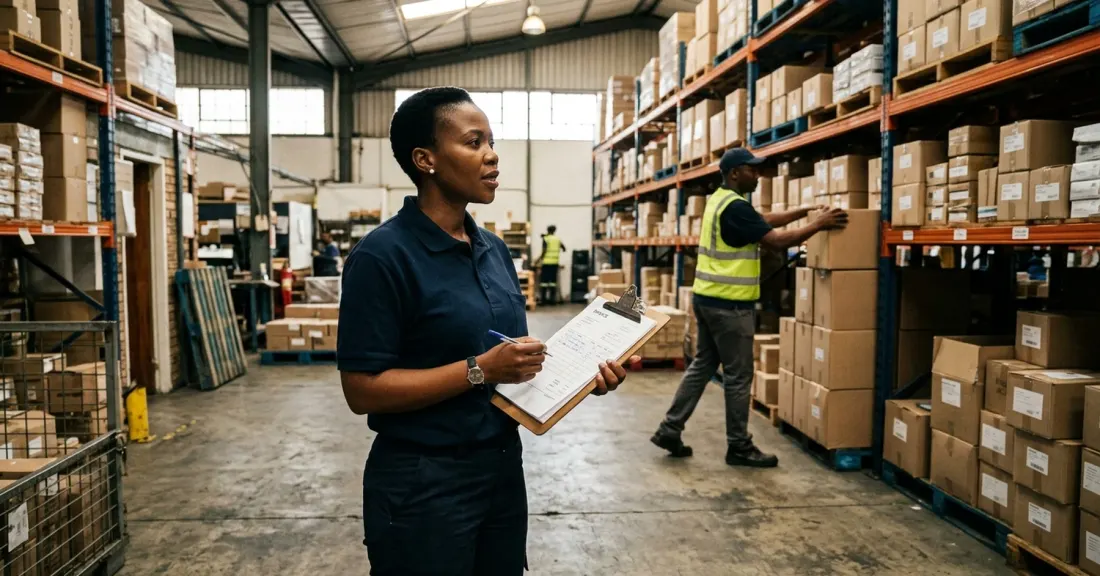
When you approach Sourcefin, the conversation starts with three questions rather than a credit score printout.
Can we trust you? We assess character, transparency, and your willingness to be open about your circumstances – not just what a bureau report shows. A judgment or past compliance issue doesn't automatically close the door. We want to understand your story: what happened, what you learned, and where you're headed.
Can the work be delivered? For purchase order funding, we assess whether the goods or services can actually be produced and delivered on time. Sourcefin has a network of more than 2,000 pre-vetted suppliers, a dedicated sourcing team, and a China-based office with 65 employees who specialise in procurement. We don't just fund the deal – we help you deliver on your promise to your client.
Will the end buyer pay? This is where our model most sharply parts ways with traditional lending. If your client is a government department, a state-owned enterprise, or a verified large corporate, their payment capacity matters as much as your own profile. Our creditors team verifies end-buyer payment ability before we commit to a deal.
If the answers to these three questions are positive, a credit impairment becomes one factor in a wider picture – not an automatic veto.
Invoice Discounting: Funded Against Your Invoice, Not Your Credit File
Invoice discounting in SA is one of the most practical funding tools available for business owners carrying credit impairment – because the transaction is secured by work you've already completed and an invoice you've already earned.
Here's how it works: you complete a project, deliver the goods or services, and issue an invoice to your client. Instead of waiting 30, 60, or 90 days for that invoice to be paid, you submit it to Sourcefin. We advance up to 75% of the invoice value upfront. When your client pays, you receive the remaining balance less our fee.
The funding is assessed against your client's ability to pay, not your personal credit history. If you've completed work for a government department, a registered corporate, or a verified South African entity, the invoice itself carries value – regardless of what your credit bureau profile looks like.
Costs vary based on deal size, invoice duration, and complexity. There are no rigid rate tables – every deal is assessed on its own terms.
See how Sourcefin's invoice discounting works – and how quickly you can convert outstanding invoices into working capital.
Purchase Order Funding: Backed on the Deal, Not Your Credit Score

If you've won a tender or received a purchase order but don't have the upfront capital to deliver, purchase order funding fills that gap. Unlike a traditional loan, the primary assessment isn't your credit history – it's the strength of the deal itself.
You have an awarded contract. There's a verified buyer. The goods or services are deliverable. That's the foundation Sourcefin works from.
The funding is structured as a profit-share arrangement, calculated on the tender value minus the cost to deliver. This means Sourcefin is genuinely invested in your success – if you deliver and your client pays, we both benefit. It's a partnership, not a transaction.
Sourcefin funds deals from R250,000 upward, with deals ranging well into the tens of millions for larger contracts. We work across construction, engineering, ICT, logistics, healthcare, and many other sectors – with roughly 80% of our portfolio in the public sector, where government payment timelines and tender structures are part of our everyday work.
Apply for purchase order funding and tell us about the contract you need to deliver.
For a detailed comparison of both products, read our guide on PO funding vs invoice discounting for SMMEs.
One example of what this makes possible: Malarey's team came to Sourcefin with a Rand Water tender for wastewater infrastructure serving 1.8 million people in the Vaal Basin. Sourcefin advanced R2.6 million to begin. From that starting point, the business grew to invest R320 million into the project – and subsequently won an R868 million follow-on contract.
Not Ready for Funding Yet? Start Here
Not every business is at the stage where funding is the right next step. That's a legitimate place to be – and Sourcefin has two platforms specifically designed to help SMMEs at different points in their growth.
TenderCentral – Find Government Tenders for Free
Before you can apply for tender funding, you need a tender worth funding. TenderCentral is a free platform that gives South African SMMEs access to municipal, provincial, and national government tenders in one place. Set filters for your industry and region, and receive alerts when relevant opportunities are published.
If you're building your business track record – getting registered, completing your first few contracts, establishing a relationship with government buyers – TenderCentral is the practical first step. Find the opportunity, understand the scope, and build a pipeline of deals you can bring to a funder when you're ready.
Affiliate Hub – Refer SMMEs and Earn Commission
If you know other business owners who are struggling to access funding, Sourcefin's Affiliate Hub lets you refer them and earn unlimited commission on every successful deal. You track referrals in real time, and the process is straightforward from sign-up to payout. It's a way to generate income while helping your network find the capital they need to grow.
Building Your Credit While You Fund
Accessing alternative funding and rebuilding your credit profile are not mutually exclusive – they can happen at the same time. Every invoice discounting transaction or purchase order deal completed on time builds a track record with Sourcefin that matters when you return for larger facilities.
In parallel, practical steps to strengthen your credit profile include:
- Separate your business and personal finances completely. A dedicated business account creates a clean financial record that any future funder can read clearly.
- Resolve outstanding SARS obligations. Tax compliance is one of the first things any funder reviews. Even a payment arrangement with SARS is better than an unresolved debt.
- Monitor your credit bureau profile quarterly. Credit bureaux regulated under the National Credit Regulator allow you to access your own report. Errors do appear, and disputing them is your right.
- Pay suppliers on time. Positive payment behaviour builds a trackable commercial history even before formal credit scores recover.
For more on how your credit profile shapes your business opportunities over time, read how a good credit score expands opportunities for small business owners.
For a broader overview of what's available, our guide to SMME funding alternatives in South Africa covers the full landscape of options beyond traditional banking.
Ready to Apply? Here's What You Need
If you have a purchase order to deliver or an outstanding invoice from a verified South African client, the application process is direct and fast.
Basic eligibility:
- Registered South African entity – Pty Ltd or CC
- Funding requirement of R250,000 or more
- A purchase order to deliver, or an unpaid invoice from a registered South African entity
The process works in three steps: a simple application telling us about your business and funding need, a deal assessment by our team with term sheets typically in as little as 48 hours, and funding released so you can deliver on your contract.
Loans for bad credit South Africa don't require a perfect credit file – they require a real opportunity and someone willing to be transparent about where they've been and where they're going. Start your funding application here and tell us your story. We're listening.
Sources & References
Frequently asked questions
Can I get a business loan in South Africa if I have bad credit?
Yes – alternative funders like Sourcefin assess deals differently from traditional lenders. Invoice discounting and purchase order funding are based on the strength of your invoices or contracts and the creditworthiness of your end buyer, not just your own credit history. A credit impairment is one factor among many, not an automatic disqualifier.
How does invoice discounting work for businesses with impaired credit?
Invoice discounting advances up to 75% of the value of an outstanding invoice you've already issued to a client. The funding is assessed against your client's ability to pay – not your personal credit record. If your client is a government department, SOE, or established corporate, the invoice carries significant value regardless of your credit bureau profile.
Does Sourcefin check my credit when I apply for funding?
Sourcefin does look at your financial history and credit profile, but not as a tick-box exercise. We use it to understand your story – what happened, the context, and whether we can trust you to deliver. A past judgment or compliance issue doesn't automatically disqualify you. What matters most is character, the quality of the deal, and the end buyer's ability to pay.
What is the minimum deal size for Sourcefin funding?
Sourcefin funds deals from R250,000 upwards, with no stated upper limit – the team has funded deals well into the tens of millions. You must be a registered South African entity (Pty Ltd or CC) and have either a purchase order to deliver or an outstanding invoice from a verified South African client.
What is TenderCentral and how does it help SMMEs with bad credit?
TenderCentral is a free platform that gives South African SMMEs access to municipal, provincial, and national government tenders in one place. For businesses not yet ready for funding, it's the practical starting point: find the tender opportunity, understand the requirements, and build a deal pipeline. Once you have a viable contract, you'll be in a much stronger position to apply for purchase order funding.
How quickly can Sourcefin approve a funding application?
Sourcefin targets term sheets in as little as 48 hours of a complete application. First-time deals typically fund within 5–10 business days once approved. Repeat clients with an established facility can draw down in as little as two days. Speed is a core part of what Sourcefin offers – most business opportunities don't wait for slow approval processes.

Sourcefin is a South African alternative finance provider that offers purchase order funding and invoice discounting to SMMEs, enabling businesses to fulfil confirmed purchase orders or tenders and unlock cash flow without collateral. Unlike traditional lenders or banks, Sourcefin also provides end-to-end support including supplier sourcing, logistics, project management, and risk oversight.