
SONA 2026 SMME Funding: A Practical Guide for South Africa
SONA 2026 dropped big numbers. But most SMMEs won't see a cent – not because the money isn't real, but because they're not structured enough to claim it.
On this page
- Key Takeaways
- Every Year, the Same Pattern
- Moment 1: R2.5 Billion for SMMEs – Get Fundable First
- Moment 2: Cheaper Credit Is Coming – Discipline Before You Borrow
- Moment 3: Procurement Reform Rewards Structure
- Moment 4: R156 Billion for Water – A Real Market for Real Suppliers
- Moment 5: The R1 Trillion Infrastructure Blitz – Specialise, Don't Chase Everything
- SONA 2026 SMME Funding Is Available – Are You Ready for It?
- Frequently asked questions
SONA 2026 SMME funding includes R2.5 billion in direct support for over 180,000 small businesses, R1 billion in guarantees, and a backdrop of R1 trillion in public infrastructure investment – but most SMMEs won't access any of it. Not because the money isn't real, but because they aren't structurally ready. The five key moments from President Ramaphosa's State of the Nation address all point to the same conclusion: 2026 will reward preparation, not hustle.
Key Takeaways
- President Ramaphosa announced R2.5 billion in SMME support and R1 billion in guarantees at SONA 2026
- Government will also amend the National Credit Act to lower borrowing costs – but cheaper credit only helps disciplined businesses
- Procurement reform is tightening, which squeezes out unstructured operators and rewards those with clean compliance and proof of delivery
- R156 billion committed to water and sanitation infrastructure creates real tender and supply opportunities for plumbing, civil, and engineering SMMEs
- The R1 trillion infrastructure blitz flows through large prime contractors first – SMMEs must specialise and position upstream
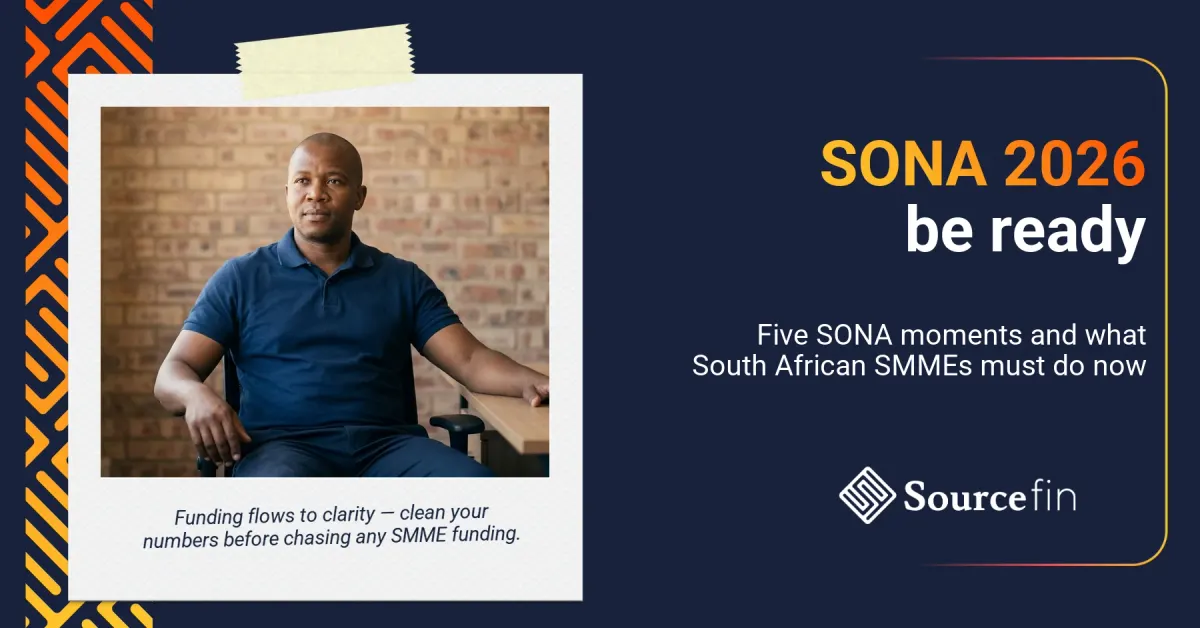
- Funding flows to clarity: clean numbers, separated finances, and a specific purpose for every rand borrowed
Every Year, the Same Pattern
Every year, a big government announcement drops. Every year, entrepreneurs feel the excitement. Every year, most of them do nothing with it – not from laziness, but because excitement isn't a strategy.
President Cyril Ramaphosa delivered the 2026 State of the Nation Address on 12 February 2026, setting out one of the most financially ambitious government programmes in South Africa's post-apartheid history. The numbers were real. The opportunity is genuine. But announcements don't build businesses – positioning does. SONA 2026 SMME funding is available, and the infrastructure opportunity is real – but it flows to prepared businesses, not excited ones.
Here are five moments from SONA 2026 and what they actually mean for your business.
Moment 1: R2.5 Billion for SMMEs – Get Fundable First
Ramaphosa announced that government would provide more than R2.5 billion in SONA 2026 SMME funding to over 180,000 businesses, alongside R1 billion in guarantees – with a specific focus on women-led and youth-led enterprises.
On the surface, that sounds like relief. Here's the uncomfortable truth: most businesses don't struggle to access funding because there isn't enough of it. They struggle because they aren't fundable.
If your last six months of bank statements are chaotic, your tax isn't up to date, your personal and business finances are blended, and you can't explain what the money is for – no funder will back you. Not government, not a development finance institution, not a private funder like Sourcefin.
Three things to do right now:
- Clean your numbers. Know your monthly expenses, revenue, and gross margin. Not perfect – clean.
- Be specific about why you need funding. If you've won a purchase order and need to pay your suppliers up front, that's purchase order funding. If you've delivered a service or goods and are waiting 30 to 60 days to be paid, that's invoice discounting. Don't take a generic loan for a specific cash flow problem.
- Separate your personal and business finances. If a funder cannot see where the business ends and you begin, they won't back you. Funding flows to clarity.
Moment 2: Cheaper Credit Is Coming – Discipline Before You Borrow
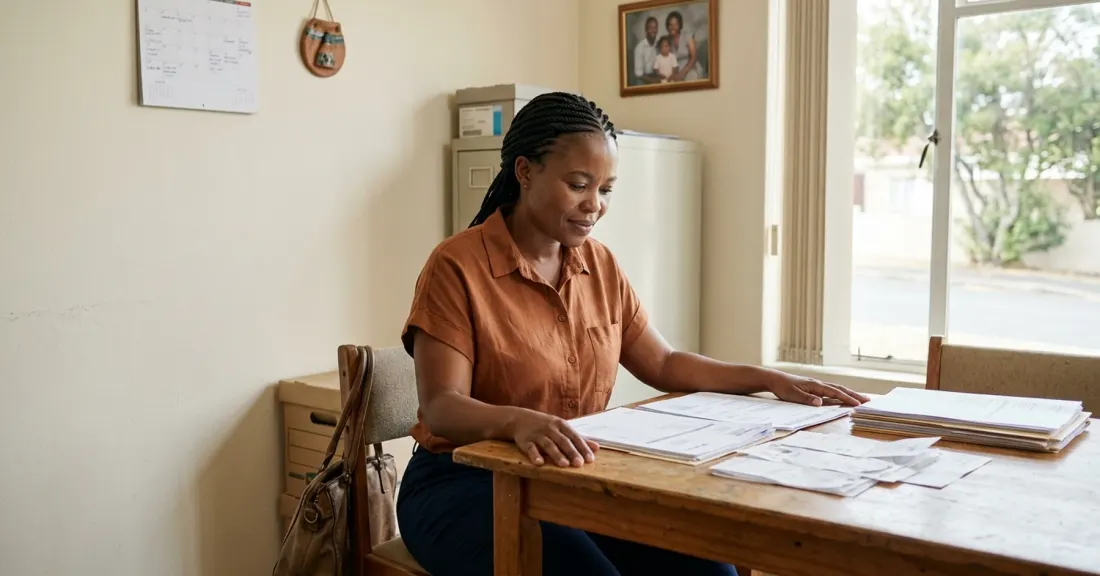
Ramaphosa announced an amendment to the National Credit Act regulations, designed to make accessing credit easier and at a lower cost for small businesses. That's a meaningful shift for SMMEs who have historically faced high borrowing rates and rigid eligibility requirements.
But cheaper credit doesn't fix undisciplined spending. If your cost of capital drops while your cash flow remains untracked, you don't grow – you just borrow faster and fall harder.
Before that cheaper credit arrives, build the discipline to use it well. Track your cash weekly, not monthly. Know what's coming in, what's going out, when payroll hits, and what your break-even revenue is each month. Before taking on any debt, ask one question: will this money earn more than it costs? If the answer isn't clear, don't take it.
Cheaper credit rewards businesses that already understand their numbers. For those that don't, it's just a faster route to the same problem.
Moment 3: Procurement Reform Rewards Structure
The auditor-general's report, cited directly in the SONA address, confirmed that the majority of corruption in South Africa originates in the procurement system. Ramaphosa committed to restructuring procurement for greater transparency and accountability – tighter controls, cleaner processes, and less room for unstructured operators.
When procurement systems tighten, the business that chases tenders without a proper foundation gets squeezed out. The structured one gets invited in.
Ask yourself honestly: if someone examined your business today, would they see a supplier or someone chasing an opportunity?
- Do you have a clear company profile that explains exactly what you do in one paragraph?
- Do you have proof that you've delivered before – references, completion certificates, client letters?
- Are your compliance documents – tax clearance, CIPC registration, CSD profile – clean, current, and ready to submit?
If the answer to any of those is no, fix that before you submit a single tender. Our complete guide to tendering in South Africa covers exactly what structural readiness looks like in practice.
Moment 4: R156 Billion for Water – A Real Market for Real Suppliers
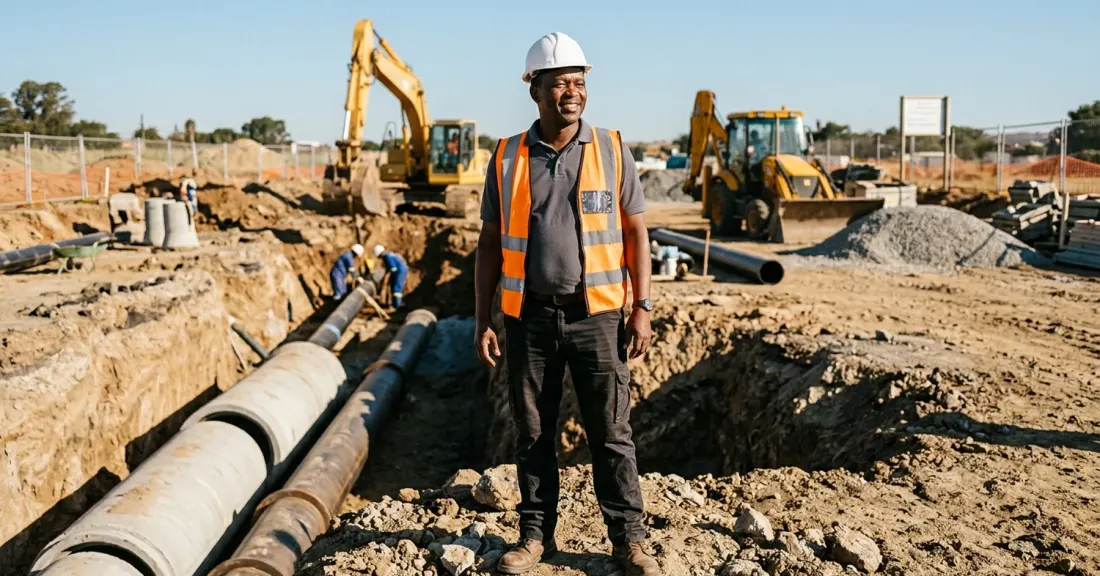
Water is a crisis in South Africa. It is also a market. Ramaphosa committed R156 billion in public funding for water and sanitation infrastructure over the next three years – new dam construction, pipeline upgrades, wastewater treatment facilities, reservoir development, and bulk water supply projects across the country.
For businesses in plumbing, civil works, engineering, chemicals, and maintenance, this commitment is not abstract. It translates into tenders, subcontracts, supply agreements, and maintenance work at scale. According to Infrastructure News, the water allocation is part of the largest infrastructure commitment in South Africa's history.
But winning the tender is not the victory. Delivering it profitably is.
If you win a water infrastructure contract and need to pay your suppliers or hire subcontractors before the money comes in, you need working capital – typically purchase order funding. If you've completed the work and are waiting 60 days for a government department to pay, invoice discounting releases that cash immediately so you can move to the next contract without stalling. For a wider walk-through of the model, see the South African invoice discounting pillar.
The mistake many SMMEs make is thinking the opportunity is the announcement. The real opportunity is being structured enough to execute when the work arrives. For a deeper look at what's on offer in the water sector specifically, see our article on SONA 2026's R156 billion water infrastructure opportunity.
Moment 5: The R1 Trillion Infrastructure Blitz – Specialise, Don't Chase Everything
The headline number from SONA 2026 was R1.07 trillion committed to public infrastructure over three years – energy, transport, water, and digital systems. Government described it as the largest allocation of its kind in South Africa's history.
Most SMMEs won't touch this money directly, and that's not a problem if you understand how it flows. Infrastructure at this scale moves through large prime contractors first, then down to subcontractors, specialist suppliers, and maintenance providers.
Your strategy shouldn't be to chase everything. It should be to specialise:
- Pick one lane – energy, water, rail, or digital infrastructure.
- Identify the prime contractors already operating in that space.
- Approach them with a clear capability profile and a record of delivery, not a cold pitch.
- Offer something repeatable – a service or supply you can deliver consistently at scale.
The businesses that consistently win infrastructure work are not the loudest voices in the room. They're the most reliable ones, every time. That reliability is what makes SONA 2026 SMME funding and procurement opportunities accessible – not the size of your ambition, but the consistency of your delivery.
SONA 2026 SMME Funding Is Available – Are You Ready for It?
The real lesson from SONA 2026 isn't about which sector to target or which announcement to chase. It's about the gap between structured and unstructured businesses – and that gap is about to widen.
Capital will move. Infrastructure is accelerating. Procurement is tightening. And when systems tighten, the unprepared get left behind, no matter how excited they were when the numbers were announced.
The businesses that will benefit from SONA 2026 SMME funding opportunities are the ones that are ready when the door opens – not the ones who scramble to prepare after they've already missed the deadline. 2026 will not reward hustle. It will reward preparation.
Clean your numbers. Structure your operations. Know the difference between purchase order funding and invoice discounting, and use the right tool for the right cash flow problem. Build relationships upstream – with prime contractors, procurement officers, and supply chain managers – before you need them.
If you're ready to start that conversation, apply for funding through Sourcefin and let's work out exactly which solution fits your business and your next contract.
Sources & References
Frequently asked questions
What SMME funding was announced at SONA 2026?
President Ramaphosa announced more than R2.5 billion in direct funding for over 180,000 small and medium enterprises, plus R1 billion in guarantees, with a focus on women-led and youth-led businesses. This sits within a broader R1 trillion public infrastructure commitment over three years.
How do I know if my business is fundable?
A fundable business has clean, up-to-date financial records, separated business and personal bank accounts, a current tax clearance certificate, and a clear, specific reason for needing funding. If you can't clearly explain what the money is for and how it will be repaid, most funders – including government schemes – will decline your application.
What is the difference between purchase order funding and invoice discounting?
Purchase order funding covers your costs before you deliver – when you've won a contract or order and need to pay suppliers up front. Invoice discounting releases cash after you've delivered, while you're waiting 30 to 90 days for your client to pay. Both solve cash flow gaps, but at different points in the business cycle.
How can a small business benefit from the R156 billion water infrastructure announced at SONA 2026?
SMMEs in plumbing, civil works, engineering, maintenance, and supply can pursue subcontracts and supply agreements through the prime contractors delivering water and sanitation projects. The key is being registered on the Central Supplier Database, having a clean compliance profile, and demonstrating prior delivery. Working capital solutions like purchase order funding and invoice discounting help you execute profitably once you've won the work.
What does procurement reform mean for small businesses in South Africa?
Tighter procurement processes mean fewer opportunities for unstructured operators and more consistent work for those with proper company profiles, compliance documents, and a track record of delivery. If your business can't clearly demonstrate what it does and that it has done it before, procurement reform makes it harder – not easier – to win government work.

Sourcefin is a South African alternative finance provider that offers purchase order funding and invoice discounting to SMMEs, enabling businesses to fulfil confirmed purchase orders or tenders and unlock cash flow without collateral. Unlike traditional lenders or banks, Sourcefin also provides end-to-end support including supplier sourcing, logistics, project management, and risk oversight.