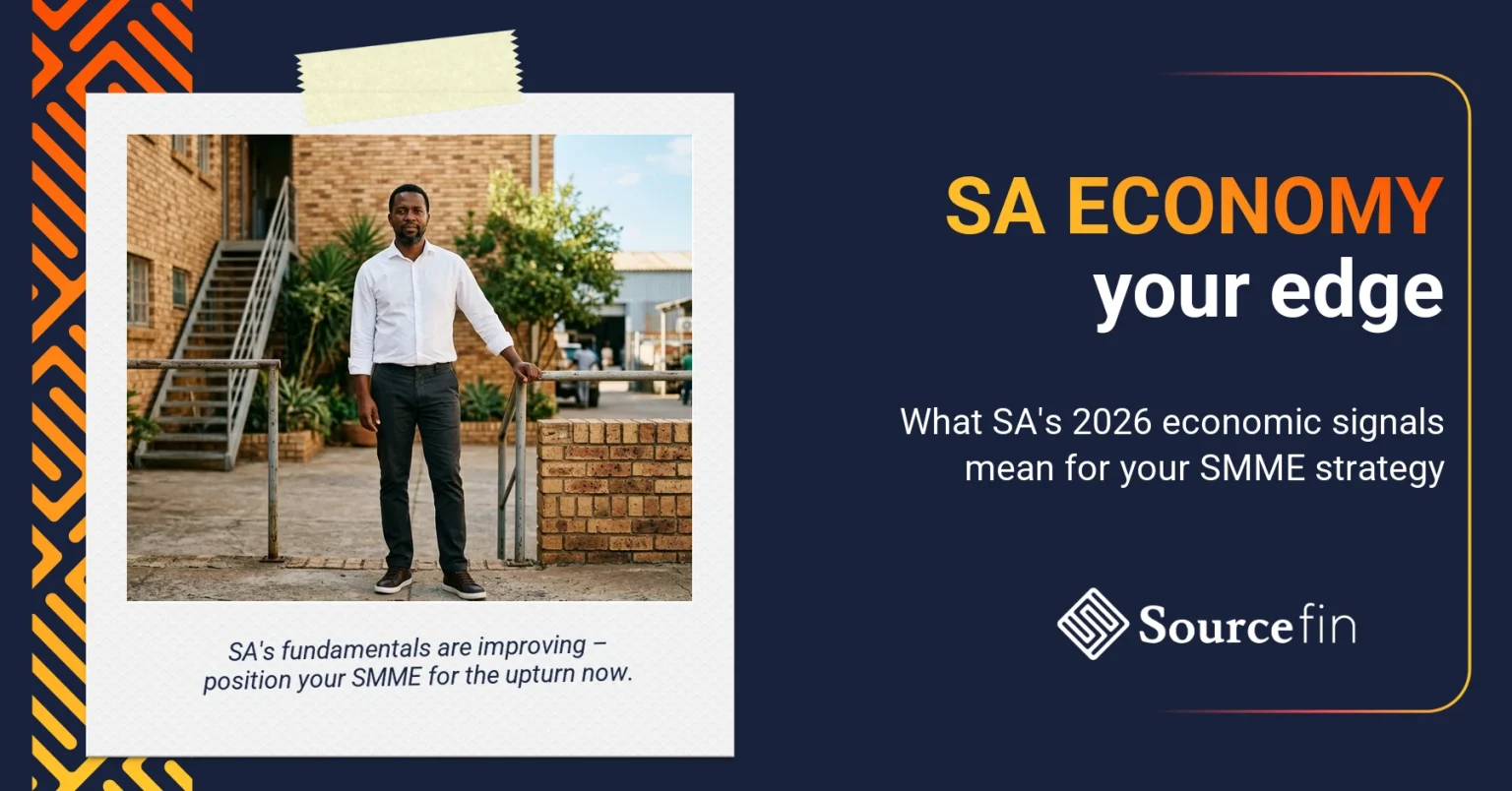
SA economic outlook for 2026 is more positive than daily headlines suggest. Yes, fuel prices hit a record in April, borrowing costs are elevated, and growth is modest. But South Africa has exited the FATF grey list, secured a sovereign credit rating upgrade, and put its first real budget surplus trajectory in years on track. For SMMEs willing to read these signals clearly, there is genuine opportunity right now.
Key Takeaways
- South Africa’s economy is projected to grow at 1.4–1.6% in 2026, improving toward 2% by 2028, supported by structural reforms, improving investor confidence, and continued government infrastructure spending.
- Three milestone events in late 2025 and early 2026 – the FATF grey list exit, S&P’s sovereign credit upgrade, and EU high-risk list removal – have materially improved South Africa’s investment environment, even if the effects take time to reach SMME level.
- Budget 2026 withdrew the previously planned R20 billion tax increase and adjusted income tax brackets for inflation for the first time in two years – a direct positive for small business owners’ personal and business finances.
- The real constraint in 2026 is not growth opportunity – it is cash flow. Government contracts are expanding, but payment terms remain long. SMMEs that solve the cash flow gap will capture the most from the current cycle.
- Over R7 trillion in government infrastructure spending is committed for the next three years. The tender pipeline for SMMEs is larger than at any point in recent history – the challenge is funding delivery, not finding work.
Reading the 2026 Budget: What SA’s Economic Outlook Actually Says
South Africa’s 2026 Budget, presented by Finance Minister Godongwana, marked a genuine turning point in the country’s fiscal position. The primary surplus – that is, revenue minus non-interest spending – is projected to grow from 0.9% of GDP in 2025/26 to 2.5% by 2028/29. The budget deficit is narrowing. For the first time in years, South Africa is spending less than it earns before interest payments, and that trajectory is improving. (Source: National Treasury, 2026 Budget Review)
For South African SMMEs, the direct Budget 2026 win was the withdrawal of a planned R20 billion tax increase. The government also adjusted personal income tax brackets and medical tax credits for inflation – the first inflation adjustment in two years. For business owners whose personal tax position is tied to their SMME’s performance, this is meaningful relief.
The broader economic picture that accompanied the budget: GDP growth of 1.6% for 2026, accelerating to close to 2% by 2028. Not spectacular, but trending in the right direction. Household consumption is contributing positively. Gross fixed capital formation – the investment in machinery, infrastructure, and plant – remains below the 25–30% of GDP needed for rapid growth, sitting at 13–15%. That is the structural challenge. But the direction is correct, and the policy environment is improving.
For more context on the budget’s specific provisions for SMMEs – including infrastructure tender opportunities and the VAT registration threshold changes – our Budget 2026 SMME guide covers the full picture.
The Three Positive Signals South African SMMEs Should Know About
Behind the fuel price headlines and interest rate holds, three structural developments in South Africa’s economic position deserve attention from any business owner thinking about the next 12–24 months.
1. The FATF grey list exit (October 2025). South Africa’s removal from the Financial Action Task Force’s grey list was a significant milestone. Grey list status increases transaction costs for South African businesses operating internationally, raises compliance scrutiny on financial institutions, and signals to global investors that the country’s financial system is not fully trusted. The exit reverses all of that. For SMMEs that deal with international suppliers or clients, the practical benefits are lower transaction friction and more straightforward banking relationships. For the broader economy, it removes a deterrent to foreign direct investment. (Source: CBN Business Advisory, 2026)
2. S&P sovereign credit rating upgrade (November 2025). S&P Global upgraded South Africa’s long-term foreign currency sovereign credit rating in November 2025 – the first upgrade in nearly two decades. A sovereign upgrade signals to global capital markets that South Africa’s risk profile is improving. That flows through to lower government borrowing costs over time, which in turn reduces the pressure on the fiscus and creates more room for productive spending. It does not help your overdraft rate today. But it is the kind of development that, cumulatively, brings interest rates down faster in the medium term. (Source: CBN Business Advisory, 2026)
3. EU high-risk jurisdiction removal (January 2026). The European Union’s removal of South Africa from its list of High-Risk Third Country Jurisdictions reduces compliance barriers for South African businesses trading with European counterparties. It is another signal, in a consistent sequence, that South Africa’s governance and financial system credibility is rebuilding.
None of these developments put cash in your bank account tomorrow. But they are the foundation of a medium-term recovery, and businesses that position now will benefit first.

The Headwinds Are Real – But Manageable with the Right Plan
Acknowledging the positive signals does not mean ignoring the pressures. The SA economic outlook for 2026 has real constraints that SMMEs need to plan around.
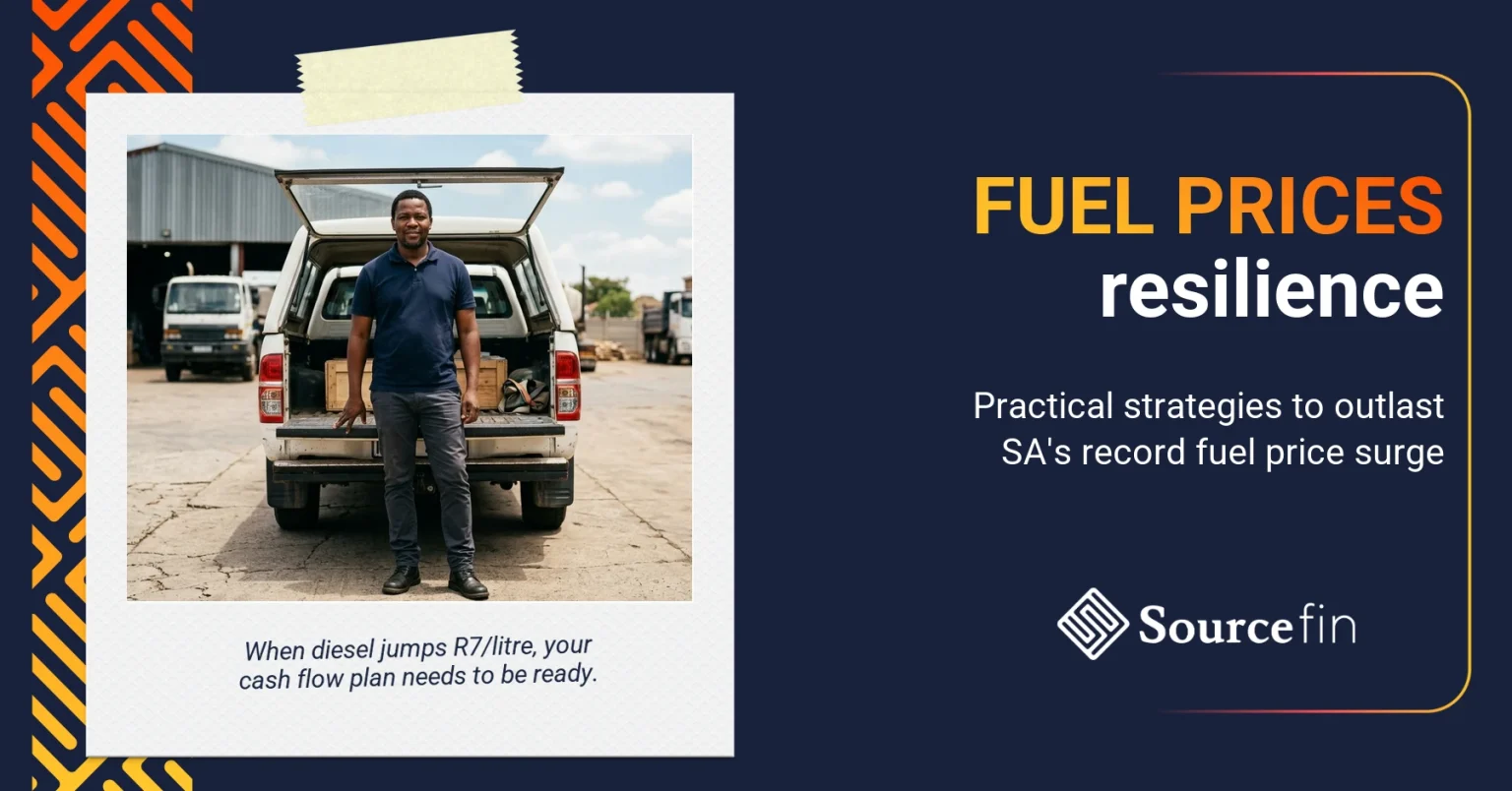
Fuel costs. April 2026’s diesel spike of R7.37 per litre – the single largest monthly increase on record – has added direct operating cost pressure across logistics, construction, and any supply chain that moves goods. The government’s temporary R3/litre fuel levy relief runs until 5 May 2026, after which costs could rise further. (Source: BusinessTech, April 2026)
Electricity tariffs. Eskom tariff increases effective April 2026 add another layer of cost pressure for businesses with energy-intensive operations. Combined with fuel, April 2026 is estimated to push headline CPI up by 2–4 percentage points.
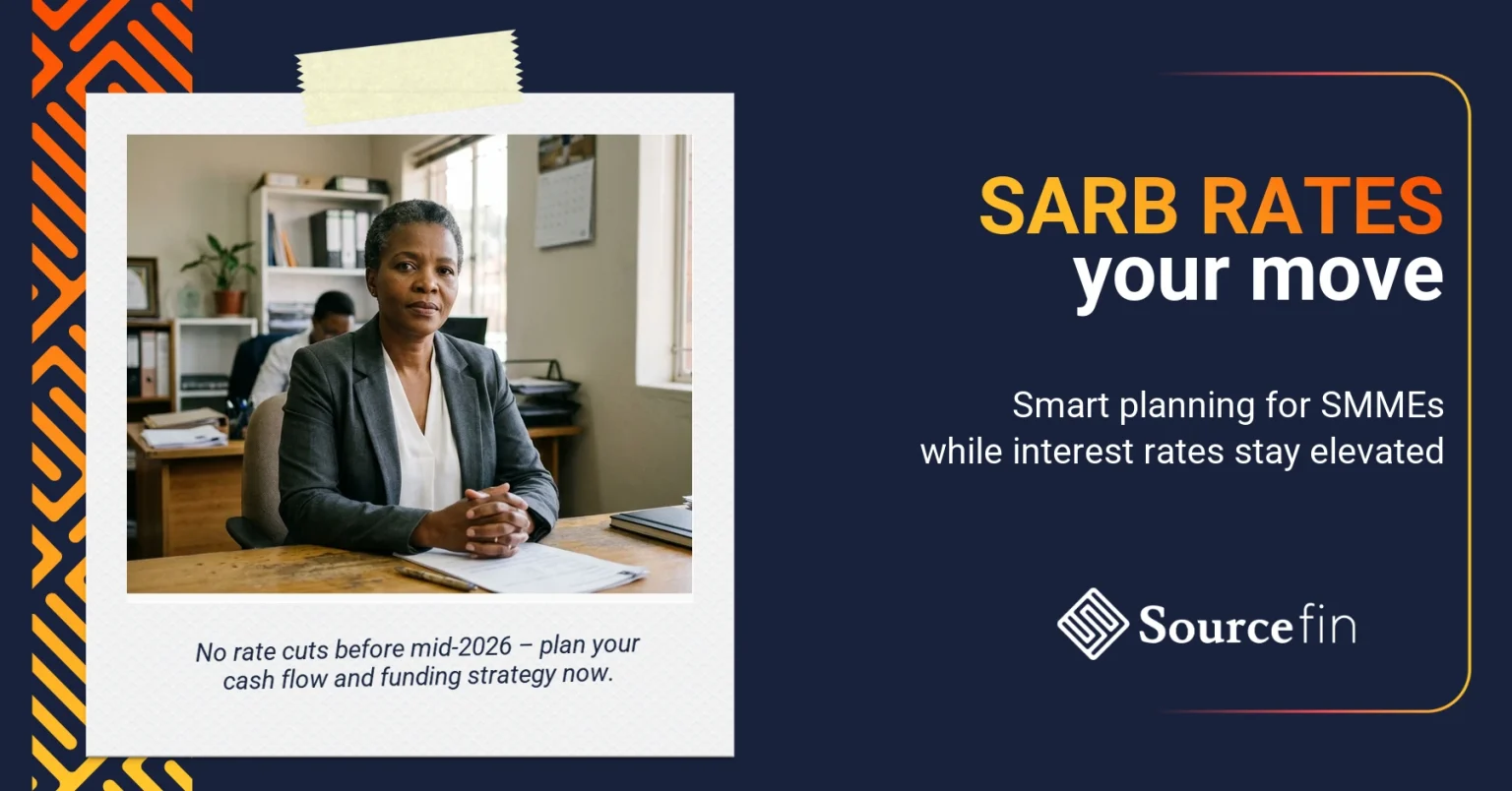
Borrowing costs. The SARB’s unanimous rate hold at 6.75% (prime: 10.25%) signals that rate relief is not imminent. Only one cut is now projected for 2026, and that may come in Q3 at the earliest. Businesses relying on cheap credit are in a difficult position.
The practical response is not to wait for conditions to improve, but to decouple your growth from expensive debt. Invoice discounting, purchase order funding, and strong cash flow management are not substitutes for cheap credit – they are better tools for this environment than cheap credit would be, because they are tied to real work you have already won, not speculative borrowing.
SA Economic Outlook and Government Tenders: A Growing Pipeline for SMMEs
The single most important economic signal for South African SMMEs in 2026 is this: government infrastructure spending is growing, not shrinking.
National Treasury’s commitment runs above R7 trillion in government spending over the next three years. Operation Vulindlela Phase 2 is accelerating structural reforms in energy, water, transport, and digital infrastructure. The SONA 2026 announcement included a R156 billion commitment to water infrastructure alone. (Source: Sourcefin, SONA 2026 analysis)
For SMMEs in construction, infrastructure, logistics, engineering, and support services, this is the most important sentence in the economic outlook: the work is there. The constraint is not finding opportunities – it is funding the delivery.
Government payment terms of 30–90 days on tender contracts create a structural cash flow gap that many capable SMMEs struggle to bridge. A business that wins a R500,000 tender but cannot fund the materials upfront is effectively unable to benefit from the opportunity. And a business that delivers the contract but cannot wait 90 days for payment may not be able to take on the next one.
This is precisely the gap that purchase order funding is designed to fill. The funder covers the upfront cost of delivery. When the contract is complete and the government entity pays, both parties share in the profit. You do not need a long credit history – you need a solid contract and a trustworthy track record.
For a detailed look at the water infrastructure tender opportunity from SONA 2026, see our guide: R156 billion for water infrastructure – how to win.

How to Position Your SMME for SA’s Recovery
Positioning for a recovery is not passive. It requires three deliberate choices, made now:
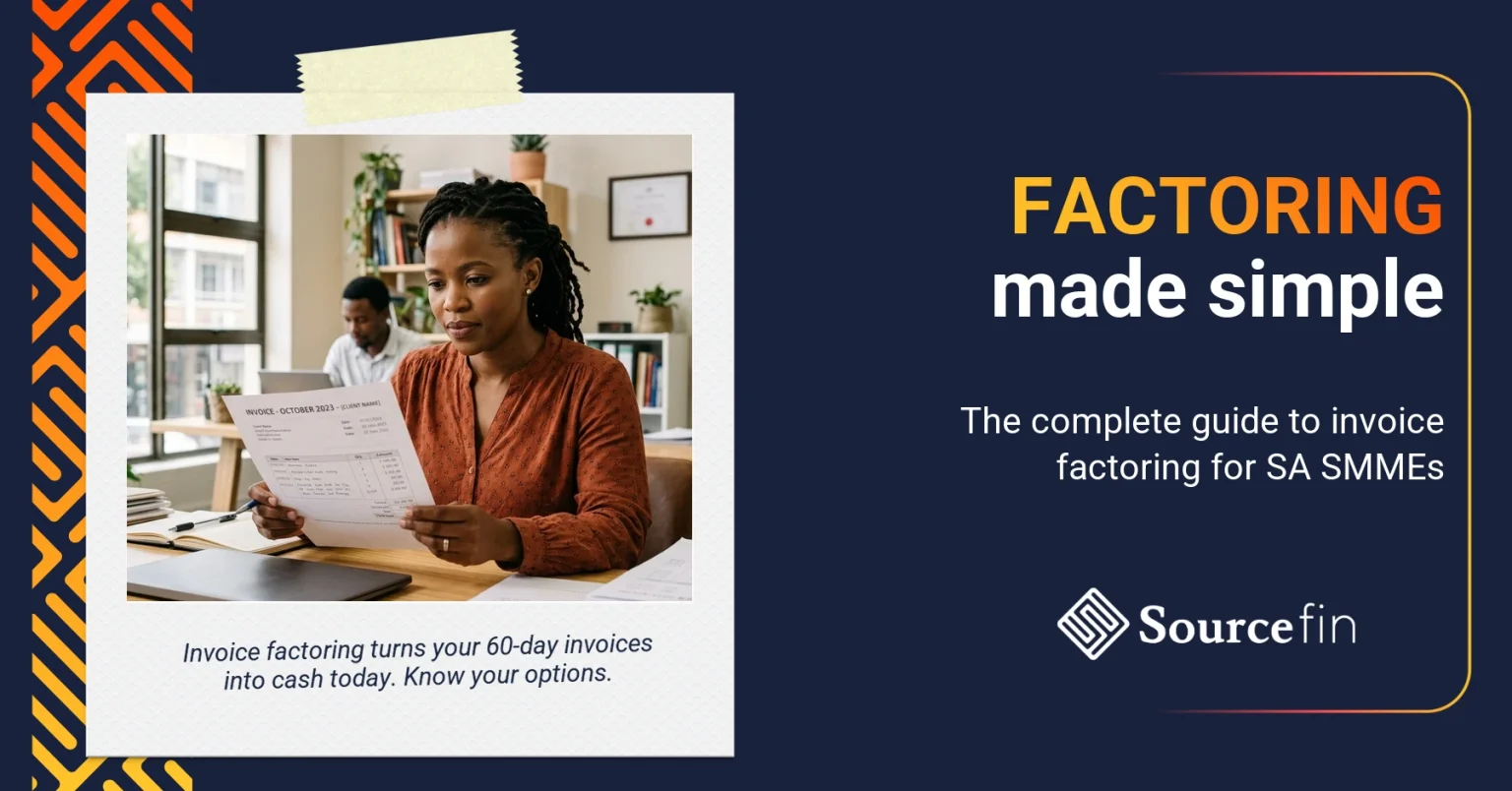
Stay funded and operational. The businesses that benefit from an economic upturn are the ones that survive to reach it. In a high-cost environment, the priority is not growth at any cost – it is maintaining the cash flow to keep operating, keep staff employed, and keep your reputation intact. Invoice discounting is the most practical tool for SMMEs that have completed work but are waiting on payment. It converts your outstanding invoices into working capital without taking on traditional debt.
Build your tender capacity. The infrastructure pipeline is real and growing. If your business is not yet registered on the Central Supplier Database (CSD), that is the starting point. If you are registered but not actively pursuing tenders, now is the time to start – before the pipeline peaks and competition intensifies. For help understanding the tender landscape, our SMME funding alternatives guide covers how to structure your approach.
Align with a funding partner who understands your cycle. South Africa’s economic recovery is opportunity-led, not debt-led. The businesses that will grow fastest are those with access to funding partners who assess the opportunity in front of them – not just their credit history. At Sourcefin, we look at three things: the quality of your deal, your ability to deliver, and your character as a business owner. If those three are strong, the funding follows. Apply here and we will assess your situation.
South Africa’s economic outlook for 2026 is not a reason for blind optimism. But for South African SMMEs who understand how to read structural signals and position accordingly, it is a genuine reason for measured confidence. The fundamentals are improving. The tender pipeline is growing. The question is whether your business is ready to benefit when the cycle turns.
Sources & References
National Treasury. 2026 Budget Review – Economic Outlook. February 2026. treasury.gov.za
CBN Business Advisory. “South Africa’s economic outlook 2026: Strategies for business growth and resilience.” 2026. cbn.co.za
BusinessTech. “Here is the official petrol price for April.” April 2026. businesstech.co.za
SAnews. “Budget 2026: SA economy ‘on the cusp’ of rapid growth.” February 2026. sanews.gov.za
Frequently Asked Questions
What is South Africa’s economic growth forecast for 2026?
South Africa’s economy is projected to grow at 1.4 to 1.6% in 2026, according to the National Treasury’s 2026 Budget Review and SARB projections. Growth is expected to improve toward 2% by 2028, supported by structural reforms under Operation Vulindlela, improving investor confidence following South Africa’s exit from the FATF grey list, and continued government infrastructure spending commitments.
What did Budget 2026 mean for South African small businesses?
Budget 2026 contained several direct benefits for small businesses and their owners. The previously planned R20 billion tax increase was withdrawn entirely. Personal income tax brackets and medical tax credits were adjusted for inflation for the first time in two years, reducing the effective tax burden on business owners. The government also maintained its infrastructure spending commitments, which sustain the government tender pipeline that many SMMEs depend on.
What is the FATF grey list and why does South Africa’s exit matter for SMMEs?
The Financial Action Task Force grey list identifies countries with deficiencies in their anti-money laundering and counter-terrorism financing frameworks. Being on the list increases compliance costs and friction for businesses dealing with international counterparties, and signals elevated risk to foreign investors. South Africa exited the grey list in October 2025. For SMMEs, this means lower transaction costs, easier international banking relationships, and a more attractive investment environment that supports long-term economic growth.
Is South Africa’s government infrastructure spending growing or shrinking in 2026?
Growing significantly. National Treasury has committed over R7 trillion in government spending over the next three years, with infrastructure a major component. SONA 2026 included a R156 billion commitment to water infrastructure alone. Operation Vulindlela Phase 2 is accelerating structural reforms across energy, water, transport, and digital infrastructure. For SMMEs in construction, engineering, logistics, and support services, the government tender pipeline is larger than at any point in recent history.
How can South African SMMEs take advantage of the improving economic outlook?
Three practical steps matter most. First, stay funded and operational – use invoice discounting to convert outstanding invoices into working capital, avoiding the cash flow gaps that cause businesses to miss opportunities. Second, build your tender capacity – ensure CSD registration is current and actively track government opportunities in your sector. Third, align with a funding partner who assesses deal quality rather than just credit history, so you can take on work you would otherwise have to decline due to upfront capital requirements.
What is the S&P sovereign credit rating upgrade and what does it mean for business?
S&P Global upgraded South Africa’s long-term foreign currency sovereign credit rating in November 2025 – the first upgrade in nearly two decades. A sovereign upgrade signals to global capital markets that South Africa’s economic and fiscal management is improving. Over time, this lowers government borrowing costs, reduces pressure on the national budget, and creates conditions for lower interest rates. It does not immediately reduce your prime lending rate, but it is part of the medium-term trajectory toward lower borrowing costs in South Africa.
Why is cash flow still the main challenge for SMMEs despite an improving economy?
Government contracts are the biggest growth opportunity for South African SMMEs in 2026, but government payment terms of 30 to 90 days create a structural cash flow gap. A business that wins a tender cannot always fund materials and labour upfront for 60 to 90 days while waiting for the department to pay. Invoice discounting and purchase order funding address this gap directly – converting confirmed work and outstanding invoices into immediate working capital, so SMMEs can benefit from the opportunity without waiting for payment cycles to align.