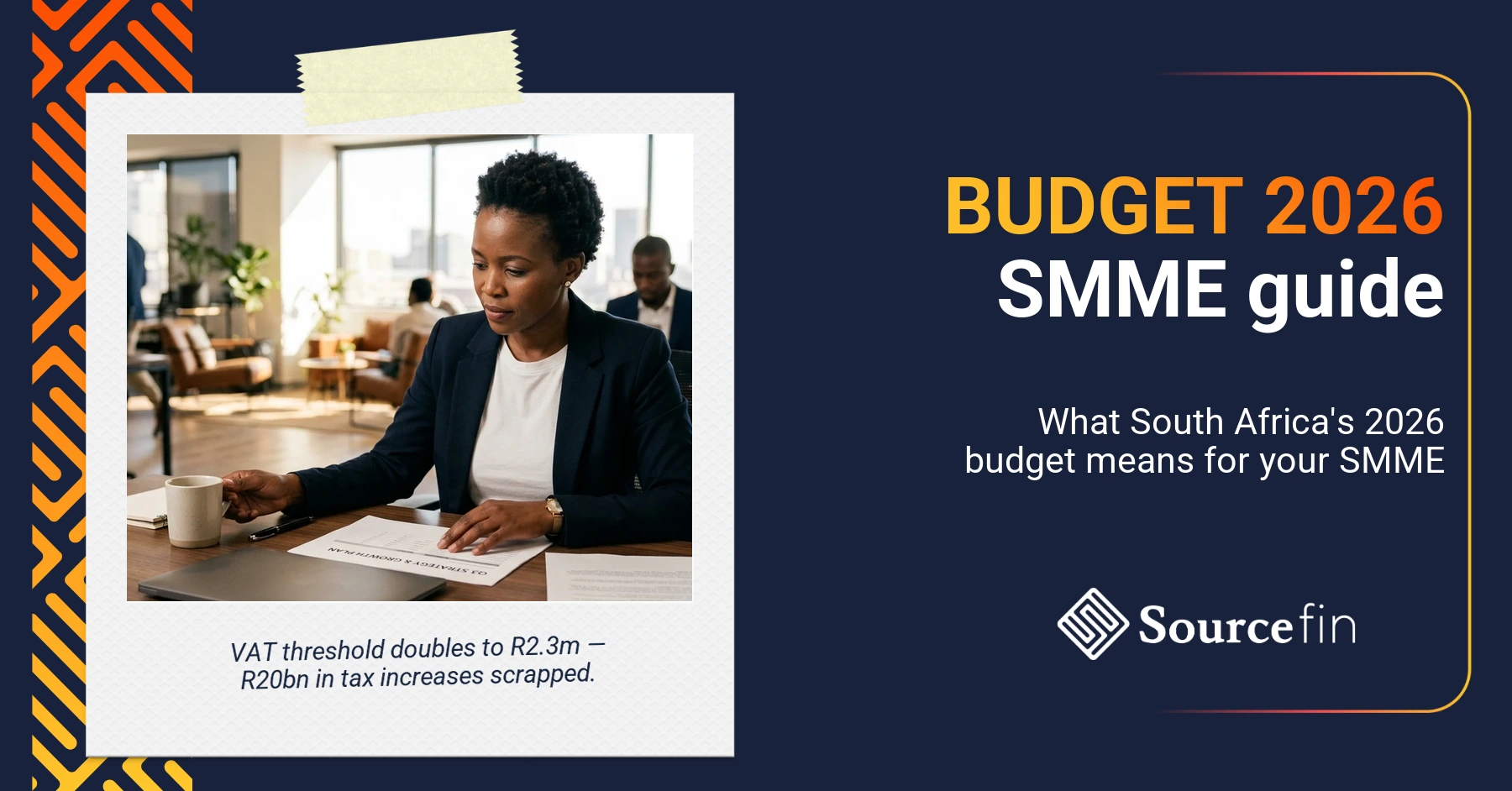

Budget 2026 South Africa SMME owners should understand three key outcomes: the VAT registration threshold doubled to R2.3 million – unchanged for 17 years – R20 billion in planned tax increases were withdrawn, and a R1.07 trillion infrastructure pipeline creates the most significant government tender opportunity in recent years. Fuel levy increases of 21 cents per litre add real pressure on business operating costs from 1 April 2026, but the overall fiscal direction is more favourable for small business than at any point in the past two budget cycles.
Key Takeaways
- VAT registration threshold rises from R1 million to R2.3 million – effective 1 April 2026, after 17 years unchanged
- R20 billion in proposed tax increases scrapped – including the VAT hike that collapsed last year’s budget
- Personal income tax brackets adjusted 3.4% for inflation – first bracket relief in two years, worth R13.7 billion to taxpayers
- Fuel levy increases: 9 cents per litre for petrol, 8 cents for diesel (general levy), plus RAF and carbon levy additions
- R1.07 trillion infrastructure investment over three years – transport, energy, and water the priority sectors
- Capital gains tax exemption for qualifying small business sales rises from R1.8 million to R2.7 million
- Skills development levy and SETA system to be reformed toward a practical dual-training model
Finance Minister Enoch Godongwana delivered South Africa’s 2026 National Budget on 26 February against a backdrop of improving fiscal credibility. South Africa’s first credit rating upgrade in 16 years, removal from the FATF grey list, and SARS revenue collections running ahead of target gave Godongwana room to avoid the tax shock many businesses feared after last year’s aborted VAT increase attempt.
For South African SMMEs, the picture is mixed but genuinely more positive than the past two budget cycles. Real tax relief is on the table. The infrastructure pipeline is substantial. And the VAT threshold change alone addresses a structural frustration that small business has carried for nearly two decades. Here is what the budget 2026 South Africa SMME sector needs to understand – and what to do with each change.
The VAT Threshold Win – What R2.3 Million Changes for Your Business
The most direct SMME relief in the budget arrived with one announcement. The compulsory VAT registration threshold increases from R1 million to R2.3 million per year, effective 1 April 2026. The voluntary registration threshold also rises from R50,000 to R120,000 per year.
Why does this matter? The R1 million threshold had sat unchanged since 2009 – 17 years during which business costs, inflation, and revenue expectations all shifted substantially. A business doing R1.1 million in annual turnover in 2009 was genuinely small. That same nominal revenue in 2026 represents a significantly smaller real operation, yet those businesses faced the same VAT compliance burden as much larger enterprises.
The jump to R2.3 million does several things simultaneously. Businesses operating below the new threshold are no longer required to register, removing quarterly VAT returns, invoice compliance requirements, and the administrative overhead that accompanies registration. For businesses currently registered but operating under R2.3 million, the option to deregister reduces administrative burden and can improve cash flow – you retain the 15% VAT component rather than collecting and remitting it to SARS.
For growing businesses that haven’t yet reached R2.3 million in turnover, the new threshold creates meaningful headroom to scale before the compliance burden kicks in. The practical effect is that many SMMEs pursuing government contracts, managing seasonal revenue fluctuations, or building toward meaningful scale now have more runway before the VAT obligation arises.
One nuance worth noting: voluntary VAT registration can still benefit businesses with significant input costs. If your suppliers are VAT-registered and you can claim input credits that exceed your output liability, registration may still work in your favour. Take professional advice before deregistering if you’re currently registered.

What the Budget 2026 South Africa SMME Sector Avoided – No New Tax Burden
The most significant thing about this budget may be what didn’t happen. Last year’s attempt to raise VAT by 2 percentage points collapsed before the budget was even tabled, forcing a revised budget and months of political instability. That proposal would have raised business compliance costs, reduced consumer spending power, and added 2% to the cost of most goods and services that SMMEs produce and sell.
In February 2026, Godongwana withdrew R20 billion in tax increases provisionally included in the May 2025 budget. Improved revenue collection through SARS – driven partly by commodity price windfalls and genuine efficiency gains across tax administration – gave the minister the room to abandon those increases without fiscal deterioration. The corporate tax rate holds unchanged. No new business taxes were introduced. For the first time in several years, the tax environment is not actively becoming more expensive for South African businesses to operate within.
The budget also adjusts personal income tax brackets by 3.4% in line with inflation. This doesn’t benefit your business directly, but it benefits your customers. Tax bracket creep had quietly eroded take-home pay for two consecutive years. Returning that bracket relief – worth R13.7 billion in foregone revenue – puts real spending power back into the consumer market. For SMMEs whose revenue depends primarily on consumer demand, that matters. You can read more about managing the tax environment as a South African SME in our dedicated guide.
Fuel Levy Increases – The Real Cost Pressure Starting 1 April 2026
Not everything in the budget 2026 South Africa SMME operating environment is positive. Fuel levies increase across the board from 1 April 2026, adding 21 cents per litre in combined increases across petrol and diesel. The general fuel levy rises 9 cents per litre for petrol and 8 cents per litre for diesel. The carbon fuel levy rises 5 cents per litre for petrol and 6 cents per litre for diesel. The Road Accident Fund levy increases by 7 cents per litre across both fuel types.
For businesses operating transport-dependent models – fuel suppliers, logistics operators, construction contractors, cleaning and security companies – these increases layer on top of April’s already significant market diesel price movement. Our article on how fuel price increases affect South African businesses covers the cascade effects in detail: when diesel rises, freight costs typically follow within two to four weeks. If your business includes any meaningful transport component, update your cost models before your next tender submission or client proposal. Pricing built on pre-April diesel assumptions won’t hold through a May or June delivery window.
The government signalled some awareness of fuel cost pressure on business. A temporary reduction of R3.00 per litre on the general fuel levy was implemented in response to global oil market disruption in May 2026 – but long-term planning cannot rely on temporary relief measures. Build realistic levy increases as a permanent baseline shift into your fuel cost assumptions rather than treating them as a temporary anomaly.
A R1 Trillion Infrastructure Pipeline – Where the Budget 2026 Tender Opportunities Are
Finance Minister Godongwana announced R1.07 trillion in infrastructure investment over the next three years. For SMMEs with government supply capability, this is the most significant government procurement opportunity the budget 2026 South Africa SMME community has seen in a decade.
The pipeline breaks down by sector. Transport and logistics receives R417.6 billion – the largest share, covering Transnet rail corridor recovery, PRASA commuter rail modernisation (targeting growth from 77 million to 250–450 million passenger trips over the medium term), road maintenance of approximately 27,000 kilometres, and six border post public-private partnerships nearing finalisation. Energy receives R213.6 billion for transmission infrastructure, grid expansion, and private sector generation facilitation. Water and sanitation receives R185.2 billion for bulk water augmentation, infrastructure refurbishment, and strategic water security projects – directly connected to the commitment outlined in the SONA 2026 water infrastructure announcement made earlier this year. Health receives R65.4 billion, including three major academic hospitals approved for the next Budget Facility for Infrastructure cycle.
Two delivery mechanisms matter for SMMEs specifically. First, the Budget Facility for Infrastructure (BFI) opened its 2026/27 call for proposals on 26 February 2026 – the same day as the budget speech. Public institutions with project proposals and funding gaps in key sectors can submit now. Second, the new Infrastructure Finance and Implementation Support Agency (Ifisa), housed at the Development Bank of Southern Africa and operational from 1 April 2026, provides dedicated support for project preparation and financing.
For SMMEs already operating in construction, logistics, facilities management, cleaning, or security, the confirmed spending pipeline across three budget years creates genuine tender opportunity. The challenge is execution capital. Large government contracts require procurement before delivery, and government payment follows 30 to 60 days after completion. Purchase order funding bridges that gap – advancing capital against the awarded contract so you can procure supplies and execute without needing the balance sheet to self-fund the entire cycle.

Operation Vulindlela Phase 2 – Why Municipal Reform Matters to Your Business
The budget supported continuation of Operation Vulindlela into its second phase, focusing specifically on local government delivery. Phase 2 shifts municipalities toward performance-linked utility models for water and electricity, professionalises management appointments, and builds technical capacity in underperforming municipal systems.
For SMMEs, this matters in two practical ways. First, unreliable municipal services are a genuine operational cost. Water disruptions, billing inconsistencies, and electricity interruptions consume management time and impose real financial losses. Progress on municipal performance directly reduces the hidden burden that business currently absorbs. Second, better-functioning municipalities are better procurement clients. Municipalities with stronger financial management and sustainable cash flows become more reliable tender issuers and payment counterparties – reducing the payment risk that makes municipal government contracts challenging for smaller suppliers.
Godongwana specifically addressed the incentivisation model – municipalities that professionalise their utilities as business entities will receive additional support funding of R27.7 billion under this framework. That structural reform, if it takes hold over the medium term, changes the risk profile of municipal government contracts for SMMEs in a meaningful way. Combined with the infrastructure investment pipeline, it points toward a local government sphere gradually becoming a more functional procurement market.
Skills Development Reform – A More Practical Talent Pipeline Ahead
The skills development levy system has been a consistent frustration for South African employers. Levies are paid, funds flow through sector education and training authorities (SETAs), and the outcomes – practically skilled, employment-ready workers – haven’t materialised at the scale the investment should produce.
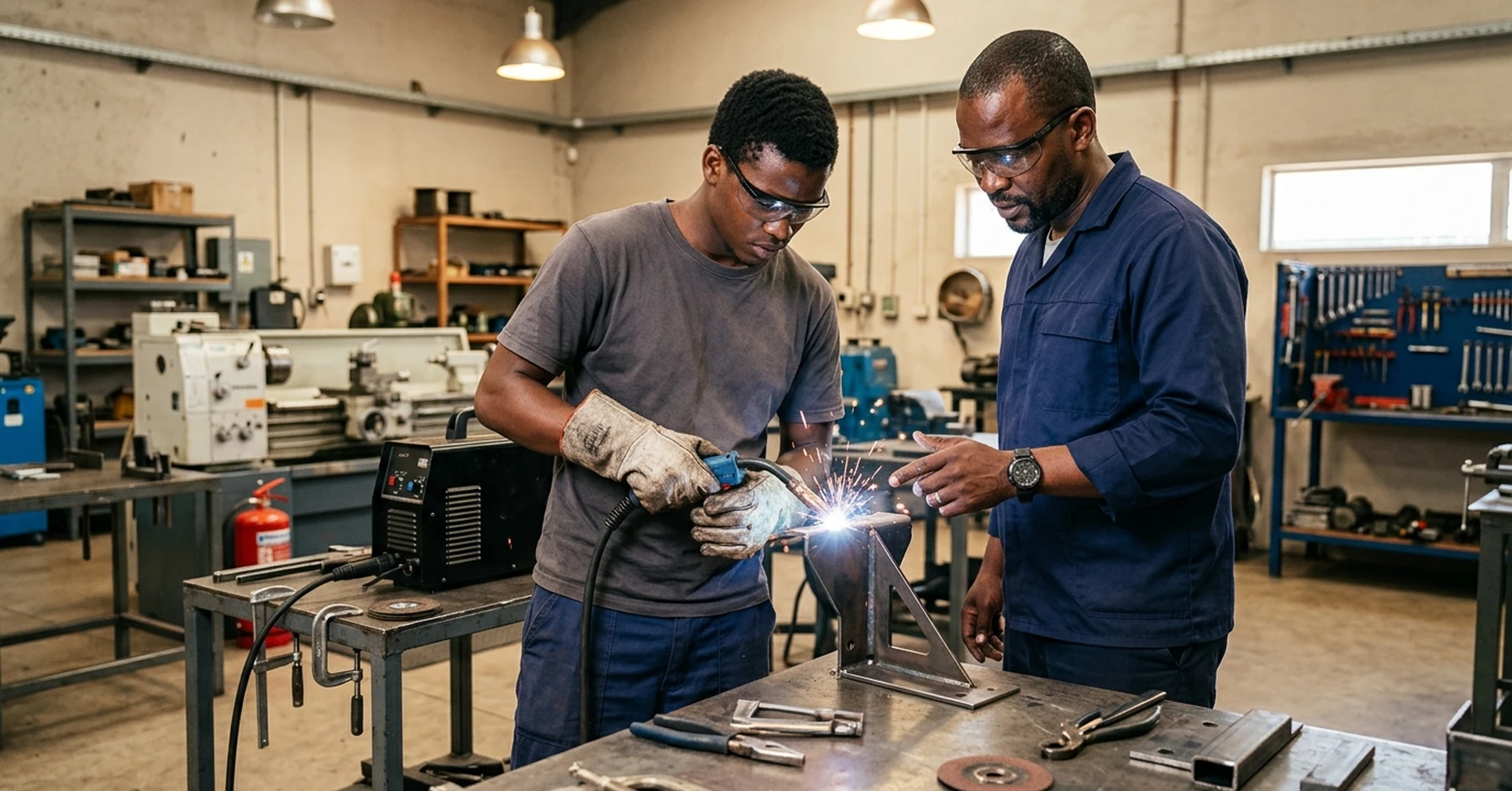
Budget 2026 signals a change in direction. The government is proposing a dual-training skills acquisition system that introduces practical, workplace-based learning alongside theoretical qualification. The employer portion of the levy returned will increase to approximately 40% of the levy paid. The National Skills Fund is being redirected toward practical employment pathways – supporting job-seekers to access workplace experience and move into employment rather than remaining in theoretical training programmes.
For SMMEs, this is a medium-term change rather than an immediate one. But the direction matters. Businesses that have struggled to find practically skilled entrants in construction, logistics, facilities management, and technical services may see a gradually improving pipeline as the system reorients toward work-integrated learning. The dual-training model – common in Germany and increasingly adopted across developing economies – produces workers capable of contributing from day one rather than requiring significant workplace retraining after qualification.
Capital Gains Tax Relief – Planning Your Business Exit
One SMME-specific announcement addresses business succession and exit planning directly. The capital gains tax exclusion for qualifying small business disposals increases from R1.8 million to R2.7 million. The qualifying business value cap rises from R10 million to R15 million. This applies to business owners aged 55 and older disposing of active small business interests – allowing more SMME owners to receive significantly more from a business sale before capital gains tax applies.
If you’ve been delaying a business sale partly because of CGT exposure, the 2026 changes meaningfully improve the after-tax proceeds of a qualifying disposal. Combined with the higher qualifying business value threshold, more SMME owners – particularly those who have built businesses worth between R10 million and R15 million – can now access the relief. Take advice from a tax professional to confirm whether your specific business structure and transaction qualifies before proceeding.
What to Do Now – Turning the Budget 2026 South Africa SMME Opportunity into Action
Understanding the budget 2026 South Africa SMME landscape is the starting point. Acting on it is what separates businesses that benefit from those that watch the opportunity pass. Here are seven practical steps worth taking in the weeks ahead.
Review your VAT registration position. If you’re currently registered and operating under R2.3 million in annual turnover, assess whether deregistration serves your business. If you’re approaching R2.3 million, you now have more headroom before the compliance obligation kicks in. Either way, this decision deserves a conversation with your accountant before the end of the tax year.
Update your fuel cost models. April 2026 levy increases plus market price movement means transport cost assumptions need updating before any tender submissions or client proposals for delivery beyond April. Pricing built before the levy changes will not hold.
Check the BFI call for proposals. If your business operates in infrastructure-relevant sectors – construction, engineering, water services, energy, or logistics – the Budget Facility for Infrastructure 2026/27 call is open now. Review the criteria and assess whether projects in your pipeline qualify for consideration.
Register on TenderCentral. The infrastructure pipeline translates into specific tender opportunities over the next 12 to 36 months. TenderCentral filters government opportunities by sector and province, so you see relevant contracts as they come to market rather than trawling multiple procurement portals manually.
Establish funding relationships before you win contracts. Large infrastructure tenders require execution capital that most SMMEs don’t carry on their balance sheets. Establishing purchase order funding or invoice discounting relationships before contract awards means 48-hour capital activation when you win, rather than starting approval processes from scratch during execution. For a wider walk-through of the model, see the SA invoice discounting pillar.
Treat the personal income tax relief as a consumer signal. R13.7 billion returned to taxpayers through bracket adjustment stimulates consumer spending over the year ahead. If your customers are primarily consumers, that spending power recovery supports your revenue outlook for 2026.
Revisit your exit strategy if you’re 55 or older. The capital gains tax changes create a window for qualifying business disposals at improved after-tax terms. If a business sale is in your medium-term plans, 2026 is a more favourable year for that conversation than it has been recently.
The budget 2026 South Africa SMME operating environment is neither a rescue nor a crisis. It’s a stabilisation – government pulling back from the tax escalation that threatened last year, investing in infrastructure that creates genuine procurement opportunity, and addressing structural constraints that have made growing a small business harder than it needed to be. The operating environment remains demanding. But the direction is better.
At Sourcefin, we’ve backed South African SMMEs with over R2.6 billion in funding because we understand that winning government tenders creates opportunity – but executing them successfully requires working capital that moves as fast as contract awards do. Budget 2026 creates more tender opportunity. Make sure your funding is ready to match it.
Sources & References
- 2026 National Budget – Minister Enoch Godongwana | National Government of South Africa
- VAT Limit Increased for Businesses in South Africa | BusinessTech
- Budget 2026 Delivers SME Relief as VAT Threshold Increases to R2.3 Million | Standard Bank
- Tender Funding Options for South African SMMEs | Sourcefin
Frequently Asked Questions
What are the main Budget 2026 changes that affect South African SMMEs?
The key changes for SMMEs are: the VAT registration threshold rises from R1 million to R2.3 million (effective 1 April 2026), R20 billion in proposed tax increases were withdrawn, personal income tax brackets were adjusted 3.4% for inflation, fuel levies increased by a combined 21 cents per litre, and R1.07 trillion in infrastructure investment was confirmed over three years. The capital gains tax exemption for qualifying small business sales also rose from R1.8 million to R2.7 million.
How does the VAT threshold increase from R1 million to R2.3 million affect my business?
If your annual turnover is below R2.3 million, you are no longer required to register for VAT from 1 April 2026. This removes quarterly VAT returns and compliance overhead. If you’re currently registered below the new threshold, you can assess whether to deregister — which may improve cash flow by retaining the 15% VAT component. If you’re growing toward R2.3 million, you now have more headroom to scale before the compliance burden applies. Take professional advice before deregistering, as voluntary registration can still benefit businesses with significant VAT input costs.
What fuel levy increases do businesses face from 1 April 2026?
From 1 April 2026, the general fuel levy increases 9 cents per litre for petrol and 8 cents per litre for diesel. The carbon fuel levy rises 5 cents for petrol and 6 cents for diesel. The Road Accident Fund levy increases 7 cents per litre. Combined, this adds 21 cents per litre across most fuel types. For transport-dependent businesses, these increases layer on top of market diesel price movement and will cascade into freight and logistics costs within two to four weeks — update your tender pricing and cost models before submitting new quotes.
Where are the biggest SMME tender opportunities from the R1 trillion infrastructure investment?
Transport and logistics receives the largest share at R417.6 billion — covering rail, roads, and border infrastructure. Water and sanitation receives R185.2 billion, energy receives R213.6 billion, and health and education make up most of the remainder. For SMMEs in construction, logistics, cleaning, security, and facilities management, this pipeline creates significant tender opportunity over the next three years. Register on TenderCentral to filter opportunities by sector and province as they come to market.
What is the capital gains tax relief for small business owners in Budget 2026?
Budget 2026 increased the capital gains tax exclusion for qualifying small business disposals from R1.8 million to R2.7 million. The qualifying business value cap also rose from R10 million to R15 million. This applies to business owners aged 55 and older disposing of active small business interests. If you’ve been considering a business sale, the improved exemption meaningfully increases after-tax proceeds for qualifying transactions. Consult a tax professional to confirm whether your business structure and transaction qualifies.
Should I establish purchase order funding before pursuing infrastructure tenders?
Yes. Large government infrastructure contracts typically require you to procure supplies before delivery, with government payment arriving 30 to 60 days after completion. Establishing a purchase order funding relationship before you win contracts means you can activate capital within 48 hours of contract award rather than starting approval processes from scratch during execution. Funders assess the government contract itself — not your credit history — so the strength of the awarded tender is what drives approval, not your balance sheet.
What does Operation Vulindlela Phase 2 mean for SMME government contracts?
Operation Vulindlela Phase 2 focuses on reforming local government delivery — shifting municipalities toward professional utility models for water and electricity, improving financial management, and building technical capacity. For SMMEs, this matters because better-functioning municipalities are more reliable procurement clients with stronger payment capabilities. Municipalities that improve their financial management become lower-risk counterparties for government supply contracts. The reform is a medium-term process, but the direction is toward a local government sphere that functions more like a dependable procurement market over time.