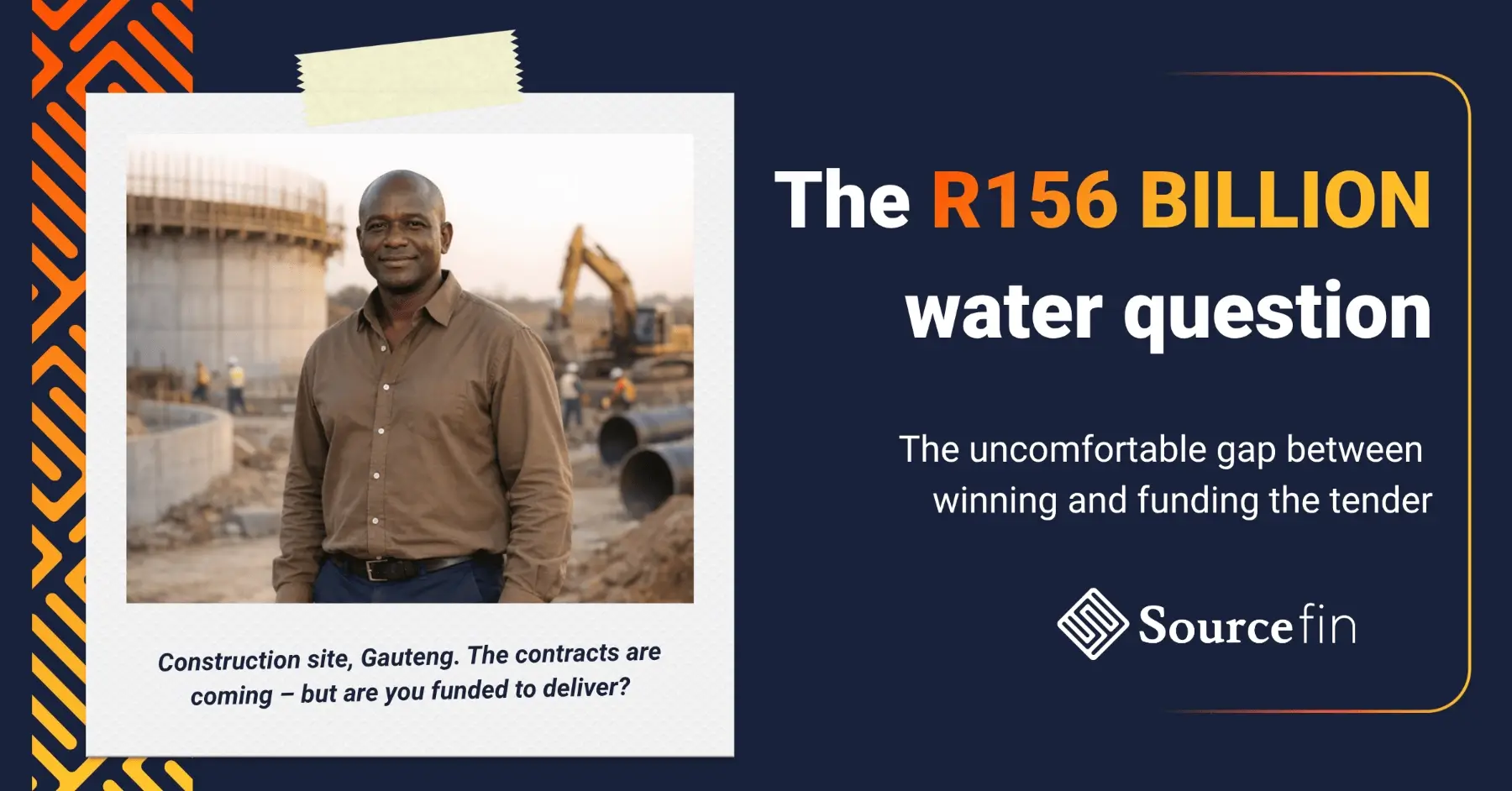

SONA 2026 committed R156 billion specifically for water and sanitation infrastructure over three years, with an additional R1 trillion for broader public infrastructure. Contractors positioned to win these tenders aren’t just those who can do the work – they’re the ones who can fund delivery through 60–90 day government payment cycles. Without working capital or access to purchase order funding, even the most capable contractor will struggle to compete at this scale.
On 12 February 2026, President Cyril Ramaphosa stood at Cape Town City Hall and announced numbers that could reshape South Africa’s infrastructure landscape. R156 billion for water and sanitation alone. R1 trillion for public infrastructure across energy, transport, water, and digital systems – the largest allocation in the country’s history.
For contractors, engineering firms, and construction companies eyeing government tenders, these are the kinds of figures that make you lean forward in your chair. Lesotho Highlands Water Project Phase II. Mzimvubu dams in the Eastern Cape. Bulk pipeline systems. Wastewater treatment plants. Reservoir upgrades across provinces.
The opportunity is real. The tenders are coming. But here’s the uncomfortable truth most won’t say out loud: not everyone who can do the work is positioned to win the work.
Key takeaways
- Scale demands different infrastructure. R100M–R500M water infrastructure contracts require financial positioning that most mid-sized contractors don’t have in place. Technical capability is table stakes; funding infrastructure is the differentiator.
- Government payment cycles create an existential gap. You’ll wait 60–90 days for payment on a contract that requires R30M–R150M in working capital upfront. Without purchase order funding or invoice discounting, you can’t bridge that gap – no matter how good your track record.
- Positioning happens before the bid opens. By the time a water infrastructure tender closes, winners have already secured funding commitments, verified supplier relationships, and built the operational capacity to deliver at scale. Positioning isn’t reactive; it’s strategic.
Why R156 billion changes the game (and raises the stakes)
Context matters. SONA 2026 didn’t just announce water spending – it acknowledged a national crisis. Minister Pemmy Majodina was literally redirected from SONA to address Johannesburg’s water collapse. Hammanskraal’s cholera outbreak. Cape Town’s near Day Zero moment. Provinces where nearly half of treated water is lost through leaks before reaching consumers.
The R156 billion isn’t charity. It’s a political imperative wrapped in fiscal commitment. Government knows that service delivery failures create electoral consequences, and water sits at the centre of that delivery equation (Source: National Treasury, SONA 2026 Budget Breakdown, 2026).
What this means for contractors: urgency creates opportunity, but it also creates scrutiny. Treasury has tied R54 billion in metro incentives to performance-linked reforms. Municipal failures now carry criminal charges – 56 municipalities already facing prosecution for failing to meet obligations. The pressure to deliver is real, which means government will favour contractors who can actually move fast and finish projects (Source: Infrastructure News, Key Infrastructure Takeaways From SONA 2026, 2026).
The projects everyone’s watching
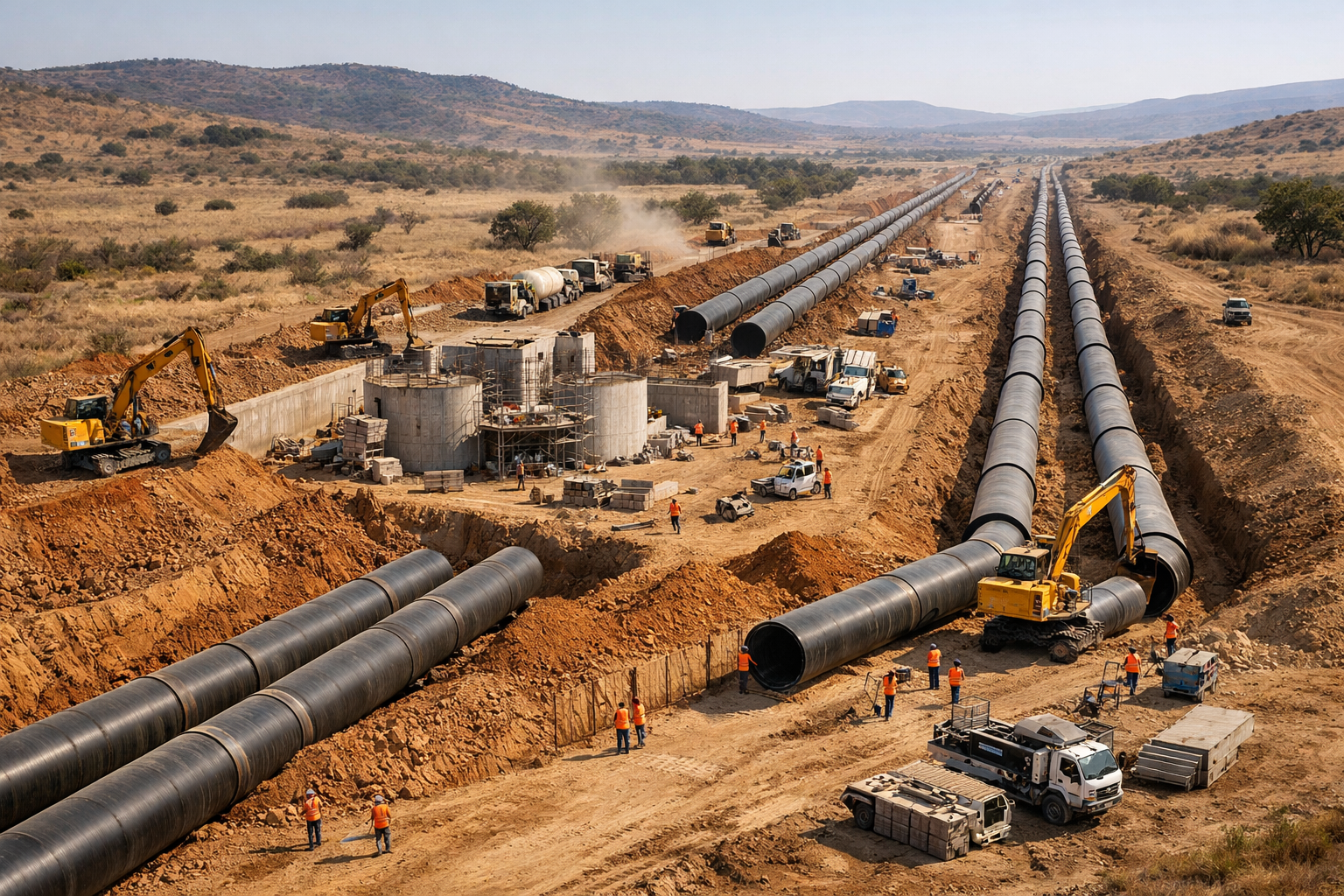
Lesotho Highlands Water Project Phase II is the flagship – multi-year, multi-billion-rand commitment to secure Gauteng’s water supply long-term. Phase construction means multiple tender packages spanning engineering, construction, civil works, equipment supply, and project management.
Mzimvubu Water Project in the Eastern Cape includes the Ntabelanga Dam and associated bulk infrastructure. Eastern Cape has historically struggled with water security, so this isn’t just about supply – it’s about regional economic development tied to agricultural and industrial growth.
Then there’s the emergency groundwater projects, bulk pipeline schemes (like the uMshwathi system currently being tendered), reservoir construction, and wastewater treatment upgrades across metros. Some of these tenders are already live. Others will drop over the next 18–24 months as government operationalises the SONA commitments (Source: Global Tenders, South Africa Water and Sanitation Tenders, 2026).
And here’s where positioning becomes critical: by the time these tenders close, the winners have already done the work. They’ve secured funding commitments, verified their supplier networks, built relationships with subcontractors, and stress-tested their operational capacity. The tender submission is just the final step in a process that started months earlier.
The uncomfortable reality: capability doesn’t equal positioning
You can have a CIDB Grade 9 CE rating. You can have 20 years of water infrastructure experience. You can have a proven track record on R50M municipal projects. And still not be positioned to win a R300M tender tied to SONA’s water commitments.
Because positioning isn’t just about what you’ve done. It’s about what you can fund.
The working capital trap
Government contracts at this scale operate on 60–90 day payment cycles. Sometimes longer if there are approval delays, invoice processing backlogs, or disputes over milestones. You mobilise equipment, hire subcontractors, procure materials, manage labour – all upfront, all out of pocket.
On a R100M contract, you might need R30M–R40M in working capital before you see your first payment. On a R300M project? You’re looking at R80M–R100M. And if the contract spans 18–24 months with phased payments, you’re essentially running a capital-intensive operation where your cash is always 60–90 days behind your costs.
Banks look at this and see risk. They want collateral. They want personal guarantees. They want a credit history that proves you’ve already survived contracts this size (which is circular logic – you can’t build that history without funding your first big contract).

This is where most capable contractors hit the ceiling. Not because they can’t do the work. Because they can’t fund doing the work.
Why traditional funding models fail at scale
Traditional bank loans look backwards. They want to see collateral, credit scores, audited financials, three years of profitable operation. If you’re a mid-sized contractor scaling up from R20M–R50M projects to R200M–R500M infrastructure work, you don’t tick those boxes yet.
Even if you get approved, the terms don’t match the contract structure. A 12-month loan doesn’t align with an 18-month project. Fixed monthly repayments don’t sync with government’s phased milestone payments. And the interest rates assume you’re borrowing for general business use, not for a confirmed, contracted opportunity with a defined end buyer.
The mismatch creates friction. You’re trying to force a square peg (traditional lending) into a round hole (project-based delivery with delayed payment cycles).
Who’s actually positioned to win (and why)
Let’s be direct. Contractors positioned to win R156 billion water infrastructure tenders share three characteristics that have nothing to do with technical skill:
1. They have funding infrastructure in place before bidding
Positioned contractors don’t scramble for funding after winning a tender. They’ve already established relationships with funders who understand purchase order financing, invoice discounting, and project-based capital deployment. When the tender award letter arrives, they can mobilise within days – not weeks or months.
This isn’t about having deep pockets. It’s about having access to capital structures that match government contract payment terms. Funders who assess the opportunity (the contract itself) rather than just the contractor’s historical balance sheet.
2. They understand the economics of saying no
Counter-intuitively, the best-positioned contractors know which tenders to avoid. They’ve run the numbers on working capital requirements, delivery timelines, penalty clauses, and profit margins. They know that some contracts – even big, prestigious ones – will bankrupt you if the economics don’t work.
A R400M contract with 120-day payment terms, 10% profit margin, and liquidated damages for delays? That’s a trap, not an opportunity. The contractors who recognise this and walk away are more likely to survive long enough to win the contracts that actually make sense.
The funding reality for water infrastructure contracts
Most contractors discover the funding gap after winning the tender. By then, it’s a crisis. The smart ones assess funding capacity before submitting the bid. They know the exact working capital requirement, they’ve stress-tested their supplier network, and they’ve confirmed funding availability with partners who understand government contracts.
This is where purchase order funding changes the equation. Instead of waiting 90 days for government to pay, you access capital to deliver the project immediately. The funder gets repaid when the department pays. You focus on delivery, not on managing a cash-flow crisis.
3. They’ve built operational capacity to deliver concurrently
R156 billion in water infrastructure means multiple tenders closing around the same time. Positioned contractors aren’t just funded for one big project – they’ve got the operational bandwidth to manage two or three simultaneously. That means project managers, site supervisors, quality control teams, supplier relationships, and financial systems that can handle concurrent delivery without everything breaking.
Under-positioned contractors win one big contract and then can’t bid on the next three because all their resources are tied up. Over-positioned contractors stack projects, knowing that their funding and operational infrastructure can handle the load.
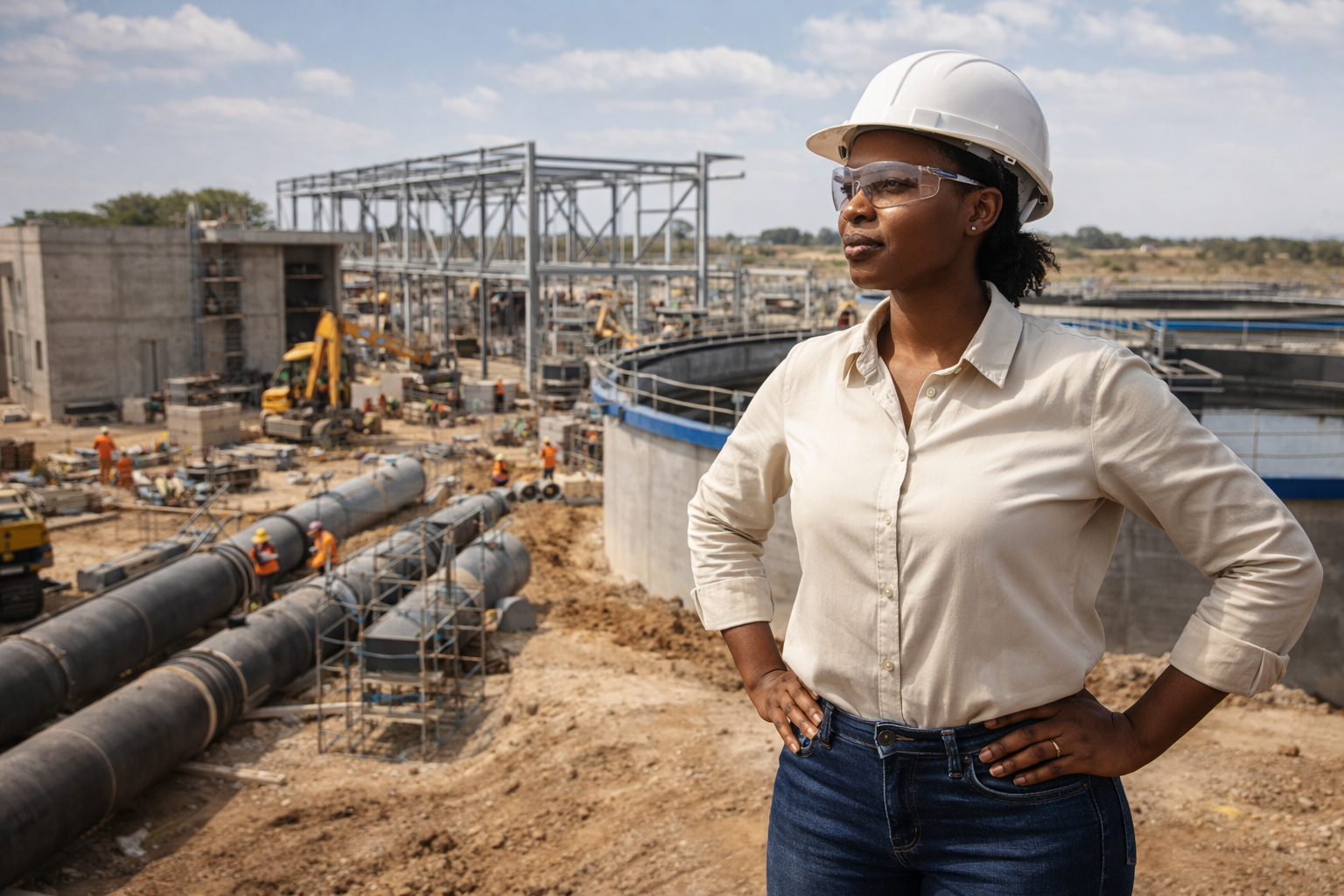
What “not positioned” actually looks like
Here’s the scenario nobody talks about openly: You’re a mid-tier contractor with solid experience. You’ve delivered R30M–R50M municipal water projects. You’ve got a CIDB 7 CE grading. You’re tax compliant, CSD registered, and your technical proposal for the R250M reservoir project is genuinely excellent.
You win the tender. There’s champagne. Your team celebrates. And then you sit down with your CFO and realise you need R70M in working capital to deliver Phase 1, and you’ve got R12M in the bank.
You approach your bank. They offer a R15M overdraft at 14% interest, secured against your office property and the director’s personal surety. That doesn’t even cover the first supplier payment for materials.
You go to your suppliers. Some will extend 30-day credit terms, but not on orders this size. They want payment upfront or within 7 days. Your subcontractors need deposits before they’ll mobilise crews.
Three weeks after winning the tender, you’re negotiating with the department to extend the mobilisation deadline because you haven’t solved the funding problem yet. Six weeks in, the department starts asking pointed questions about your capacity to deliver. Two months later, they’re considering contract cancellation and retendering.
You didn’t fail because you couldn’t do the work. You failed because you weren’t positioned to fund doing the work. And now you’ve got a failed contract on your record, which makes the next tender even harder to win.
That’s what “not positioned” looks like. It’s not a skills problem. It’s a capital structure problem.
Positioning isn’t about perfection – it’s about honesty
Nobody starts out positioned for R500M contracts. Every major contractor in South Africa today started with smaller projects and scaled up. The difference between the ones who made it and the ones who didn’t wasn’t talent or work ethic. It was honest self-assessment about readiness.
Positioned contractors ask harder questions before bidding: Do we have the working capital to deliver without choking our cash flow? Have we stress-tested our supplier relationships at this procurement volume? Can we manage a 90-day payment cycle on a contract this size? What happens if there are delays or disputes – can we sustain operations for an extra 60 days without payment?
If the answers expose gaps, they either fix the gaps before bidding (by securing funding commitments, restructuring supplier terms, building operational redundancy) or they don’t bid at all. Because winning a contract you can’t fund is worse than not winning it in the first place.

The next 18 months will separate the positioned from the hopeful
SONA 2026 put R156 billion in water infrastructure on the table. National Treasury is operationalising the commitments. Tenders are being drafted. Procurement timelines are being set. The work is coming.
And over the next 18–24 months, we’ll see which contractors were positioned and which were just hopeful. The hopeful ones will submit great technical proposals, win tenders, and then struggle to deliver because they didn’t solve the funding problem first. The positioned ones will submit equally strong proposals – but when they win, they’ll mobilise fast, deliver clean, and be ready to bid on the next project before the ink dries on the first completion certificate.
The difference isn’t capability. It’s infrastructure. Financial infrastructure. Operational infrastructure. Strategic infrastructure that says, “We didn’t just plan to win this tender. We planned to deliver it, get paid, and win three more like it.”
If you’re eyeing SONA’s R156 billion water opportunity, the question isn’t “Can we do the work?” It’s “Are we positioned to fund doing the work?” Because in 18 months, when the tenders start closing and contracts start getting awarded, that second question is the only one that will matter.
Ready to position your business for large-scale water infrastructure contracts?
Winning the tender is step one. Funding delivery is where most contractors hit the wall. Sourcefin provides purchase order funding and invoice discounting specifically for contractors delivering on government infrastructure projects. We assess the opportunity, not just your balance sheet. Apply for PO funding.
Sources & references
National Treasury. SONA 2026 Budget Breakdown. February 2026. Retrieved from www.treasury.gov.za
SAnews. “SONA 2026 in Numbers.” February 15, 2026. Retrieved from www.sanews.gov.za
Infrastructure News. “Key Infrastructure Takeaways From SONA 2026.” February 13, 2026. Retrieved from infrastructurenews.co.za
Global Tenders. “South Africa Water and Sanitation Tenders.” 2026. Retrieved from www.globaltenders.com
African Insider. “SONA 2026: 10 Key Plans Shaping South Africa’s Future.” February 13, 2026. Retrieved from www.africaninsider.com