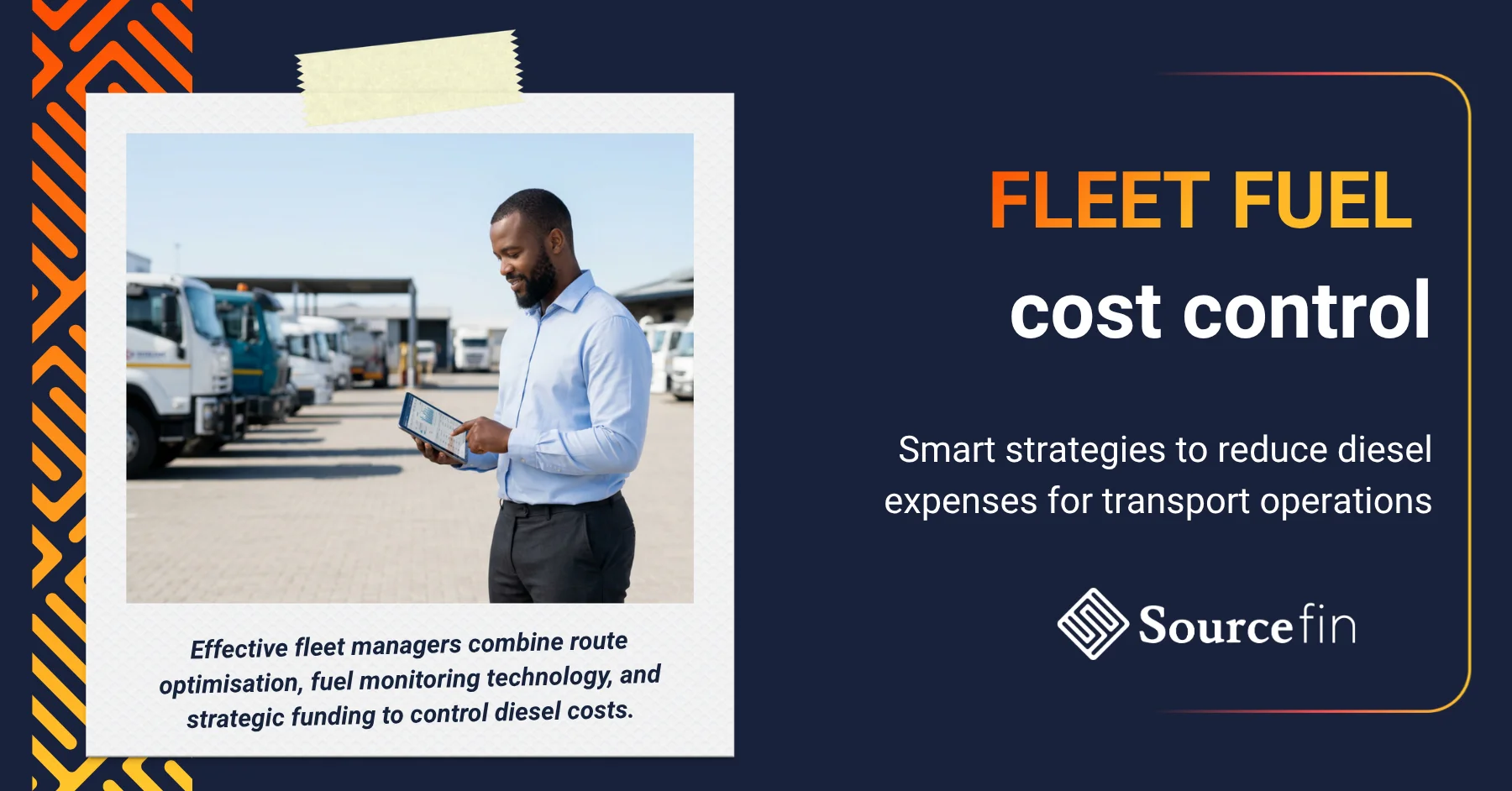

Transport fleet fuel cost management South Africa combines operational efficiency strategies with working capital solutions. Fleet operators reduce diesel expenses through route optimisation, fuel monitoring systems, and driver behaviour training whilst using invoice discounting to accelerate receivables and purchase order funding to manage contract delivery during price volatility.
When you operate a transport fleet in South Africa, diesel isn’t just an expense – it’s the foundation of your entire cost structure. For most logistics businesses, fuel represents 30% to 40% of total operating costs. That equation held when diesel prices moved predictably. It broke in April 2026 when diesel jumped by R7.37 per litre, creating immediate pressure on operating margins for every truck on the road.
A transport company running 20 commercial vehicles, each consuming 15,000 litres monthly, suddenly faced an additional R2.2 million in annual diesel costs. When you’re operating on fixed-rate contracts with clients who won’t absorb fuel surcharges mid-term, that increase comes straight from profit margins. Transport fleet fuel cost management South Africa businesses need isn’t theoretical – it’s the difference between sustainable operations and financial stress.
The Transport Fleet Diesel Cost Reality
Road freight dominates South African logistics, accounting for approximately 63% of all freight tonne-kilometres according to industry data. Diesel powers nearly every medium and heavy commercial vehicle moving goods across provinces. When the South African Freight and Logistics Association responded to April 2026’s fuel increases, their message was clear: transport and logistics sectors feel diesel price impacts first and hardest.
The Road Freight Association noted that the R0.62 to R0.65 per litre March increase already placed immediate cost burdens on daily operations. April’s R7.37 jump magnified that pressure exponentially. For transporters operating on tight contracts or fixed-rate agreements, absorbing these increases isn’t sustainable. Eventually, higher fuel costs translate into freight tariff adjustments, but there’s often a lag – months where businesses carry the cost themselves.
This creates a working capital challenge. You purchase diesel today at R25+ per litre. Your client pays freight charges 30 to 60 days later based on contracts signed when diesel was R18 per litre. That gap between procurement costs and revenue recovery strains cash flow, especially for small and medium fleet operators without large cash reserves.
Route Optimisation Reduces Fuel Consumption
The most effective transport fleet fuel cost management South Africa strategy starts with using less diesel per kilometre. Route optimisation software analyses delivery schedules, traffic patterns, and vehicle capacity to minimise unnecessary distance. A Gauteng to Durban haul that saves 50 kilometres through better routing saves approximately 40 litres of diesel at current consumption rates.
Modern fleet management systems integrate GPS tracking with route planning tools. You see exactly where vehicles are, which routes they’re taking, and where inefficiencies exist. Drivers deviating from optimised routes show up immediately. Unnecessary detours, whether from driver preference or navigation errors, consume fuel that directly impacts your bottom line.
Consolidating deliveries reduces total kilometres travelled. Instead of three partially loaded trucks making separate runs, one fully loaded vehicle completes the same work using a third of the fuel. The operational complexity increases – coordinating pickups and drop-offs requires better logistics planning – but the diesel savings justify the effort when prices surge.
Fuel Monitoring Systems Cut Waste and Theft
Fuel theft remains a persistent challenge for South African transport fleets. Drivers siphoning diesel, fraudulent fuel card transactions, and unexplained consumption variances erode profitability silently. Fuel monitoring systems eliminate these blind spots by tracking every litre from purchase to consumption.
Advanced fuel sensors measure tank levels continuously, alerting fleet managers immediately when fuel drains without corresponding engine hours or distance travelled. The 2Bio fuel sensors available in South Africa can even detect when foreign substances – paraffin or petrol – are added to diesel tanks, providing real-time contamination alerts.
Fleet operators report significant savings after implementing monitoring systems. One garage owner using SmartFuel systems in Johannesburg increased monthly fuel sales by 140,000 litres through better account management and theft prevention. Whilst that example focuses on retail fuel, the same technology protects transport fleet inventory. When diesel costs R25+ per litre, preventing theft of even 500 litres monthly saves R12,500 – R150,000 annually.
Driver Behaviour Training Improves Efficiency
Driver behaviour directly impacts fuel consumption. Aggressive acceleration, excessive idling, and poor gear selection can increase diesel usage by 20% to 30% compared to efficient driving techniques. When fuel prices spike, those inefficiencies become expensive quickly.
Training programmes teach drivers fuel-efficient techniques: smooth acceleration, maintaining steady speeds, anticipating traffic flow to avoid harsh braking, and minimising idle time. Some transport fleet fuel cost management South Africa programmes include in-cab coaching systems that provide real-time feedback when drivers exhibit wasteful behaviours.
The challenge is enforcement. Training works only if drivers apply learned behaviours consistently. Fleet management systems that track acceleration patterns, braking intensity, and idle time help managers identify which drivers need additional coaching and which consistently demonstrate efficient techniques. Performance-based incentives – bonuses for drivers maintaining the best fuel economy – reinforce good habits.
Fixed-Rate Contracts and Fuel Price Volatility
Fixed-rate transport contracts create the same vulnerability fuel tender businesses face: you commit to pricing based on current diesel costs, but your actual procurement expenses fluctuate with monthly price adjustments. When diesel increases R7+ per litre overnight, your contracted revenue doesn’t adjust to match.
Some transport contracts include fuel escalation clauses that adjust pricing monthly based on official fuel price changes. These clauses protect both parties – transport operators don’t absorb unexpected increases, and clients understand that fuel volatility affects logistics costs. Negotiating escalation clauses into new contracts provides crucial protection during volatile periods.
For existing fixed-rate contracts without escalation clauses, the burden falls entirely on fleet operators. You deliver the same service at higher cost, accepting reduced margins until contract renewal. This is where operational efficiencies – route optimisation, fuel monitoring, driver training – become essential. Every litre saved through better operations offsets some margin erosion from price increases.
Invoice Discounting for Fleet Operating Expenses
Operational efficiency addresses per-kilometre costs. Working capital funding addresses cash flow timing. Invoice discounting converts your unpaid freight invoices into immediate cash, accelerating the gap between diesel procurement and client payment.
Here’s the transport fleet fuel cost management South Africa application: you complete a delivery run, invoice your client, and wait 30 to 60 days for payment. Meanwhile, you need to refuel vehicles for tomorrow’s runs. Invoice discounting advances 75% to 85% of invoice value within 24 to 48 hours. That cash pays for this week’s diesel purchases before prices potentially increase again.
For businesses with ongoing supply chain delivery contracts, invoice discounting creates predictable working capital. Instead of constantly juggling which bills to pay whilst waiting for client payments, you maintain steady cash flow. Diesel suppliers get paid on time, protecting your negotiating position for bulk purchase discounts.
The Sourcefin approach to invoice discounting focuses on your client relationships and contract strength rather than perfect credit history. Government logistics contracts and SOE freight agreements typically qualify because the end buyer’s ability to pay is strong, even if your fleet business has limited track record.
Long-Term Fleet Fuel Strategy
April 2026’s diesel crisis won’t be the last price shock. Middle East supply disruptions, exchange rate volatility, and domestic tax policy changes all affect fuel pricing. Building resilience into your transport fleet fuel cost management South Africa approach means preparing for future volatility rather than reacting to each price jump.
Establish working capital facilities before you need them. When cash flow is comfortable, approach funders to set up pre-approved invoice discounting limits. If diesel prices spike again, you draw down immediately instead of scrambling for emergency financing during a crisis. The facility sits idle when not needed but provides crucial speed when markets move against you.
Invest in fuel efficiency technology incrementally. You don’t need to implement comprehensive monitoring systems, route optimisation software, and driver training simultaneously. Start with the highest-impact intervention for your specific operation – perhaps fuel monitoring if theft is a concern, or route optimisation if vehicles travel long distances. Build capabilities over time as savings justify additional investment.
Diversify your client base to reduce exposure to any single contract’s fixed pricing. A transport business deriving 70% of revenue from one client with unfavourable fuel terms has little negotiating power. Spreading revenue across multiple clients with varying contract structures provides flexibility to prioritise work with better fuel adjustment provisions when prices surge.
Technology and Funding Working Together
The most effective transport fleet fuel cost management South Africa strategies combine operational improvements with financial tools. Route optimisation and fuel monitoring reduce litres consumed per delivery. Invoice discounting and purchase order funding ensure you have working capital to operate efficiently regardless of fuel price movements.
A transport operator implementing both approaches sees compounding benefits. Better fuel efficiency improves margins directly. Faster cash conversion through invoice discounting lets you purchase diesel in bulk when prices temporarily dip, locking in better rates. The combination creates resilience that neither operational efficiency nor funding alone provides.
The businesses navigating diesel price volatility successfully aren’t hoping for stable prices or government relief. They’re building operational discipline through technology and protecting cash flow through strategic funding partnerships. At Sourcefin, we’ve backed South African SMMEs with over R2.6 billion in funding because we understand that when your business has solid opportunities, working capital shouldn’t constrain growth.
Sources & References
Government announcements: Department of Mineral and Petroleum Resources (DMPR) fuel price adjustments (April 1, 2026)
Industry analysis: South African Freight and Logistics Association (SAFLA) fuel impact statements, Road Freight Association March 2026 analysis
Market data: South Africa Freight & Logistics Market (2026 projections), Afrirent freight transportation statistics
Technology providers: SmartFuel fuel management systems, Cartrack fleet monitoring solutions
FAQs
What is transport fleet fuel cost management?
Transport fleet fuel cost management refers to strategies businesses use to control diesel expenses across their vehicle operations. This includes operational approaches like route optimisation, fuel monitoring systems, and driver behaviour training to reduce litres consumed per kilometre, combined with financial strategies like invoice discounting to manage cash flow when diesel prices surge. Effective fleet fuel management balances operational efficiency improvements with working capital solutions that protect margins during price volatility.
How much do fuel costs impact transport fleet operations?
Fuel typically represents 30% to 40% of total operating costs for South African transport and logistics businesses. When diesel prices increase significantly, this directly impacts profitability, especially for fleets operating under fixed-rate contracts that don’t include fuel escalation clauses. Road freight accounts for approximately 63% of freight tonne-kilometres in South Africa, making diesel the primary cost driver for the sector. A fleet of 20 commercial vehicles can see annual diesel costs increase by over R2 million from a R7 per litre price jump.
What are fuel escalation clauses in transport contracts?
Fuel escalation clauses are contractual provisions that adjust transport pricing monthly based on official fuel price changes published by the Department of Mineral and Petroleum Resources. These clauses protect both transport operators and clients from fuel price volatility by automatically adjusting rates when diesel costs change. Without escalation clauses, fleet operators absorb the entire impact of fuel price increases on fixed-rate contracts, which can eliminate profit margins during volatile periods. Negotiating escalation clauses into new contracts provides crucial protection during unpredictable fuel markets.
How do fuel monitoring systems work for transport fleets?
Fuel monitoring systems use advanced sensors installed in vehicle fuel tanks to track diesel levels continuously in real time. These systems alert fleet managers immediately when fuel drains without corresponding engine hours or distance travelled, indicating potential theft or leakage. Modern sensors can detect foreign substances added to diesel tanks and integrate with GPS fleet tracking to correlate fuel consumption with routes travelled. By eliminating blind spots in fuel usage, monitoring systems help transport businesses prevent theft, identify inefficient vehicles, and verify actual consumption against expected performance.
Can driver behaviour training really reduce fleet fuel costs?
Driver behaviour significantly impacts fuel consumption, with aggressive acceleration, excessive idling, and poor gear selection increasing diesel usage by 20% to 30% compared to efficient driving techniques. Training programmes teach drivers fuel-saving behaviours like smooth acceleration, maintaining steady speeds, and minimising idle time. The key to success is enforcement through fleet management systems that track driver performance and identify who needs additional coaching. When combined with performance-based incentives for drivers maintaining the best fuel economy, behaviour training delivers measurable consumption reductions that directly improve fleet profitability.
How does invoice discounting help transport fleets manage diesel costs?
Invoice discounting accelerates cash flow by converting unpaid freight invoices into immediate working capital. Transport businesses complete deliveries, issue invoices, then wait 30 to 60 days for client payment. Invoice discounting advances 75% to 85% of invoice value within 24 to 48 hours, providing cash to purchase diesel for ongoing operations before the next price increase potentially hits. This compresses the gap between procurement expenses today and client payment later, preventing cash flow constraints that force businesses to delay fuel purchases or miss bulk discount opportunities. For fleets with ongoing delivery contracts, invoice discounting creates predictable working capital regardless of fuel price movements.
What technology investments provide the best return for fleet fuel management?
The highest-impact technology investment depends on your fleet’s specific challenges. If fuel theft is a concern, monitoring systems with real-time tank sensors provide immediate returns by eliminating losses. For fleets travelling long distances, route optimisation software delivers savings through reduced kilometres per delivery. Businesses with driver performance issues benefit most from in-cab coaching systems that provide real-time feedback. Rather than implementing everything simultaneously, start with the intervention addressing your largest fuel inefficiency, then build capabilities incrementally as savings justify additional investment. Combined with working capital solutions like invoice discounting, technology investments compound their impact by improving both operational efficiency and financial resilience.