
Purchase order funding without a track record in SA
You won the order but the business is young and there is no collateral. The three checks a purchase order funder actually runs, and what gets deals rejected.
On this page
- Key takeaways
- What is purchase order funding without a track record?
- Why do banks turn down SMMEs that have won the work?
- How does a funder decide? The three-question trust triangle
- What actually gets applications rejected?
- How quickly can funding come through?
- Is it more expensive than a bank overdraft?
- What if you're not funding-ready yet?
- Where Sourcefin fits
- Frequently asked questions
Purchase order funding without a track record is possible in South Africa because funders like Sourcefin assess the opportunity, not your credit history. They ask three questions: can they trust you, can you deliver the order, and will your end buyer pay in full and on time?
Key takeaways
- A purchase order is a binding commitment to pay on delivery, so the order itself is the security.
- The decision rests on three checks: trust, delivery capability, and whether the end buyer will pay.
- Being upfront about a judgment or a credit issue strengthens the trust check. Being caught out destroys it.
- Two of the most common reasons deals stall are nothing to do with the business: applying for the wrong type of funding, and not answering the phone afterwards.
- Compare the cost against the cost of not delivering at all, not against an overdraft you would never be granted.
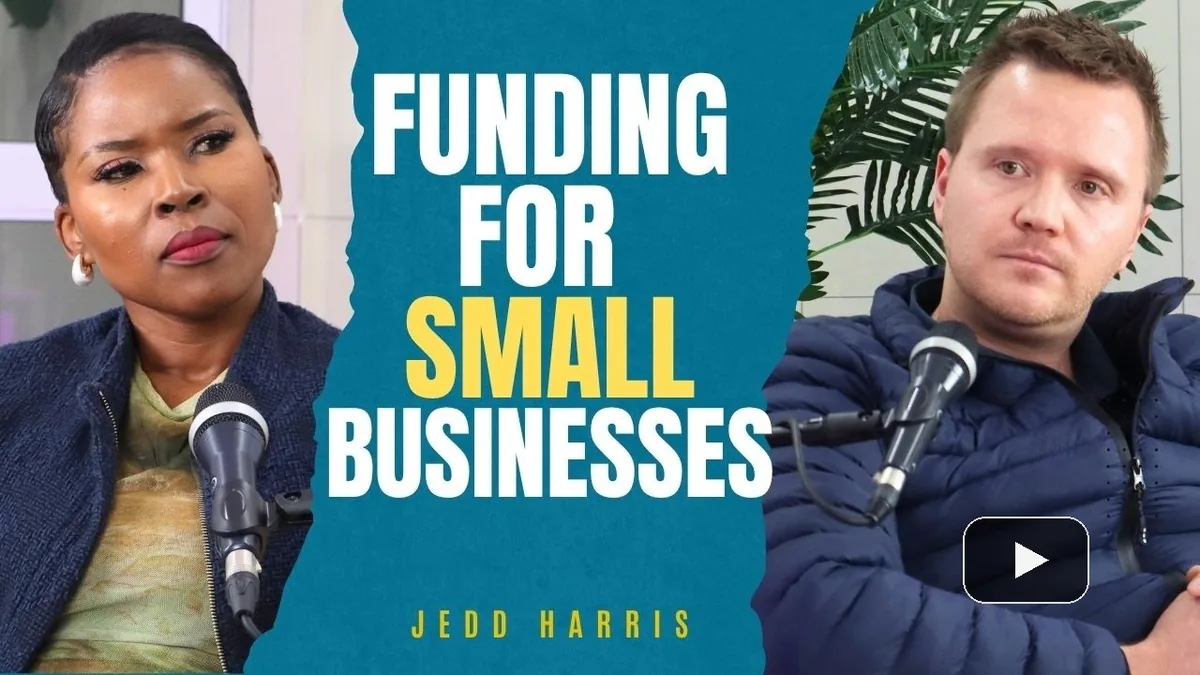
It is one of the most common worries a small business owner carries into a funding conversation. You have won the work, the purchase order is in your hand, and the delivery deadline is real, but the business is young, the bank statements are thin, and there is no collateral to pledge. Speaking on Lerato Sebata's Procurement Dialogues, Sourcefin's Chief Strategy Officer Jedd Harris put it plainly: Sourcefin is built to back exactly that kind of business.
This article is the purchase order specific view. For the wider picture across every product, start with our guide to business funding without a track record.
What is purchase order funding without a track record?
The mechanism is straightforward. A purchase order is a legally binding commitment that if you deliver what you promised, on time and to spec, the end buyer is obliged to pay. Sourcefin funds the delivery of that order and is repaid when the end buyer pays. The security is the opportunity itself, which is why a limited history need not be the thing that stops you. To understand the product in full, see how purchase order funding works, and if the sticking point is security rather than history, our guide to purchase order funding without collateral covers how those deals are structured.
Why do banks turn down SMMEs that have won the work?
This is where most SMMEs get rejected for funding, and it helps to understand why. A traditional lender underwrites the balance sheet behind you. It looks backwards at credit history, security, judgments and years of trading, because its model is built to ask a single question: is there proof you can pay us back, and something to recover if you cannot?
That is a different mandate, not a moral failing on either side. As Jedd framed it on the show, the forgotten SMME is not a business banks are unable to see the value in, it is a business their model was not built to serve yet. A first-generation business with a genuine opportunity is often mathematically excluded from traditional lending simply because it has a future rather than a history.
"Sourcefin's taken the view: why don't we underwrite the future, not necessarily the history."
How does a funder decide? The three-question trust triangle
Understanding how funders assess applications changes how you prepare for one. Sourcefin structures its assessment as a triangle with three checks, and the funding decision rests on answering all three as strongly as the deal allows.
- Can we trust you? Not "is your credit perfect", but "are you honest with us". If the credit report is going to show something, say so upfront. A candid "Covid was tough and here is what happened" builds trust. A "squeaky clean" story that the checks then contradict destroys it.
- Can you deliver? Either you have a record of delivering this kind of work, or you have a supplier who is willing and able to deliver it. Sourcefin's own supply-chain team often helps here.
- Will your end buyer pay? When you deliver, will the client at the end of the deal be able to pay you in full and on time?
Technology and data speed the assessment up, but there is always a person at the end of the decision. That matters, because when something goes wrong on a live deal, the relationship with your deal manager is what gets it solved.

What actually gets applications rejected?
Sourcefin fields thousands of funding requests a month, around 4,500 on the figure Jedd gave on the show, so the reasons deals do not proceed are well worn. Three stand out.
First is funding fit. Many requests simply fall outside a funder's mandate, meaning the funding someone needs is not the funding that funder offers. This is an awareness gap more than an availability gap. There is a specific type of funding for a specific business problem, and starting with the wrong one leads to a demoralising run of rejections that says nothing about the quality of the business.
Second, and more surprising, is contactability. A large share of applicants who would qualify simply never answer the phone after applying. If you need funding urgently, stay reachable once you have applied.
Third is the delivery and end-buyer legs of the triangle: no evidence you can deliver, no margin built into the deal, or an end buyer who may not pay reliably. If the timing is tight, funding needs to be planned into the bid from the start rather than scrambled for once the work is awarded.
How quickly can funding come through?
Sourcefin aims to make a first phone call within about 15 minutes of an application during business hours, issue a term sheet within 24 to 48 hours, and fund a first deal within roughly 5 to 10 working days, because there is onboarding and compliance to complete the first time round. On a second or third deal it can be same-day, and repeat clients can be set up with a facility they draw down against as each invoice or order arrives.
Where the work is already done and the wait is a slow-paying client, invoice funding for unpaid invoices advances up to 75% of the invoice value now, with the balance released when your client pays.
Is it more expensive than a bank overdraft?
It is the question Jedd said he gets most at conferences, and his answer is about opportunity cost, not price. Comparing a purchase order funder's charge directly to an overdraft is comparing two different products. The real question is whether an overdraft would even be extended for the opportunity in front of you. If your turnover is R1 million and the life-changing order needs R3 million, a lender securing against your past cannot bridge that gap, and the opportunity is lost.
There is also an offset most people miss. On purchase order deals Sourcefin structures the arrangement as a profit share, and because Sourcefin comes from the supply side, it will often work with you to source the goods at a better price. Those savings increase the profit that is shared, which can leave you earning more on the deal than you would have alone, while offsetting the cost of the funding. Sourcefin publishes no rates, because every deal is priced to its own risk, but the principle holds: weigh the cost against the cost of not delivering at all.
What if you're not funding-ready yet?
Not every business is ready for funding on the day it first asks, and Sourcefin's position is that a "no" for now should never be a closed door. As Jedd put it, "if we can't fund, we must always enable." If a strong deal has compliance gaps, SARS shortfalls or judgments, the deal manager will often help you get funding-ready during the application rather than turn you away.
Around that sits a wider ecosystem for anyone still building towards their first fundable opportunity: the Great Enabler podcast to learn, Tender Central to find government tenders for free, and Affiliate Hub to share opportunities and earn. It is alternative funding for SMMEs in South Africa framed as a journey, not a single yes-or-no gate.
Where Sourcefin fits
Sourcefin is a funding partner, not a lender, built for the forgotten SMME: the registered, first-generation business that has proven its concept and won the work, but does not yet have the history a bank needs to see. To date it has deployed over R3 billion, enabled more than 2,000 South African SMMEs, kept its all-time bad-debt ratio below 2%, and seen every funded deal through to delivery, work recognised as the first-ever winner of the NSBC National Funder Award. If you have a purchase order, a contract or an unpaid invoice and an opportunity worth backing, the history behind you matters far less than the promise in front of you.
Won the order? Get the capital. Apply for funding and see how quickly a real opportunity can move.
Sources & references
- Jedd Harris on Procurement Dialogues with Lerato Sebata – the full episode this article draws on.
- National Small Business Chamber – awarding body for the National Funder Award.
- South African Revenue Service – tax compliance status for business owners.
- National Treasury of South Africa – public procurement and payment rules for awarded work.
Frequently asked questions
Can you get purchase order funding without a track record?
Purchase order funding without a track record is possible in South Africa because funders like Sourcefin assess the opportunity, not your credit history. They ask three questions: can they trust you, can you deliver the order, and will your end buyer pay in full and on time?
Why do banks decline SMMEs that have already won a tender?
Traditional lenders underwrite your history, so they look for credit record, security and years of trading before approving funding. A first-generation business with a real opportunity is often mathematically excluded, because the model was built to price a proven past rather than a future contract. It is a difference of mandate, not of willingness.
What do purchase order funders look for in an application?
Sourcefin assesses three things: whether it can trust you, whether the order can be delivered by you or a capable supplier, and whether your end buyer will pay in full and on time. Being open about any credit issues upfront strengthens the first and most important check.
What is the minimum for purchase order funding in South Africa?
Sourcefin's funding starts at around R250,000 and extends to R100 million and beyond. The minimum reflects the cost of the hands-on supply-chain, sourcing and delivery support each deal receives, though smaller orders that unlock larger ones can still be structured.
How long does purchase order funding take to pay out?
Sourcefin aims to call within about 15 minutes of an application in business hours, issue a term sheet within 24 to 48 hours, and fund a first deal within roughly 5 to 10 working days once onboarding is complete. Second and third deals can be same-day, and facilities allow instant drawdowns.
What are the best alternative funding options for SMMEs in South Africa?
Alternative funding for SMMEs in South Africa is about funding fit: purchase order funding for orders you still need to deliver, and invoice funding for work already done but not yet paid. The key is matching the funding type to the specific problem rather than searching generically.

Sourcefin is a South African alternative finance provider that offers purchase order funding and invoice discounting to SMMEs, enabling businesses to fulfil confirmed purchase orders or tenders and unlock cash flow without collateral. Unlike traditional lenders or banks, Sourcefin also provides end-to-end support including supplier sourcing, logistics, project management, and risk oversight.