
Start a Business with No Money in SA: Real Funding Paths
An honest guide to starting a business with no money in South Africa – minimum costs, proven government programmes and how to fund the work once it lands.
On this page
- Key Takeaways
- The honest minimum to start a business with no money South Africa wide
- Government and NGO programmes that lower the barrier
- Trading models that need very little capital
- The "find the work first, then fund the delivery" path
- What to do BEFORE you apply for funding
- Common traps when starting with no money
- When you're ready to scale: Sourcefin's role
- About the source data
- Frequently asked questions
Start a business with no money South Africa really means starting with very little money – not literally zero rand. The honest path is a low-cost CIPC registration, free SARS and CSD registrations, a no-stock trading model (services, agency or contract delivery) and access to government and NGO support like SEDFA and the NYDA. Once you have a signed contract or invoice in hand, alternative funders can fund the delivery so you keep more of the profit.
Key Takeaways
- Starting a business in South Africa with literally zero rand is rare – the realistic goal is a few hundred rand for registration plus zero stock.
- CIPC registration is a small, one-off cost. SARS, CSD and a basic business bank account are free or near-free.
- Government and NGO programmes – SEDFA, the NYDA, township and women's funds – exist specifically to lower the barrier for first-time founders.
- Service businesses, agency models and dropshipping let you trade with no upfront stock.
- The smartest path in South Africa is winning the work first – through tenders or contracts – and then funding the delivery.
- Skip compliance to save money, and you pay more to fix it later. Get the basics right from day one.
- Beware of "guaranteed funding" scams. Real funders never ask for upfront fees.
The honest minimum to start a business with no money South Africa wide
Let's be straight with each other. You cannot start a business with no money South Africa-wide in the literal sense – nobody starts on zero rand. What you can do is start with very little, and that is a real path many founders walk every year.
The honest minimum looks something like this. Your biggest line item is registering a company with the Companies and Intellectual Property Commission (CIPC). Name reservation costs a small fee, and registering the company itself is also a modest fee – check the current CIPC fee schedule before you apply because these numbers shift from year to year. If you want to keep the cost lower still, you can trade as a sole proprietor (no registration required) until you need to bid for tenders or sign supplier contracts that demand a registered company.
Once registered, almost everything else is free. Registering with SARS for income tax is free. Registering on the National Treasury Central Supplier Database (CSD) is free and required if you ever want to sell to government. Several South African banks offer free or near-free starter business bank accounts – worth shopping around. A simple business email through a free provider costs nothing.
So the realistic minimum is the CIPC fee plus your time. Add a basic prepaid airtime budget and a notebook, and you have what you need to start. For more detail on what early costs to plan for, our practical guide to start-up costs to consider walks through the realistic line items most new founders forget.
One word of caution. Do not skip registration to save the few hundred rand. The cost of fixing your compliance later – paying penalties to SARS, missing tender deadlines because you are not on CSD, losing a client because you cannot invoice them properly – will dwarf the small upfront fee.

Government and NGO programmes that lower the barrier
South Africa has more first-time-founder support than most people realise. The trick is knowing where to look.
The Small Enterprise Development and Finance Agency (SEDFA) – the merged successor to the old Sefa and Seda – is the largest public-sector SMME support body. It offers a mix of business development services (free advice, training, mentorship), blended finance products (a combination of grants and loans for qualifying businesses) and dedicated programmes for specific groups. If you are starting from scratch, the development services side is where you should begin – it costs you nothing.
The National Youth Development Agency (NYDA) serves South Africans aged 18 to 35. It runs grant funding for early-stage youth businesses – modest amounts designed to cover basic stock, equipment or registration. It also runs business development support, mentorship and training. Apply through the NYDA branch network or online portal.
The Spaza Shop Support Fund, announced by Minister of Small Business Development Stella Ndabeni-Abrahams, targets township spaza shops with funding, equipment and compliance assistance. The Township and Rural Entrepreneurship Programme is a similar scheme aimed at SMMEs operating in townships and rural areas where capital and infrastructure are thin on the ground.
For women founders, the Women's Entrepreneurship Fund and related provincial programmes provide grants and concessional finance. For young founders, the Youth Entrepreneurship Fund and the NYDA grant work in parallel. Provincial economic development agencies – the Gauteng Enterprise Propeller (GEP), the Western Cape's Casidra, KwaZulu-Natal's Ithala, the Northern Cape's economic development agency – run their own SMME funds.
The National Small Business Chamber (NSBC) is a private-sector advocacy body that runs free training, free networking events and access-to-market programmes for member SMMEs. Membership costs nothing for the basic tier and is worth the sign-up.
One last point. Public programmes are not lottery tickets. They have application processes, they take weeks or months, and many require proof you have done the basics – company registration, tax compliance, a clear business idea. Treat these as serious applications and they pay off.
Trading models that need very little capital
If you have no money to put into stock or equipment, choose a business model that does not need it. South Africa has several.
Service businesses are the obvious starting point. Cleaning, security, gardening, professional services (bookkeeping, marketing, IT), catering on a small scale, training, hairdressing from a home setup – all need your time and skill far more than they need capital. You charge clients for the service, you pay yourself, and you scale only when the work justifies it.
Agency or brokerage models work the same way. You do not own stock – you connect a buyer with a seller and earn a commission or margin. Recruitment, property letting, insurance broking, freight broking and corporate gifting all fit this pattern.
Dropshipping lets you sell physical goods without holding stock. The customer orders from your storefront, you order from your supplier, the supplier ships directly to the customer, and you keep the margin. It is not a get-rich-quick play – the work is in marketing, customer service and supplier management – but the capital barrier is genuinely low. Our practical walkthrough on how to start and succeed in dropshipping in South Africa covers what to set up first and the common traps.
Service-on-contract is the smartest model for ambitious founders. You sign a contract or accept a purchase order from a client first, the client pays a deposit or agrees to pay on delivery, and you use that commitment to fund the supplies you need. This is the bedrock of how thousands of SMMEs in South Africa actually trade. For the line items that catch new founders out, it is worth scanning our list of start-up costs to consider before you sign your first deal.
The "find the work first, then fund the delivery" path
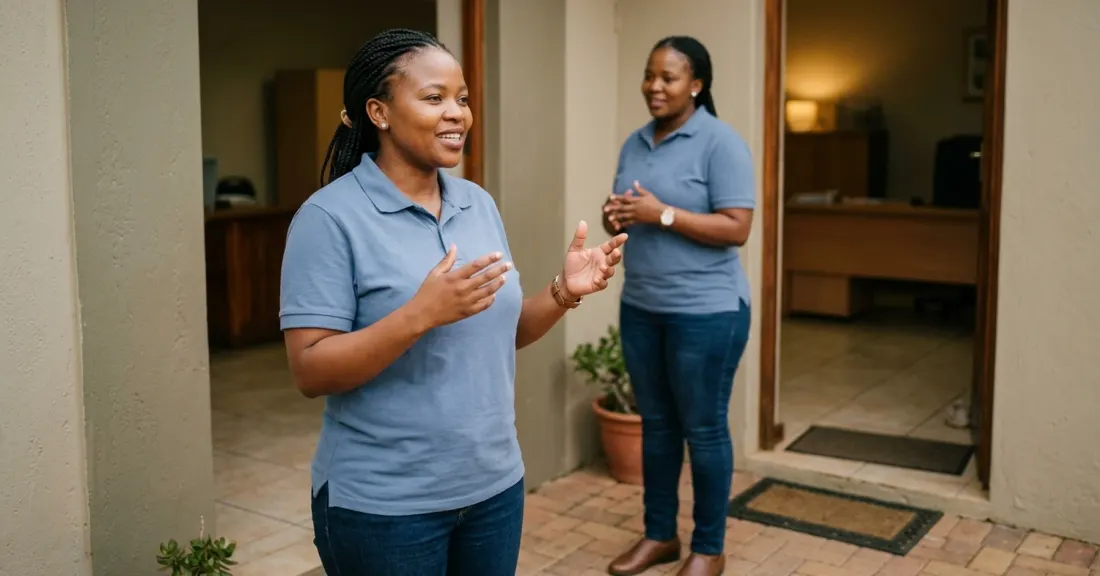
Here is the part most early-stage founders miss. In South Africa, you can win a contract or a tender before you have built much of a business at all – and then access funding to deliver it. This is the path that has built many of the country's most successful SMMEs.
Start with tenders. Government and large private buyers publish thousands of tenders every month. Many of them are open to small, newly registered businesses, especially under the 80/20 preference points system that favours SMMEs and B-BBEE-compliant suppliers. The challenge is finding them and knowing which ones are realistic. TenderCentral, Sourcefin's free tender discovery platform, aggregates verified municipal, provincial and national tenders in one place. Our guide on how to find tender opportunities covers where else to look and how to filter.
Once you have a signed purchase order or a contract in hand, you are no longer a founder with an idea – you are a founder with an order. That changes everything. Alternative funders look at the order itself, the buyer behind it and your ability to deliver. Sourcefin's purchase order funding is built for exactly this scenario – you have won the work but you do not have the cash to buy supplies and pay the deposit. We fund the delivery, you complete the order, the buyer pays, and we settle up. If the work you won is a government tender, tender funding covers the same delivery gap.
The same principle applies to invoices. Once you have delivered the work and issued an invoice, invoice discounting lets you draw cash against that invoice rather than waiting 30, 60 or 90 days for payment. For founders building working capital from a low base, that wait can break the business.
The headline insight is simple. Money follows opportunity. Win the opportunity first. This is how most founders who start a business with no money South Africa offers actually break through – they let the work pull the funding rather than waiting for the funding to chase the work.
What to do BEFORE you apply for funding
If you are going to access government grants, NGO support or alternative funding, get the basics in place first. Funders – including Sourcefin – assess readiness, and a few free admin steps put you ahead of most applicants.
Register your company with CIPC and keep your annual returns up to date. Lapsed annual returns can lead to deregistration, and a deregistered company cannot trade or hold contracts. Our practical guide to CIPC registration and annual returns walks through the steps.
Get tax-compliant with SARS. Register for income tax, register for VAT once you cross the threshold, and request a Tax Compliance Status (TCS) PIN. Many tenders and most funders require a current TCS PIN – without it, you are out before the conversation starts. Our walkthrough on SARS tax compliance for SMMEs covers the practical steps.
Register on the Central Supplier Database. CSD registration is free, online and required for any government work. Our practical CSD registration guide covers what you need before you start.
Get a B-BBEE certificate or affidavit. If your business turnover is under the EME threshold, you qualify for a free sworn affidavit – no audit, no consultant fee. That alone can move you up the points table on tenders.
Open a separate business bank account. Mixing personal and business money is the single most common reason early-stage founders fail their first funding application. Our explainer on the importance of separating business and personal finances covers why this matters and how to do it cleanly.
Common traps when starting with no money
The honest article does not stop at "here are the paths". It tells you where founders trip up.
Borrowing personally to fund a business is the first trap. A personal loan or a credit card balance to buy stock might feel necessary in the moment, but it puts your home, your credit score and your family's stability on the line for a business that may take years to break even. Where you can avoid it, do.
Family loans without clear terms are the second. Money from family is often the difference between starting and not starting – and it is also the most common reason founders lose family relationships. Write the loan down. Agree the repayment schedule. Treat it like any other creditor. The conversation is awkward once. The fight is forever.
Taking on contracts you cannot deliver is the third. New founders, hungry for the win, sign for a R500 000 order with no plan for how to fund the supplies. The supplier asks for a deposit, you panic, the order falls over and your reputation goes with it. Either pre-arrange your funding before you sign or pass on deals you cannot realistically deliver.
Skipping compliance to save money is the fourth. Late SARS submissions, lapsed CIPC annual returns and missing CSD registrations all cost more to fix than to do correctly the first time. Compliance is cheap upfront and expensive on the back end.
Falling for "guaranteed funding" scams is the fifth. If anyone tells you they can "guarantee" SARS clearance, "guarantee" a grant approval or "guarantee" funding for an upfront fee paid into their personal account, walk away. Real funders never ask for money before a deal is signed. Real grants never charge an application fee.
When you're ready to scale: Sourcefin's role
Sourcefin is not a starter-grant agency. We are not the right partner for someone who has no contract, no invoice and no clear opportunity in front of them. We are the right partner once you have something real – a signed purchase order, a delivered invoice, a tender win that needs delivery capital.
That is when our products step in. Purchase order funding covers the cost of supplies and delivery on a confirmed order, structured as a profit-share so we win when you do. Invoice discounting turns an unpaid invoice into cash once the invoice is verified so you do not wait out long payment terms. Banks are built for stability. Sourcefin is built for speed – we are designed for the deals banks structurally cannot fund quickly.
If you are at the right stage, our funding application takes a few minutes. If you are an adviser, accountant or business consultant who supports first-time founders, our AffiliateHub lets you refer clients and earn on every funded deal. For the bigger picture on growing past the first few deals, our guide to scaling your South African SMME covers the next stage.
About the source data
Programme details, registration steps and fee structures referenced in this article come from the official websites of CIPC, SARS, SEDFA, the NYDA, the dtic and the NSBC. Where specific fee amounts are not quoted, that is deliberate – South African government fees adjust each financial year, and the safest practice is to check the current fee schedule on the relevant authority's website before you apply. Programme criteria, qualifying amounts and turnaround times also change with each new financial year and ministerial announcement. Always confirm current eligibility with the source agency before submitting a funding application.
Sources & References
- CIPC – Companies and Intellectual Property Commission – company registration and annual returns
- SARS – South African Revenue Service – tax registration and compliance
- SEDFA – Small Enterprise Development and Finance Agency – public-sector SMME finance and support
- National Youth Development Agency – youth grant funding and business support
- Department of Trade, Industry and Competition – SMME policy and CSD information
- National Small Business Chamber – SMME advocacy and free programmes
Frequently asked questions
Can you really start a business in South Africa with no money?
Not literally zero rand – but very close. The honest minimum is the CIPC registration fee. Tax registration with SARS, CSD registration and many basic business bank accounts are free. Choose a service-based or no-stock trading model, lean on free government and NGO support, and you can start with a few hundred rand and your time.
What is the cheapest way to register a company in South Africa?
Register directly with CIPC online rather than paying a third party. Name reservation is a small fee, and standard company registration is also a modest fee – check the current CIPC fee schedule for exact amounts. Avoid intermediaries that charge marked-up bundles. If you do not need a registered company yet, you can trade as a sole proprietor for free.
What government grants are available for SMME start-ups?
SEDFA offers blended finance and free business development support. The NYDA runs grants for founders aged 18 to 35. The Spaza Shop Support Fund and the Township and Rural Entrepreneurship Programme target specific sectors and locations. Provincial agencies like GEP, Casidra and Ithala run their own funds. Eligibility, amounts and application windows change each financial year, so always check the agency's current notice.
Do I need a B-BBEE certificate from day one?
Not legally, but it helps. If your turnover is below the Exempted Micro Enterprise threshold, you qualify for a free sworn B-BBEE affidavit – no audit, no consultant fee. Having one ready when you bid for tenders or apply to corporate suppliers can move you up the points table and open access to work that B-BBEE-compliant buyers prefer to award.
How do I get funding without a track record?
Win the work first, then fund the delivery. Once you have a signed purchase order, an awarded tender or a delivered invoice, alternative funders look at the order and the buyer rather than your trading history. Sourcefin's purchase order funding and invoice discounting are built exactly for this scenario – the opportunity is the asset, not your past financials.
What is the role of TenderCentral for new businesses?
TenderCentral is a free tender discovery platform that aggregates verified municipal, provincial and national government tenders in one place. For founders starting with little capital, it removes the work of trawling individual government websites. You can filter by industry, value and location, and apply directly through your CSD-registered company once you find a tender that fits.

Sourcefin is a South African alternative finance provider that offers purchase order funding and invoice discounting to SMMEs, enabling businesses to fulfil confirmed purchase orders or tenders and unlock cash flow without collateral. Unlike traditional lenders or banks, Sourcefin also provides end-to-end support including supplier sourcing, logistics, project management, and risk oversight.