
Invoice Discounting Tender Winners South Africa: Real
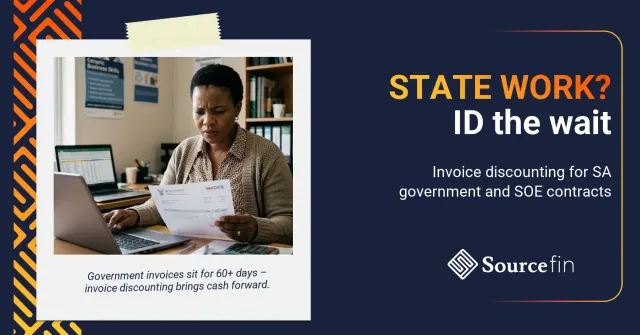
Won a tender, delivered the work, now waiting on payment? Here's how invoice discounting helps SA tender winners bridge the gap until the buyer pays.
On this page
- Key Takeaways
- Invoice Discounting Tender Winners South Africa: Why the Model Fits
- Where Invoice Discounting Fits in the Tender Cycle
- When Tender Winners Most Need Invoice Discounting
- What the Funder Looks at for Tender Receivables
- How to Apply for Invoice Discounting as a Tender Winner
- Combining PO Funding and Invoice Discounting on the Same Tender
- The Bigger Picture for SA Tender Winners
- Frequently asked questions
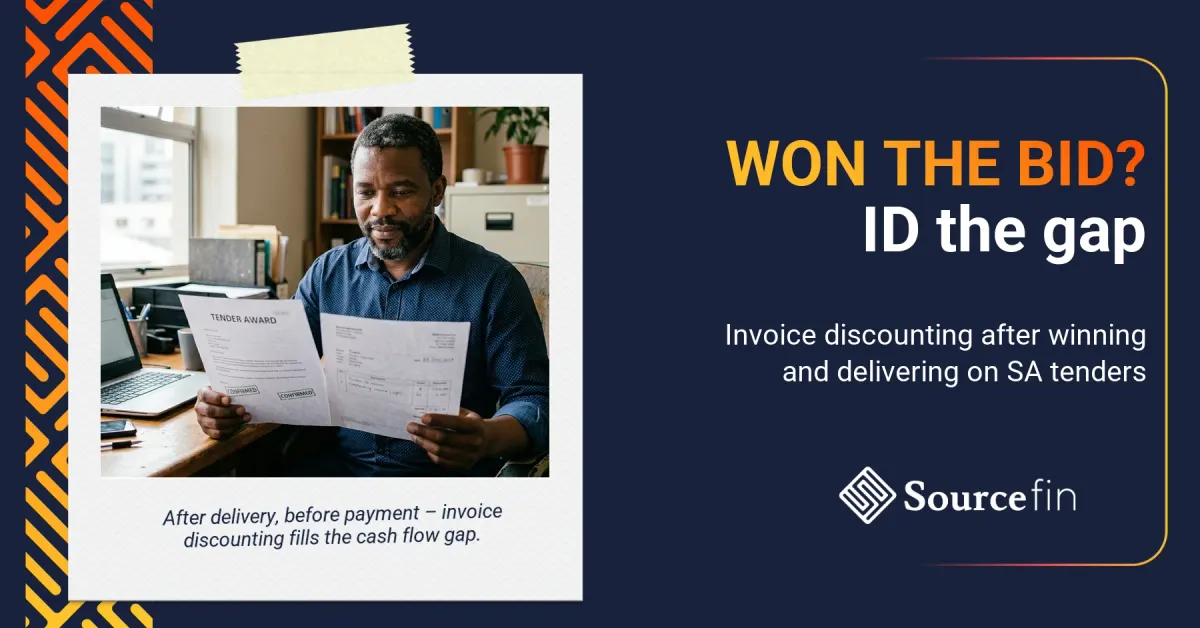
Invoice discounting tender winners South Africa is the funding model designed for the gap between delivering on an awarded tender and getting paid. Once you have completed milestones and issued invoices, the funder advances cash against those receivables. The procuring entity pays per the tender's payment terms, the funder is repaid from that payment, and you operate without absorbing the wait.
Key Takeaways
- Invoice discounting kicks in after delivery and invoicing – it is the post-delivery counterpart to PO funding.
- Most tender contracts in SA carry payment cycles of 30 to 90 days from invoice. Invoice discounting compresses the wait.
- Tender winners typically have strong receivables – government and SOE buyers are creditworthy even when slow to pay.
- Sourcefin funds tender invoice discounting facilities from R250,000 upwards, with deep public-sector experience.
- The facility scales with your invoice book as the contract progresses – it is not a one-shot advance.
- Many tender winners use PO funding for execution and invoice discounting once invoices are issued.
Invoice Discounting Tender Winners South Africa: Why the Model Fits
Winning a tender is an achievement. Delivering it is the start of a different challenge: managing cash flow while waiting for the procuring entity to pay. South African public-sector payment cycles run 30 to 90 days from invoice, sometimes longer. For a tender winner who has just completed a milestone or delivery and issued the corresponding invoice, that wait is the cash flow gap that defines the entire month.
Invoice discounting tender winners South Africa exists for exactly that gap. The funder advances cash against the outstanding tender invoice. The procuring entity pays per the tender's terms. The advance is recovered from that payment. The tender winner has been able to mobilise the next month's work, pay sub-contractors, and meet payroll without absorbing the wait out of cash flow that did not exist.
For broader context on how invoice discounting works, the wider invoice discounting South Africa pillar guide explains the model end to end. The invoice discounting for government contracts guide covers the broader public-sector receivables picture.
Where Invoice Discounting Fits in the Tender Cycle
A typical tender cycle for an SMME runs in three phases:
Phase 1 – Award and mobilisation. The tender is awarded. Working capital is needed for materials, suppliers, sub-contractors, and operational costs. PO funding is usually the right tool here. The PO funding for government tenders guide covers this phase.
Phase 2 – Delivery and invoicing. The work is completed (in milestones for longer contracts, in full for supply contracts). Invoices are issued to the procuring entity. The cash flow gap shifts from "before delivery" to "after invoicing".
Phase 3 – Waiting for payment. The procuring entity processes the invoice and pays per the contract terms. This is where invoice discounting fits. The funder advances against the outstanding invoice so the SMME can keep operating.
For tender winners running multi-month or multi-year contracts, the cycle repeats every invoicing period. Invoice discounting becomes a rolling facility rather than a one-shot advance.
When Tender Winners Most Need Invoice Discounting

Three patterns stand out among SA tender winners using invoice discounting.
Slow-paying procuring entities. Some departments and councils run efficient procurement and pay close to the contractual 30 days. Others stretch routinely to 60, 90 days, or longer. For SMMEs supplying these slower payers, invoice discounting is the practical bridge.
Multi-milestone contracts. A construction or services tender with monthly invoicing creates a steady receivables pipeline. Invoice discounting against each milestone keeps cash flowing through the project rather than being lumped in at the end.
Concurrent contracts. An SMME running two or three tenders simultaneously needs working capital across all of them. Invoice discounting against the combined receivables book covers more ground than fighting for cash one project at a time.
The tender funding for municipal contracts guide covers municipal-specific patterns. The tender funding options overview covers the broader tender funding landscape.
What the Funder Looks at for Tender Receivables
The receivables-book assessment for tender winners focuses on three areas.
The procuring entity's payment record. A track record of paying invoices on time (or at least on a predictable cycle) makes the receivables high-quality from the funder's view. The funder draws on its own experience plus National Treasury's monitoring data to assess each entity.
The contract structure. Clean payment terms, clear invoicing milestones, and absence of contentious clauses (heavy retention, ambiguous performance criteria, unilateral termination) all feed into the assessment. The cleaner the contract, the easier the facility.
The SMME's invoicing discipline. Invoices issued promptly on completion, clearly referencing the tender and milestone, and supported by sign-off where required, make the receivables fundable. Late or sloppy invoicing slows everything down.
How to Apply for Invoice Discounting as a Tender Winner
The standard invoice discounting requirements apply. The invoice discounting requirements South Africa guide covers the full document picture. For tender winners specifically, the funder will want to see:
- The signed tender award letter or contract.
- Recent invoices issued against the tender showing structure, value, and payment terms.
- An aged debtors report showing where each invoice sits in its payment cycle.
- Your CIPC, SARS compliance, and CSD registration.
- Recent business bank statements showing the historical payment patterns from this customer.
For a fuller view of the application process, the how to apply for invoice discounting walkthrough explains the steps from form submission through to facility setup.
Combining PO Funding and Invoice Discounting on the Same Tender
For larger or longer tender contracts, many SMMEs use both PO funding and invoice discounting on the same deal. PO funding handles the working capital before delivery (mobilisation, materials, sub-contractors). Once invoices are issued, invoice discounting takes over – advancing cash on the receivables before the procuring entity pays.
The two tools complement each other. PO funding closes the pre-delivery gap. Invoice discounting closes the post-delivery gap. Used together, they cover the entire tender cycle. The PO funding vs invoice discounting guide explains how the two products differ structurally and where each fits.
The Bigger Picture for SA Tender Winners
South Africa's tender opportunity is substantial. The IFC's recent SA SMME finance partnership work shows that traditional credit access remains constrained for SMMEs even after winning meaningful contracts. Invoice discounting tender winners South Africa is one of the practical routes that lets the procurement opportunity translate to delivered, well-funded work.
For an SMME running a tender contract and waiting on the procuring entity to pay, the practical takeaway is short. Do not absorb the cash flow gap out of personal funds or stretched supplier payments. Invoice discounting is built specifically for that gap. To explore a facility against a specific tender's receivables, the Sourcefin funding application form takes a couple of minutes. The Sourcefin invoice discounting service page sets out the full process.
Sources & References
Frequently asked questions
What is invoice discounting for tender winners in South Africa?
Invoice discounting for tender winners advances cash against invoices already issued for delivered tender work. Once you have completed milestones or delivered against the contract and issued the corresponding invoice, the funder advances a percentage of the invoice value. The procuring entity pays per the tender's payment terms, and the advance is recovered from that payment.
When should a tender winner use invoice discounting versus PO funding?
PO funding fits the period before delivery – mobilising materials, paying suppliers, and getting the work started. Invoice discounting fits the period after delivery – between issuing the invoice and the procuring entity actually paying. Many SMMEs running larger tender contracts use both: PO funding for execution, invoice discounting for the receivables that follow.
How long does an invoice discounting facility take to set up for a tender winner?
Straightforward facilities can be set up in days rather than weeks once the tender award letter, sample invoices, aged debtors report, and standard compliance documents are submitted. Complex facilities involving unusual contract structures or first-time tender invoicing take longer. Document readiness on the SMME side is the biggest variable.
Can I get invoice discounting against a single large tender invoice?
Yes, single-invoice facilities are available, although ongoing facilities against a rolling receivables book are more common. For a tender winner with a one-off large milestone invoice, the funder can structure a one-shot advance against that specific invoice. For multi-month tender contracts with regular invoicing, an ongoing facility scales with each new invoice issued.
Does the procuring entity need to know the facility exists?
It depends on the structure. Confidential invoice discounting keeps the funder out of view of your customer – the procuring entity continues paying you directly. Disclosed invoice discounting makes the funder visible. For tender contracts specifically, confidential facilities are usually preferred to keep the procurement relationship clean. The confidential vs disclosed choice should be discussed upfront.
What if my tender contract has retention or performance bonds?
Retention is standard in many SA tender contracts, particularly construction. The funder factors retention into how the facility is sized and recovered, since the retention sum is released only at the end of the contract. It does not stop the facility from being structured – it shapes the deal economics. Performance bonds are similarly accommodated as part of the contract review.
What is the minimum tender size for invoice discounting to make sense?
Sourcefin funds invoice discounting facilities from R250,000 upwards across the receivables book. For tender winners, that usually translates to contracts where monthly or milestone invoicing creates meaningful receivables. Single invoices much below R100,000 are typically too small to fund individually. The facility works best on contracts that generate steady, fundable invoicing over time.

Sourcefin is a South African alternative finance provider that offers purchase order funding and invoice discounting to SMMEs, enabling businesses to fulfil confirmed purchase orders or tenders and unlock cash flow without collateral. Unlike traditional lenders or banks, Sourcefin also provides end-to-end support including supplier sourcing, logistics, project management, and risk oversight.