
Media buying funding: how Zizi Digital funded a national campaign in five days
Zizi Digital had 10 days to run a 12-language national radio campaign and no cash for upfront airtime. This is how media buying funding got it on air.
On this page
Media buying funding lets an agency pay broadcasters upfront when its client only pays after the campaign is complete. Zizi Digital used Sourcefin invoice funding to cover airtime on a 12-language national radio campaign. Founder Nombulelo Malinga says the funds landed within five days, in time to go live on schedule.
Key takeaways
- Zizi Digital won a national workers' rights campaign that had to run in 12 languages within 10 days.
- The contract paid only on 100% completion, while radio stations wanted full payment upfront to book airtime.
- The agency had already spent about R200,000 of its own money on production, leaving a shortfall of close to half a million rand.
- Sourcefin structured invoice funding against the confirmed contract, and the money arrived within five days, according to Nombulelo.
- Matching the funding tool to the cash-flow gap, not the balance sheet, is what kept the campaign on air.
The campaign: 12 languages in 10 days
Zizi Digital is an impact communications consultancy founded in July 2020 by Nombulelo Malinga. It handles public relations, social media and media buying, and much of its work comes from public sector clients. Nombulelo told the story on The Great Enabler Podcast with host Jedd Harris.
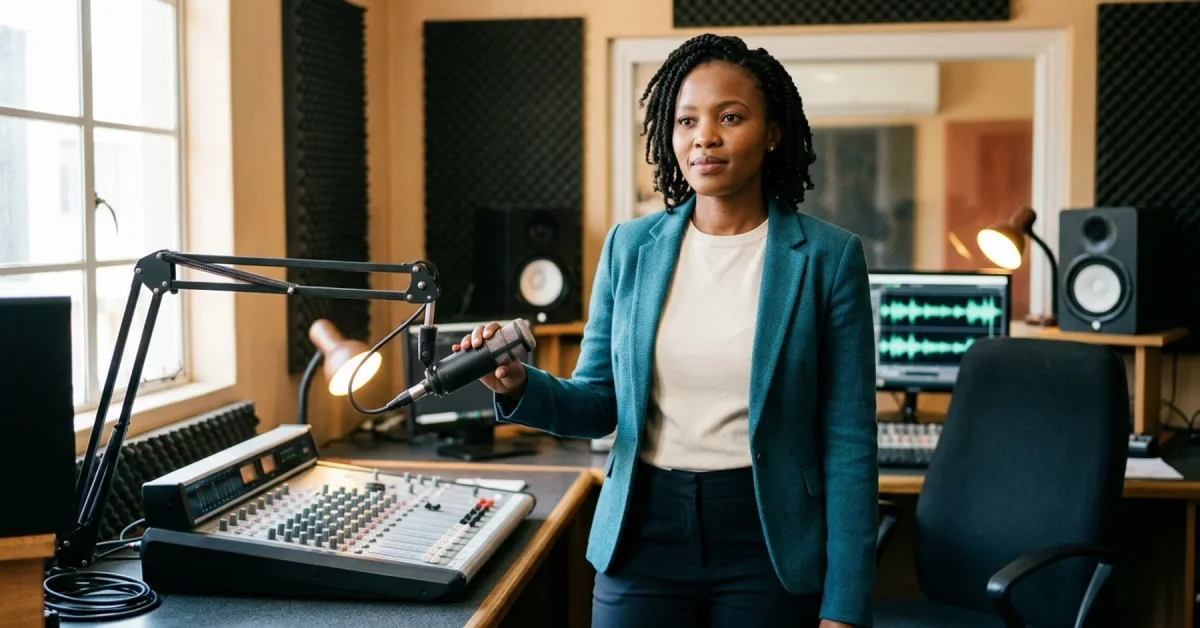
The agency was awarded a national campaign to promote workers' rights. The brief was to translate, record and broadcast one message in 12 languages across national and community radio stations, and the whole campaign had to be live within 10 days.
Zizi Digital moved straight into production. Nombulelo says the agency put about R200,000 of its own funds into voiceover artists, studio time and sound engineering before a single slot had aired.
Why media buying needs cash before the client pays
The problem arrived at the media buying stage. An earlier 2024 contract with the same department had paid in tranches. This one only allowed Zizi Digital to invoice once the campaign was 100% complete. At the same time, the radio stations wanted full payment upfront to secure airtime, with some placements costing around R100,000 each.
That is the standard shape of the problem for any agency that buys media on a client's behalf. The agency carries the cost at the start, the client pays at the end, and the gap in between grows with the size of the campaign. For Zizi Digital it came to close to half a million rand, needed within days. Closing that gap is exactly what media buying funding is for.
Government work adds its own timing. Payment by departments is governed by the Public Finance Management Act, and suppliers have to be registered on the Central Supplier Database before they can be paid at all. A confirmed contract is valuable, but it does not put cash in the account on day one.
Why a term loan did not fit the timeline
Nombulelo looked at conventional finance first. "A loan for me needs to be something that is a calculated risk with the most affordable interest rate," she said on the episode. A term loan is designed around trading history and collateral, with an assessment process to match, and that process is not built for a five-day window.
What she needed was funding sized to this contract, priced to this deal and available before the airtime booking deadline.
How media buying funding closed the gap
Nombulelo searched online for purchase order funding and was referred to Sourcefin. Rather than starting from the agency's balance sheet, the Sourcefin team assessed the opportunity itself: a confirmed government contract, production largely complete and media placements ready to book.
Sourcefin structured the deal as invoice discounting, secured against the confirmed contract and the payment due from the department on completion. Sourcefin is a funding partner, not a lender, and the structure followed the contract rather than a generic loan product.
According to Nombulelo, verification took two days and the funds were in Zizi Digital's account within five. The agency paid the media houses and the campaign went live on schedule, in all 12 languages.
If you are weighing the two products for your own agency, our comparison of PO funding vs invoice discounting sets out when each one fits, and our guide to invoice discounting in South Africa covers how facilities are structured.
What reliable funding changes for an agency
The immediate win was one campaign delivered on time. The longer-term change is in what the agency can bid for. With media buying funding available when she needs it, Nombulelo says Zizi Digital can now go after larger, pure media buying tenders with confidence.
Her advice to other founders is direct.
"Do not play small just because you do not know of the right solution yet. Stay calm, breathe, and reach out to people that can be partners and not people that just want to be vultures."
– Nombulelo Malinga, founder and director, Zizi Digital
Agencies with public sector clients meet this pattern again and again, and our guide to invoice discounting on government contracts covers it in more detail. If you have a confirmed contract and a media bill due before your client pays, media buying funding can carry you through, and you can apply for funding and Sourcefin will assess the deal on its merits.
Sources & references
- The Great Enabler Podcast – The tender win that nearly broke her cash flow
- National Treasury – Public Finance Management Act
- National Treasury – Central Supplier Database
Full episode transcript
Edited for readability. Watch the full episode on YouTube.
SME funding case study South Africa
Nombulelo Malinga: Now we are speaking to the radio stations and they are saying, actually, we require full upfront payment. And some placements, even if it's for three times a week, it's R100K. When you look at the reality of being self-employed, there isn't necessarily a backup plan. Well, that was for me. I didn't receive a cash injection. I bootstrapped my business. Once we were awarded, we started talking to the client. We only had a space of about 10 days to complete this work, and it was a very quick-turn project. Someone has to say to you right now they have exhausted funds and they need close to half a million rand. Where are you going to go to immediately as a business owner with reduced risk and without necessarily taking a regular bank loan? And now you get to a point where I've already invested X. There's still a gap.
Jedd Harris: Nombulelo Malinga, yes, lovely to have you from Zizi Digital. I've heard a lot about you. This is obviously the first time I've met you, but you are quite an inspiration in the office. An amazing person and woman leading an organisation that's just finished off quite a mammoth project, quite a mammoth task.
Nombulelo Malinga: Indeed.
Jedd Harris: And we're here to hear your story, hear your journey, and understand a lot of people at home don't realise that there's funding that fits their purpose. And I think you realised that recently, that if you have a funding partner that can walk a journey with you, it really does take a load off and allow you to grow your business and focus on what you do best. So, we're going to cover a little bit of all of those things, your progress through the deal and the process you took to find the funding that you needed. But before we get to that, let's start where all good conversations start. Tell us a little bit about yourself.
Nombulelo Malinga: Lovely. Firstly, thank you so much for having me. And nice to hear that there's some positive chatters about myself and Zizi in the office. We truly are humbled and really excited just to be here and have this conversation with you today. So, my name is Nombulelo Nana Spesihle Malinga, and I'm the founder and director of Zizi Digital. So what Zizi Digital does is we are an impact communications consultancy. A lot of people hear that, what do you actually do? So we essentially do public relations, social media, media buying, which is what we're going to be talking about today. Media buying is the good stuff. We essentially make sure that your message gets heard on the right channels, right platforms, radio and television on a national scale. So, we love what we do. We make sure that we lead with impact and purpose. So, it's really important for us to be able to tell that story.
Jedd Harris: Brilliant. Tell me a little bit about your service offering, maybe go a little deeper and perhaps give some guidance to the viewers on – because I mean, you've got an amazing portfolio, PR, social media. I would love to hear what your specialities are within those areas. You also spoke a little bit about impact PR. Tell me what that means and why business needs it.
Nombulelo Malinga: Oh, lovely. So, firstly, PR and social media are the core service offerings. However, we offer 360 communication solutions. So, that means printing, it means branding, it means coming up with talking points. So, when you see very important members of parliament, or international entities making statements, they needed to be drafted something called talking points. So, we actually come in and be a strategic communications partner and develop that for you. So, anything that's got to do with getting a message across, anything that's got to do with influencing individuals, we essentially do that. We do the fun side of it. So, for the PR perspective, why PR is very close to my heart, I actually got some very good news very recently. And it's that I've been awarded as a Chartered Public Relations Practitioner. And the business itself is also listed with PRISA. So, when we actually do PR, it is not just for the sake of it. It's because we've already been vetted from an ethics perspective. We have already been approved, certified to be able to provide that service on a national and global scale. So, when it comes to essentially ensuring that your product, your service, or your cause needs to be publicised, it needs to get more airtime, or maybe you just need to tweak your messaging, how do you actually want to come across, come off to people? We would then come in and refine and tweak that for you. Then the impact part of it. Now, have you ever felt like you are scrolling on social media and you have not subscribed to see content? You do not actually want to tap into this. You do not want to see this particular news article because there's a lot of negativity that we see constantly within the media, within narrative landscapes, within social media. So, we said we actually want to do PR and comms for impact. Let's talk about something that's good. Let's talk about changing behaviours on a national scale. Something that we do align ourselves to is the Sustainable Development Goals. So, these are 17 goals that we are supposed to achieve as the world by 2030. Which include some goals such as zero poverty, gender equality, partnerships, especially within the business sector. So these are some very fundamental and important goals that I think that we should all tap into, not only for governments, not only for entities, but as individuals. So when we do see that organisations want to act for climate change or want to communicate what just energy transition is or want to encourage people to engage in partnerships, we think that that message also deserves a voice. So, that's when we come in, and then we will tell you how to get it heard by the right people.
How media buying works for national campaigns
Jedd Harris: Amazing. And then you touched a little bit on social media and media buying. Tell me a little bit about those services as well.
Nombulelo Malinga: So, with social media, I'm sure you've seen content where it says it's an ad at the top, or when you're scrolling on your feed, and there's a little button that says, click to follow the page, click to go through to the website. And that essentially is built off of an algorithm, and you have been targeted by people like Zizi. So in the back end of that content, you would have a media partner such as us, which would actually create a targeting set list so that that advert can actually reach you based off of your interests. So a lot of times clients don't know how to get to the granular level of reaching who they actually want and reaching their buyer or reaching people where they are. So, that is when they would then come to us for our expertise to be able to set up their targeting, make sure that we do their audience demographic profiles well, and then set up those ads for them. It's not just about the targeting though as well. We also then need to go into something called a visual guideline. So whether we're going to be developing infographics, whether we're going to be designing an asset, or if we're going to create a TikTok reel, shoot content, we would do that as well. So we also do the implementation and the production. So it's not just the media buying, because we know that a lot of clients, they want the service, but they don't realise that there's a lot more that goes into the media buying aspect than just the end result. So, that's the social media and the digital side of that.
Then for media buying from a broadcast perspective in particular, that is built off of partnerships and very strong relationships with media houses and entities. And I must say, as someone within the public relations space, that relationship has really evolved since COVID even, because there have been some restrictions, some barriers and changes within the way that newsrooms work. So when it comes to media buying, it's not as simple as it was before. Now they are a lot more stringent in terms of budgeting and payment terms, especially if you are a first-time buyer with particular media houses. And essentially what this is, and I want to make this very clear because a lot of people think with public relations, you just get free press all the time. We spend a lot of money actually nurturing relationships, pitching stories, and preparing content that is taken up by media houses. And when you purchase space, not only does it guarantee the spot, but you actually get more insights, data, accessibility, and more upsell from that package that you're actually going into. So, media buying is really a very valuable tool. Instead of just pitching for a story where maybe you're going to get one interview, you're able to actually create a narrative, a message, obviously aligned ethically and approved, and speak to the station, adjust it to the audience that that station listens to. Public service announcements are very important. And radio is one of the best ways still on a national scale to be able to spread those public service announcements. I will say TikTok virality, yes, okay, I get the debate. I'm not taking anything away from TikTok. But when you are developing campaigns on a national scale, and they are meant to influence the people of South Africa, radio and broadcast is still one of the primary channels that we would use for media buying.
Jedd Harris: Makes a lot of sense. You mentioned something earlier, and it's the last piece I'd love to hear about your business. You said it's 360 Communications. What does that mean?
Nombulelo Malinga: 360 Communications essentially means that we take more of a consultative process with our clients. We first sit down with you and ascertain what is the actual communication gap? Sometimes clients say that they are lacking leads for a product, or sometimes, with another project that we worked on, it was actually a response to a national crisis, which is now a different matter where it's tendered. But even there, there become opportunities for other services to actually play a part. So, I believe that if you are going to offer, from a communications perspective, social media and PR and corporate communications and strategy, you also need to be able to implement what it is that you are recommending for the client. So, after we've done that bit of analysis, we would then say that, fine, you guys need to have a press conference, after the press conference, we need to do a community engagement. With that, what do you need? You need branding, you're going to need banners, pull-up banners everywhere, you're going to need flyers, you're going to need accreditation that's printed, you're going to need social media content that also speaks to and has the same look and feel as the other components. We're also going to need to punt this message on radio. I think it's a very big disadvantage to be able to advise but not implement. So, we then are able to implement all of those different areas that I've spoken about. So, that's the 360 component.
The real cost of bootstrapping an agency
Jedd Harris: Understood. Now, it says that you started Zizi in July 2020. 2020, all I think of is one thing. So, it's quite a brave time to start a business. Tell me a little bit about where you were before 2020. What was your background before? And why on earth did you decide to start a business when lots of businesses were closing?
Nombulelo Malinga: Can I tell you something? Firstly, with COVID it was such a loss. We really lost a lot of lives, a lot of hope. So, I truly do first want to pay respect to that. However, as someone who has always been quite passionate about being able to come up with an idea and seeing it visually and helping brands communicate. The first thing that I started to see with the restrictions during COVID we did not have access to face-to-face time with individuals. Going into the office at that time became restricted. If you were to walk outside, people weren't handing out flyers anymore. There was no visibility of billboards anymore. People weren't buying as many magazines anymore. So, where does that leave us in terms of messages that are being communicated? It means that this was the prime time for digital communications and digital marketing to really reach its peak. So, as someone who, at the time, I was actually the head of social media at an award-winning advertising agency. But as I've mentioned before, I did study public relations, and I was exposed to a lot of different areas where they intersect – PR, social media, under the umbrella of communications. And I started seeing that actually, there's a lot of people who still want their brands to be visible right now, and still want to find means to still make sales. So I said, maybe I should start helping out one or two people on the side. And I saw that actually I was getting more joy from that. Absolutely loved where I worked at before, but I had hit a bit of a ceiling and I was ready to see what's next. And that's where I essentially started consulting as an individual. And it worked out well. I actually started getting bigger clients when I ended up consulting for an international body. And that's when I realised that, no, wait, actually, I can turn this into a business. So, it is a business that evolved over time. I definitely feel like the business came to me. It's something that I love dearly. And I think it's really important to be able to drive the right message to the right types of people.
Jedd Harris: Amazing. Congratulations. When so many people saw chaos and suffering, you saw opportunity, which is amazing. Tell me a little bit about the journey of running your own business. It's been six years. It sounds like it started like a consultancy. Almost freelance when you had a bit of extra time, side hustle maybe. But it seems like it's grown into something that's full-time and now your baby. And you've had to nurture it and nourish it and it's grown. Tell us a little bit about the journey of being a business owner. And then maybe a little bit about the business and the team.
Nombulelo Malinga: I always get so surprised when I think of how much time has actually passed being self-employed. I think that's a conversation that a lot of people don't have, is when you look at the reality of being self-employed, there isn't necessarily a backup plan. Well, that was for me. I didn't receive a cash injection. I bootstrapped my business. And I've always been quite cautious financially, which is a bit of an oxymoron. Going into business, you need to be ready for anything. So, it definitely has been a journey that I truly believe you need to have a certain type of characteristic and personality for. It's not always smooth sailing. There've been times where you're not sure if this contract is going to be signed. What's happening with staffing? People have their own personal matters that you need to actually attend to. I'm quite fortunate to have never experienced bankruptcy, or any major losses in business. But it is due to being cautious, or taking calculated risks, if I have to say that. But as a business owner, it's been a ride. It's really been quite a ride. And I mean that from both sides of it. The negatives and the positives. The negative is, guess what, if you don't work, you're not going to get that paycheck from those clients at the end of the month, which is different to when you are working for somebody else. You are guaranteed your paycheck. As a business owner, you have to make it.
Jedd Harris: How many people are in the team?
Nombulelo Malinga: Right now we're managing a small consultancy. We're five permanent employees, and then we use contractors which are then on more of a part-time basis. And then when we have larger contracts that it's all hands on deck, then we obviously have temporary contracts in place. So, we've got a nice balance.
Jedd Harris: I've obviously looked, I'm within the source fund marketing space. And it seems there are certain roles that you need permanent full-time hires that support you, but it's hard to find talent that is keen to work full-time because they're freelancers. They're able to support multiple clients at once, and an hourly rate is generally better for them than a full-time salary.
Managing cash flow for government tenders
Jedd Harris: We are moving to the part of the conversation where I'd love to unpack the order that brought the Sourcefin path across with the Zizi path. Tell us a little bit about where you were. There's a campaign that came to you. It was for a public department. Tell us a little bit about that journey.
Nombulelo Malinga: It was hectic, but we made it through. Essentially, what happened is that we generally do tender. We do have our retainer clients, but we also tender. Any business owner knows that tendering is going to be part of your cash flow system. And it's a nice to have from a financial perspective, but you don't depend on the tenders, or at least you try not to. So, what had happened is this was actually a repeat client, this particular department. We had worked with them before in 2024, and with that particular contract, the payments – and I'm sure as entrepreneurs we know, when you receive your contract, there's normally payment tranches. Especially in comms. Once you submit the first portion, which is normally a project plan, there's funds released that will enable you to take care of any costs that that particular bid or offer needs in order for it to succeed. So, normally, we are used to operating in that way, where you know exactly which funds are coming in, but then you also, as a business, do have your own reserves. You need to have some kind of reserves. On this occasion, second time, and this was a matter of an assumption that it would take the same format as the last contract, where we would receive initial funds post the first phase of the project. Once we were awarded, we started talking to the client. Mind you, we only had a space of about 10 days to complete this work, and it was a very quick-turn project. Start talking to the client, start saying, we've already booked the voiceover artist, we've already booked studio time, and we already did that from the business funds, because we need to get things moving. And then we say, when do we submit a portion of the invoice? And they said, oh no, you are only getting paid once the campaign is complete. Mind you, this is a national scale media buying campaign. Which means this is not just one or two radio stations. We are doing this across South Africa. We are doing it in all 12 languages. So it wasn't a cheap production.
Jedd Harris: And is that the media buying as well as the production of the content?
Nombulelo Malinga: Yes. Because you need that before you give it to the actual media houses, radio stations, and it had to be done very quickly.
Jedd Harris: Tell us a bit about the campaign. What was the specific ask?
Nombulelo Malinga: The specific ask of the campaign was to take a message to promote workers' rights. And it was to empower citizens of South Africa and people living in South Africa to ensure that they know what their rights are, and to have trust in our governance systems. So we needed to ensure that we would deliver this message to audiences where they are and in languages that they understand. It's very often that obviously we hear things in English most of the time, we communicate in English most of the time, but there is a difference where you hear a message that is meant to move you and build trust in your language from your community radio stations and national radio stations, it makes a difference. It makes you feel that you're heard and it makes you feel like you can actually trust this message. So that was part of the strategic alignment brought into this particular campaign. It was very important to create trust. I think just as I'm a bit of a humanitarian at heart. I care about the human people. It's important for us to be able to connect. Let's not use influence and power just for selfish gain. Let's actually help people feel heard, connected to, understood. So we had to carry that out nationally, media buying, voiceover recording, voiceover artists, production, engineering, studio booking, the works.
Jedd Harris: And take me through the bidding process.
Nombulelo Malinga: The bidding process. Essentially, there is a call that is released, as we all know, and you respond to it. That's pretty much it. And even with that particular bidding process, tendering is something that we do almost every single day within Zizi. You see the scope of work, you say, great, they've already been pre-selected radio stations, we get a gist of what the message is about. Now we need to actually get on it quickly, gather our updated quotes, because essentially we would need to pay those radio stations, we would need to pay those voiceover artists, we'd need to pay for studio booking, hiring. So it's a process of really having a tight lock on what is required financially. It's just that we were under the impression that we would have received an initial payment and not be paid at the end.
Jedd Harris: And tell me the moment you heard that you won it. How does that work? Do you get an email? Is it a call?
Nombulelo Malinga: You get a purchase order, my favourite thing. Face just lit up.
Jedd Harris: I saw, so my face lit up. And I don't get purchase orders.
Nombulelo Malinga: Favourite thing. You get a purchase order and just a letter stating that you've been awarded as the preferred supplier kindly see the purchase order attached, and then the work begins. At times there is a bit more time that goes into getting the work done, but on this occasion, because it was a particular month that this special day happened in, the days in the month were running out and we needed to get that message on the radio before the month ended. So there was a lot of pressure.
Why suppliers demand full upfront payment
Nombulelo Malinga: Look, media buying is always going to have a bit of a higher budget, especially if you look at the timeframe, because this project was executed in about two weeks.
Jedd Harris: It sounds impossible.
Nombulelo Malinga: Well, we did it.
Jedd Harris: It honestly sounds impossible.
Nombulelo Malinga: We did it. But that's also because we know how the industry works. We know how to get things done. Doesn't mean it's not stressful, but we did it. With this particular project, the timeline was insane. And we actually expected to hear back from the department sooner. We thought we didn't actually even get it because we saw that based off of what was on the brief, the scope of work, those dates have passed now, so we probably didn't get it. So seeing that purchase order come in, which is how we knew that we were awarded, was exciting financially, because as a business owner, you're always thinking about the money that you'll make. But then the reality sets in quickly that we have to make this happen immediately. And with that being said, how this project was very different to some other projects that we do is that it was purely media buying. So normally you're able to cover certain costs with other services. This was purely purchasing media space, which means that the cost of executing this project is much higher than the other projects that we have. Other projects that we have, we're selling our services, which is easily managed internally as a business. But in this particular case, you need to come up with money upfront to pay for space. So the cost of the business was quite high, and the turnaround time was very, very tight.
Jedd Harris: I still can't believe you managed to pull it off in, you said, 10 days? Two weeks. So tell us what needed to be pulled off.
Nombulelo Malinga: Step one.
Jedd Harris: Of 100.
Nombulelo Malinga: Step one. We had already pre-sourced voiceover artists, which helped drastically. We do have an existing database because we do different type of work that needs that. But now we needed to actually align the voices to the script. Step two, the script that was provided needed to be translated and vetted into the remaining 11 languages. And that needed to still be approved by the client in the short space of time. We all know how long clients take to actually approve content. Step three was to actually get into studio and to orchestrate – I'm just having flashbacks of my team. My team did an amazing, amazing job. Coordinating talent is not easy. Especially when you say, guys, there isn't enough time for us to have a whole week booked out. We literally need to squeeze in all of these 12 different artists into a period of two days and get it done. You have to have a vernacular supervisor on site to ensure that each language is pronounced the way that it should be. It's a lot of detail. Then from there, there's a sound engineering component because some people think, oh, you're just going to record. No. The sound needs to be very good, especially if it's going to be a national campaign for radio. Sound engineering component. Once all of that is done, we then send those files to the client to approve because we cannot go and launch campaign on the different radio stations and the clients actually don't like that voice. There's other things that you need to consider as well from a PR perspective and a branding perspective is, is there enough representation? So, there's various things that you need to consider. So, we had essentially done all of that work. Everything was approved. And then the bomb drops. Now, we are speaking to the radio stations and they are saying, actually, we require full upfront payment. And just for an indication, guys, some placements, even if it's for three times a week, it's R100K. That's one out of 11. So we got to that point and we said, is this client really not going to – really, what's the holdup? Can't they release some files? I mean, we've already won this. We've already completed 90% of the work. All that's left is for this to actually air. And timelines were drawing a lot closer. I think we have one week to run this. And I think we were on a Wednesday, previous Wednesday before the weekend. And I said, no, I need to make a call. Talking to the client and trying to see what's possible in terms of early release of certain portion is not happening because of procurement. And I had to sit down with myself first because I don't want to burden the whole team with these matters. Also, they are working tirelessly. I've already invested money from the business, and all of the things that I've mentioned obviously aren't free. And now you get to a point where I've already invested X, there's still a gap.
How to get invoice funding fast
Nombulelo Malinga: And that's where I started. I went online. Let's check. Isn't there something called purchase order funding? At what rate? And with which criteria? And what credibility? There's so many questions, and you don't know what you are signing yourself up for. You don't know who's trusted. You don't know who's vetted. And I do think that when it comes to purchase order funding, there are a lot of chance takers that really look for entrepreneurs that were in the position I was in. And it's not good to be in a position where you feel like you've got no option. I don't like that personally. So, I said, I need to find out what are all of the different possibilities here. And then I did some more research, called around. And I was actually referred to Sourcefin. And I said, okay. I think the first call I made was probably so chaotic because I just wanted to know what is the process, how quickly can this turn around. This is extremely urgent. I don't know what to do. What do you guys need from me? I don't want to get scammed. I also do not want to work with people that I've never worked with before, or have no sense of trust for. And also emotions are heightened, of course.
Jedd Harris: Of course. You've got five days now, I'm guessing.
Nombulelo Malinga: My goodness, to make things happen. And the initial consultant we're working with was just so calming. She said, Miss Malinga, just relax. What is actually happening? Have you been awarded? At what stage are you? And she just took me through the process of actually submitting the relevant documents to verify the award, to verify the costs that we had actually put up. I think I've already mentioned one of the radio costs. And to ask us, what do we need? So we were very transparent in just saying that we have already spent about R200,000 company funds just to get the production done. Now we are stuck. I need a partner that's going to walk the path with me to ensure that this particular list of service providers, media houses, is paid. And here's the evidence that the funds will obviously be cleared. And she said, we're going to go through our verification process, which was very smooth. I think that verification was done almost within two days. But the only part that delayed is just the verification of the actual purchase order. Because that depends on – we all know how that goes at times. But that's the only part that I think even that took like an extra day. And once everything was done, and within five days, the funds that we requested were deposited into our business account. Now, you can imagine this coincided with the day to actually go live. On national radio. But luckily, with good relationships, we were able to make some negotiations and get it done, which is why I always say it's so important to always work with partners and people who've got some skin in the game, who aren't going to just give up and say, this is impossible. I do believe that there is always a way if you look hard enough and if you work with the right people and also talk to people as human beings. Because I think a friend of mine was even saying, how did you pull this off in a matter of days? Someone has to say to you right now, they have exhausted funds, and they need close to half a million rand. Where are you going to go to immediately as a business owner with reduced risk, and without necessarily taking a regular bank loan? It's not something that can be easily resolved like that, especially if there's an urgent need. So, we were quite relieved when that happened, when we saw that payments had been processed and our media partners and the media houses went live. Even on the first day, they already sent us some proof of going live, shipped that off to the client immediately, maintain the trust. And essentially, although it was quite strenuous, it does instil a level of trust between yourself and the client to know that this is possible, and that you can actually do it. Because they were also aware that the timeline was almost ridiculous.
Invoice funding vs purchase order funding
Jedd Harris: Take me back to the moment you found out that you needed to frontload that payment. So, you mentioned that there was a surprise that appeared, where all of a sudden, you needed to purchase media space. But the expectation from the client was for you to frontload that media space. The radio stations needed you to pay upfront.
Nombulelo Malinga: Yes.
Jedd Harris: You thought that the client that you were servicing was going to provide you with the funds in order to settle those radio stations.
Nombulelo Malinga: Normally they do a percentage.
Jedd Harris: A percentage. So you were prepared to pay an amount. What took you off guard was actually we're not giving you a percentage, we're going to –
Nombulelo Malinga: Wait for the end.
Jedd Harris: Well, wait for the end, but also 30 days to payment once you've invoiced us. So firstly, it's amazing that you knew what purchase order funding was because you'll be surprised how few people know that type of funding exists.
Nombulelo Malinga: Can I just jump in there? I knew about purchase order funding, but I did not know about invoice funding, which is actually what we ended up doing. So, that was really cool. Really cool benefits as well, reduced risk on our end, and very, very reasonable interest rates to repay, which obviously is something that as a business owner, first thing you're going to look at is. I didn't account for this, but really fantastic. I'm quite happy.
Jedd Harris: Maybe in your own words, explain to the audience what invoice funding or invoice discounting – terrible names. We call it invoice funding because it just makes more sense. Invoice discounting is apparently the industry term. But it's very confusing.
Nombulelo Malinga: Yes. So, what I did, and what I in my head call invoice funding, is essentially once services have been rendered and the client has received the invoice and confirmed receipt of that invoice and that it shall be paid, that confirmation is then used as a surety of sorts, and then you can get certain items on that invoice paid by a partner like Sourcefin.
Alternative funding vs bank loans in South Africa
Jedd Harris: Now, if you had gone to a bank for this particular transaction, well, let me ask you in a different way. Why didn't you go to a bank first?
Nombulelo Malinga: Loans. Business owners and loans. A loan for me needs to be something that is a calculated risk with the most affordable interest rate. […]
Jedd Harris: Did you try?
Nombulelo Malinga: I did try. And also the process was –
Jedd Harris: A little bit slower?
Nombulelo Malinga: Yeah, wasn't going to work for this. It was not going to work at all.
Jedd Harris: Sure. Okay. Now let's assume Sourcefin didn't exist. Or you didn't find Sourcefin. The person that calmed you down didn't exist. Where would Zizi Digital be on this particular order?
Nombulelo Malinga: I don't even want to think about that. I'm someone who always believes in a solution. But with how things were looking, time was the limiting factor. If there was more time, perhaps an alternative could have come up. And that's why I say the journey with Sourcefin is something to really be appreciated. The matter of sensitivity, urgency, and attention to detail that this matter was handled with, I literally cannot compare it to anything because I did not get it anywhere else. So, I hope there's an answer in there for you.
Jedd Harris: No, that sounds exactly right. It's what alternative funding is there for. The traditional funding space, what I've learned is, it just hasn't been built to service the needs or the realities of an SME in today's day and age. Zizi Digital, six years old, you've built something amazing. There's clearly a track record. But unfortunately, you're going to be measured on your history and evidence and balance sheet. […] And I'm sure you noticed in your conversations with the initial person as well as your deal manager, the conversations or the questions you were asked were very different to what I'm sure you've experienced in the past.
Nombulelo Malinga: Yeah, absolutely. And it was based off of looking at what has worked, looking at the trust, and looking at the guarantee that obviously the funds would be returned, as opposed to feeling like you are going through an entire life audit. And I think that that helps in moments of high pressure to know that we are looking at the facts, not at the –
Jedd Harris: You're saying balance sheet matters, collateral, security, the history. For us, it's all about the opportunity. And if we can partner with you and we can execute on it together, and we know that your client is one that will pay, why would we not take the risk on you? And now that Sourcefin did take the bet on you, or the risk, took it on, and you delivered, how does it transform the trajectory for your business?
Funding impact on women-owned businesses
Nombulelo Malinga: Oh, I think it's lovely because now I know that, for example, within my business, Londi, who's here off camera, deals with a lot of the tender processes. Now I can approach media buying tenders, pure media buying tenders, with confidence, because I already know the process, I've already been pre-vetted. Obviously, the goal is to eventually not require assistance. But the reality is, because of the scale and magnitude of some of these campaigns, it's a lot of money to put in upfront. So, it gives me a lot of confidence, and it opens us up to more opportunities for business. It's also empowering, because with a lot of these, we also do temporarily employ individuals, so it also gives back. I am also a top gender-empowered employer. So, we do give opportunities to minority sector, especially women that need to find their space in the working world and have a voice. So, when you do work with Zizi, you don't just support you getting your work done. There are communities that are affected, there are women that are empowered, and look, there's opportunities for people to move beyond just living in the bare minimum because there's financial security as well that comes from that.
Jedd Harris: And the project you delivered through those radio stations, tell me a little bit about the impact that was delivered through those stories that were told across the country in all of the national languages?
Nombulelo Malinga: Yes. Firstly, I just want to start with some of the talent that we had used. As you are aware, we won't always have a voiceover artist that's a permanent employee in an advertising agency. Normally they are freelancers or within a network or managed. So that was also an opportunity for some of that talent that we worked with, especially with the magnitude of who the client was. And it's work that we gave them back so that they can use to enrich their own portfolios. That's the first part of it. Then the second part, the impact. The impact is that from a community level, we know that in South Africa at the moment, work and the ability to be employed is something that we need to treasure and be grateful for, but it is something that you do in order to get a living. And because of the different economic shifts that we are experiencing, sometimes people can get so caught in, I'm just a worker, do I even know my rights, what is being done for me by certain entities? They need a reminder to know that we are here for you. If there are problems within a working environment or working space, this is where you need to get in touch with us. And just hearing that, it softens people. It gives you a moment to be like, actually, I'm not just a hamster on a wheel constantly. There's entities that are there to support me as somebody who works and a worker. Whether you're an entrepreneur, whether you're an intern, whether you are an employee that's been working for 50 years, we all fall under that bracket. So, it's important to be able to communicate with that large, vast, different types of personalities, languages, regions, in a way that actually resonates with them.
Jedd Harris: That's beautiful. It's what I say a lot of the time is funding isn't money in an account, it's the impact that it delivers when it's delivered by impressive entrepreneurs and SMEs like yourself. Where to from here for Zizi? What's next?
Nombulelo Malinga: Oh, goodness, we are super excited. Firstly, with the award that we've just achieved, it unlocks us being able to win more awards. Okay, that's on the side. And secondly, we are looking at doing more business outside of South Africa, but that's under wraps. And everyone else that's watching. So, being able to know that you can qualify for larger bids, larger deals, it increases your profit margins, your cash flow, and it allows us as a business to actually think about other plans. Do we want more office space? Do we want more employees? Do we want to target new regions? Having that financial security of knowing that I've got a partner that can actually assist me should I need it allows you as an entrepreneur to think more open-mindedly. The second that you are restricted in any way, automatically your mind is not going to think to its full capacity. So, definitely allows me to think more clearly, about upcoming opportunities, upcoming decisions, and new places that we want to work with them.
Jedd Harris: Gives you the confidence, I suppose, to venture out. To bid on way more tenders and POs and not worry if you win more than you expect. Which is, yeah, cash is needed to grow. It's unfortunately the fuel. And it's nice to know that you've got a treasury that you can dip into when the time comes.
Nombulelo Malinga: My honeypot. I'm ready.
Common mistakes when choosing a funding partner
Jedd Harris: Amazing, amazing. Nombulelo Malinga, it's been a pleasure spending this time with you. My final question, and apparently this is a question that makes people nervous, but I don't think you will feel the nerves. Throughout this session, we've been sitting next to the calabash. The calabash is the symbol of the podcast. What it makes me think of is people sitting, sharing stories, sharing wisdom, sharing their journey and experience, and hopefully that's passed on to someone else and enriches their journey. Now, I would love to know, assume you had a piece of paper that you could write a piece of wisdom on and drop it into the calabash, and that calabash is passed on to the next person. It could be Nombulelo before she had her own business. It could be when you were going into the working world, just before you took on this massive project. What was that one bit of advice you wish you knew then that would have made the journey so much easier?
Nombulelo Malinga: For entrepreneurs in particular, do not play small just because you do not know of the right solution yet. The right solution could be right under your nose. Stay calm, breathe. I'm definitely talking to myself here. Stay calm, breathe, and reach out to people that can be partners and not people that just want to be vultures. And you will be surprised at how far you will get.
Jedd Harris: We're going to clip that one. Partners, not vultures. There for the long term. There to enrich your journey. Absolutely. Nombulelo, it's been a pleasure and a privilege. I can see why everyone raves so much about you out in the office. And we look forward to many more deals and many more growth opportunities with you.
Frequently asked questions
What is media buying funding?
Media buying funding is short-term finance that lets a marketing, PR or media agency pay radio, TV or digital publishers upfront for airtime and placements, then repay once the client settles. In South Africa it is usually structured as purchase order funding before the work starts, or as invoice discounting once the contract is confirmed or the work is delivered.
Can a PR or marketing agency get funding to pay radio stations upfront?
A PR or marketing agency with a confirmed client contract can get funding to pay radio stations upfront. The funding partner assesses the contract and the client paying for it, not only the agency's balance sheet. Zizi Digital used this route on a 12-language national radio campaign and, according to its founder, was funded within five days.
How did Zizi Digital fund its national radio campaign?
Zizi Digital funded its national radio campaign with invoice discounting from Sourcefin, secured against a confirmed government contract that only paid on completion. Founder Nombulelo Malinga says verification took two days and the funds arrived within five, which let the agency pay media houses upfront and launch on time in 12 languages.
Why do government campaigns create cash-flow gaps for agencies?
Government campaigns create cash-flow gaps for agencies because suppliers usually invoice only once deliverables are complete, while broadcasters and production crews want payment at the start. The bigger the media buy, the larger the gap. Invoice discounting or purchase order funding bridges that period, so the agency does not fund the whole campaign from its own reserves.

Sourcefin is a South African alternative finance provider that offers purchase order funding and invoice discounting to SMMEs, enabling businesses to fulfil confirmed purchase orders or tenders and unlock cash flow without collateral. Unlike traditional lenders or banks, Sourcefin also provides end-to-end support including supplier sourcing, logistics, project management, and risk oversight.