
Tender Funding First-Time Bidders South Africa: Smart Guide
Just won your first government tender? Here's how tender funding works for first-time bidders in South Africa – and what makes a first deal qualify.
On this page
- Key Takeaways
- Tender Funding First-Time Bidders South Africa: Why It Is Available
- Why First-Time Bidders Get Stuck on Funding
- What First-Time Bidders Need to Bring
- What the Funder Actually Assesses for a First-Time Bidder
- Common First-Time Tender Scenarios That Get Funded
- What Stops a First-Time Tender Funding Application
- How First-Time Bidders Build From Here
- The Bigger Picture for SA First-Time Bidders
- Frequently asked questions
Tender funding first-time bidders South Africa works because the funding model assesses the contract you have just won, not the years of tendering history you have not yet built. A confirmed government tender award from a credible department is funded against the contract itself – the new bidder's lack of track record is not the disqualifier it would be in traditional credit. The deal opens the door.
Key Takeaways
- First-time bidders can access tender funding when their first award is real and the buyer is a credible government department or SOE.
- The funder assesses the contract, the buyer, and your delivery plan – not how many tenders you have won before.
- The standard documents apply: signed award letter, CIPC, SARS, and a clear delivery plan.
- A credible supplier set and an honest framing of being new to the bidding world both help.
- Sourcefin funds tender deals from R250,000 upwards – the first contract needs to be of meaningful size.
- Successfully delivering a first tender opens the door to the next one significantly faster than starting cold again.
Tender Funding First-Time Bidders South Africa: Why It Is Available
Winning a first government tender is a milestone. It usually comes after months of compliance work, document gathering, and learning the procurement process. The catch is that winning the contract does not solve the next problem: where does the working capital come from to actually deliver?
For many first-time bidders, the next conversation should be with a bank, but bank credit decisions for new SMMEs without trading history rarely move fast enough to mobilise on a tender deadline. Tender funding first-time bidders South Africa exists for exactly this gap. The funding model assesses the contract you have just won, not the long list of contracts you have not yet had a chance to deliver.
For broader context on how this funding model works across all sectors, the wider purchase order funding South Africa pillar guide explains the approach end to end. The PO funding for government tenders guide covers the tender-specific layer.
Why First-Time Bidders Get Stuck on Funding
The conventional credit pathway assumes a track record. Three years of trading. Audited financials. Security to pledge. A history of meeting payment obligations. None of these exist for an SMME that has just won its first tender. The result is a funding gap that can stop a winning bid in its tracks.
The pattern is familiar. SMMEs spend months getting their CSD registration in order. They study the SBD forms for government tenders. They lodge the tax compliance, BEE certificates, and bid bond. The award arrives. And then the cash to deliver does not. Bank credit applications take weeks. Friends and family run out. The award is handed back, and the SMME walks away from the very contract that was supposed to launch the business.
This is the gap that tender funding for first-time bidders fills. The structure works because the funder is not assessing the SMME's history – it is assessing the contract.
What First-Time Bidders Need to Bring
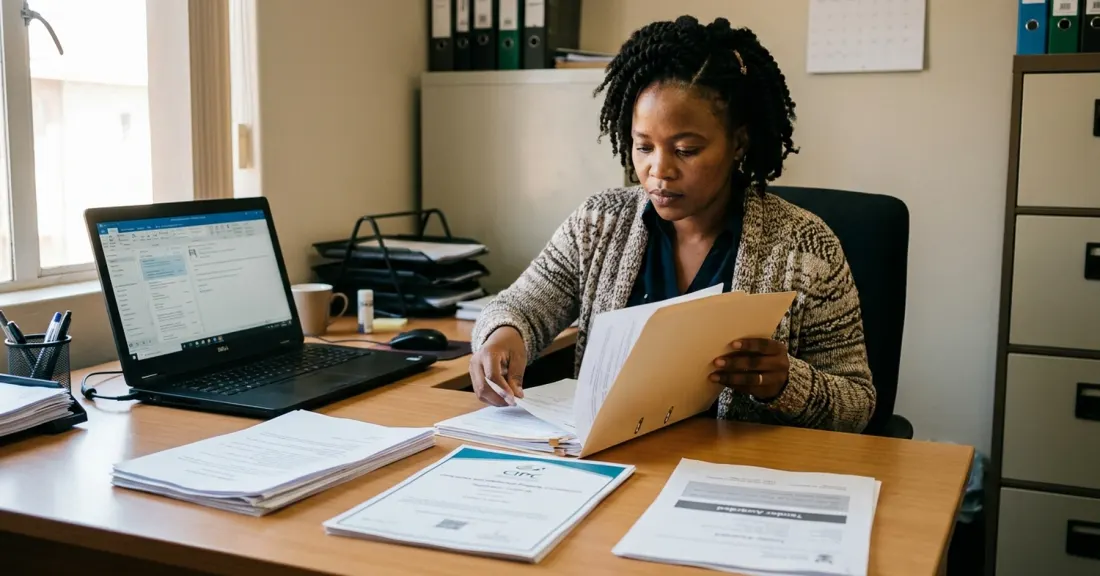
The standard requirements apply. The purchase order funding requirements South Africa guide covers the document picture in detail. For first-time bidders specifically, certain elements take on extra weight:
- The signed tender award letter or contract. The foundation of the deal. The funder needs to see the actual award document from the procurement department or SOE, not a verbal indication or an "expected" outcome.
- CIPC company registration certificate. Confirms the legal entity is in order. Annual returns must be up to date if the business is more than a year old.
- SARS tax compliance status (Tax PIN). A current PIN keeps things moving. The tax clearance certificate for tenders guide covers the renewal process.
- CSD registration confirmation. If the tender required CSD registration, the proof of registration is part of the funding pack too.
- Supplier quote or proforma invoice. The supplier set for delivering the contract. Coming with a credible supplier is a strong signal – the funder can see operational readiness.
- The owner's background. Without trading history, prior sector experience and personal credibility do the work that financial track record would otherwise do. Be specific and honest about your background.
The how to apply for PO funding walkthrough explains the application process from there.
What the Funder Actually Assesses for a First-Time Bidder
Three pillars do the assessment work, with a slight rebalancing for first-time bidders.
The end buyer. For a first-time bidder, the buyer carries more of the assurance work. A confirmed contract with a national department, an SOE, or a major municipality is a much stronger position than the same-sized contract with a small private business that has no payment history. The buyer's reliability substitutes for the contractor's track record.
The deal itself. Is the contract real? Is the price-to-cost gap healthy enough to leave a meaningful margin after delivery? Is the delivery timeline realistic? For a first-time bidder, the deal must do the heavy lifting in the assessment.
The owner. Even without business history, the owner's background matters. Prior sector experience, employment history, or specialist knowledge can substitute for trading track record. A first-time bidder with deep industry experience is in a stronger position than one entering the sector cold, but both can be funded if the deal stacks up.
Common First-Time Tender Scenarios That Get Funded
Sourcefin sees recurring patterns in first-time bidder tender funding deals.
Spin-offs from established sector experience. An employee leaves an established business to start their own and immediately wins a first government tender, drawing on industry knowledge and supplier relationships built over years. The new SMME has no trading history, but the owner brings deep sector competence.
B-BBEE compliance contracts. A new SMME wins a tender specifically structured for emerging suppliers, with the principal department or SOE explicitly seeking to develop new entrants. The contract size and complexity are scaled to the SMME's capacity. The B-BBEE certificates for tenders guide covers the compliance side.
Sub-contracts on larger awards. A first-time bidder wins a sub-contract from an established principal contractor on a large infrastructure or supply tender. The principal's standing reinforces the deal.
Specialist supply tenders. A new SMME with specific product or service expertise wins a specialist supply contract – PPE, IT equipment, niche services – where their offering is the differentiator rather than their history.
What Stops a First-Time Tender Funding Application
Three patterns most commonly stop a first-time bidder's funding application.
The buyer is not actually committed. A "letter of intent" or expected award is not a contract. The funder needs the signed award letter to start the deal review.
The contract is below R250,000. Sourcefin funds tender deals from R250,000 upwards. Below that, an overdraft, short-term working capital from a bank, or a SEDA grant may be a better fit.
The owner has unresolved issues that affect trust – active fraud proceedings, recent business failures with unpaid creditors, or substantial deception during the application. Trust is non-negotiable. The PO funding bad credit South Africa guide explains how the funder thinks about credit history specifically.
How First-Time Bidders Build From Here
Successfully delivering a first tender opens doors that were closed before. The next tender award lands easier when there is a delivered contract on the record. The next funding application moves faster when the funder has seen the SMME execute. The next supplier conversation is stronger when there is a track record to point to.
For broader context on building tender capability over time, the building tender track record guide covers the longer arc. The wider tender funding options South Africa overview covers the broader funding landscape.
The Bigger Picture for SA First-Time Bidders
South Africa's procurement system explicitly aims to develop new SMME suppliers. The IFC's recent SA SMME finance partnership work shows that traditional credit access for new businesses remains constrained. Tender funding for first-time bidders is one of the practical routes that lets the procurement intent translate into delivered contracts on the ground.
For an SMME sitting on a first tender award without the cash to mobilise, the practical next step is short. The Sourcefin funding application form takes a couple of minutes, and a Sourcefin representative will follow up to walk through the deal. The Sourcefin purchase order funding service page sets out the full process.
Sources & References
Frequently asked questions
Can a first-time bidder access tender funding in South Africa?
Yes. Tender funding for first-time bidders is available because the funder assesses the contract you have just won, not the years of tendering history you do not yet have. A confirmed government tender award from a credible department or SOE can be funded against the contract itself. The deal opens the door, even when there is no past performance to point to.
What does Sourcefin look at when assessing a first-time bidder application?
Three things matter most: the end buyer (a credible government department or SOE strengthens the deal significantly), the contract itself (must be real, signed, with healthy margin between price and delivery cost), and the owner (sector experience, prior roles, and personal credibility substitute for trading history). Be specific and honest about your background – the conversation is part of the assessment.
What documents do I need to apply as a first-time bidder?
The signed tender award letter or contract, your CIPC company registration certificate, current SARS tax compliance status (Tax PIN), CSD registration confirmation if the tender required it, and a supplier quote or proforma invoice for delivery. Recent business bank statements and ID copies for directors round out the standard pack. The application form itself takes a couple of minutes.
What contract size do I need to qualify for tender funding as a first-time bidder?
Sourcefin funds tender deals from R250,000 upwards through to multi-million-rand contracts. Below that threshold, an overdraft facility, short-term working capital from a commercial bank, or a SEDA grant is usually a better fit. The R250,000 minimum exists because the operational work involved in structuring a tender deal makes very small transactions unworkable for both sides.
What if my first tender award is from a private buyer rather than a government department?
Private buyers can be funded too, but the assessment is harder for first-time bidders. The funder relies more heavily on the buyer's payment ability. A major corporate or large established business is much easier to fund against than a small private business with no payment history. For first-time bidders, government and SOE awards are typically the easier first deal to structure.
Will winning and delivering a first tender make the second one easier to fund?
Yes. Successfully delivering a first tender contract creates a track record the funder can point to next time. The second tender funding application moves faster because the funder has seen the SMME execute. Suppliers are easier to bring on board. The buyer relationship is established. The first tender done well becomes the foundation for everything that follows.
Do I need to be CIDB-graded or specially registered as a first-time bidder?
It depends on the tender. Some tenders – particularly construction and infrastructure – require CIDB grading at the procurement stage. Others do not. CSD registration is required for nearly all government supplier work. The tender specification itself sets the registration requirements. The funder works around whatever the tender required, not around general criteria. If you won the tender, you have already met its compliance demands.

Sourcefin is a South African alternative finance provider that offers purchase order funding and invoice discounting to SMMEs, enabling businesses to fulfil confirmed purchase orders or tenders and unlock cash flow without collateral. Unlike traditional lenders or banks, Sourcefin also provides end-to-end support including supplier sourcing, logistics, project management, and risk oversight.