
Find Government Tenders South Africa Free: Essential Guide
TenderCentral is a free platform built by Sourcefin that aggregates government tenders across South Africa into one searchable database for SMMEs.
On this page
- Key Takeaways
- Why Finding the Right Tender Comes Before Finding Funding
- What Is TenderCentral and How Does It Work?
- How to Register and Set Up Your TenderCentral Profile
- Find Government Tenders South Africa Free: Using Filters Effectively
- How to Read a Tender Document Without Getting Lost
- Building a Pipeline: Why One Tender Isn't Enough
- From Tender Discovery to Funding: How the Two Connect
- Frequently asked questions
Find government tenders South Africa free using TenderCentral – the platform built by Sourcefin specifically for SMMEs who are ready to enter the government tender market. Register, set your filters, and receive alerts when matching opportunities are published. No cost, no gatekeeping, just access to the pipeline you need to build a real tender business.
Key Takeaways
- TenderCentral is a free platform developed by Sourcefin that aggregates municipal, provincial, and national government tenders in one place.
- SMMEs can register, set filters by industry and region, and receive email alerts when relevant tenders are published.
- Reading a tender document correctly – scope, eligibility, scoring method – saves time and improves bid quality significantly.
- Building a pipeline of 5–10 active tenders at any time is the goal. One application is not a strategy.
- Once a tender is awarded, Sourcefin's purchase order funding provides the capital to deliver – TenderCentral and Sourcefin work together from discovery through to delivery.
Why Finding the Right Tender Comes Before Finding Funding
One of the most common questions SMMEs ask when exploring loans for bad credit South Africa is how to build the business track record that funders want to see. The answer often starts with government tender work – a structured, predictable revenue source that alternative funders understand well.
But before any funder can back you, you need an opportunity. South Africa's government plans to spend over R1 trillion on infrastructure over the next three years, and SMMEs are explicitly targeted through preferential procurement policies. National Treasury has made it clear that small businesses are a priority channel for public spending. The contracts are there. The challenge is finding them.
Tender notices are published across dozens of government bulletins, portals, and print publications. Without a single point of access, most SMMEs either miss relevant opportunities entirely or spend hours searching before finding anything actionable. That's the gap TenderCentral was built to close.
What Is TenderCentral and How Does It Work?

TenderCentral is a free SMME platform available at tendercentral.co.za. Developed by Sourcefin, it pulls government tender notices from municipal, provincial, and national sources into a single, searchable database. SMMEs get one place to look rather than dozens.
The platform is completely free to use. There is no subscription fee, no pay-per-alert model, and no premium tier required to access the full database. Sourcefin built TenderCentral as an entry point for SMMEs who are ready to start bidding on government work – and as the logical first step before purchase order funding becomes relevant.
When a tender matches your saved filters, TenderCentral sends an email alert. You don't have to check the platform daily. You set it up once and the opportunities come to you.
How to Register and Set Up Your TenderCentral Profile
Registration takes a few minutes. Visit tendercentral.co.za, create a free account, and complete your profile. The information you enter shapes the filters TenderCentral uses to match you with relevant opportunities, so it's worth taking the time to get it right.
When setting up your profile, focus on two things: your industry category and your geographic scope. If your business operates in a specific province or municipality, narrow your region accordingly. Broad filters return too many results and make it harder to prioritise. Narrow filters return the opportunities most likely to fit your actual capacity.
Once your filters are set, enable email alerts. You'll receive a notification each time a tender matching your criteria is published. Most SMMEs find a manageable number of relevant tenders per week once their filters are correctly configured.
Find Government Tenders South Africa Free: Using Filters Effectively
The ability to find government tenders South Africa free is only useful if you're finding the right tenders. TenderCentral's filter system is where that precision happens.
Filter by industry first. Government procurement categories are broad – construction, catering, cleaning services, IT, professional services, logistics, and many more. Match your filters to your actual service or product category, not what you aspire to supply. Start narrow and widen later as your capacity grows.
Filter by region second. Municipal and provincial tenders often have local supplier preferences built into their scoring criteria. A business registered in the Western Cape with a strong local track record may score higher on a Cape Town municipal tender than an out-of-province competitor with greater capacity. Geography matters.
Once you have a shortlist, sort by closing date. Tenders with short turnarounds may not be suitable if you're new to bidding. Tenders with 3–4 weeks remaining give you enough time to gather documents, check eligibility, and submit a quality bid.
How to Read a Tender Document Without Getting Lost
A tender document can run to dozens of pages. Knowing where to focus saves hours and improves bid quality. Every tender document – whether a Request for Quotation (RFQ) or a Request for Proposals (RFP) – covers the same core sections.
Scope of work: What exactly is required. Read this first. If the specification doesn't match what your business can deliver, stop here. There's no point submitting a non-compliant bid.
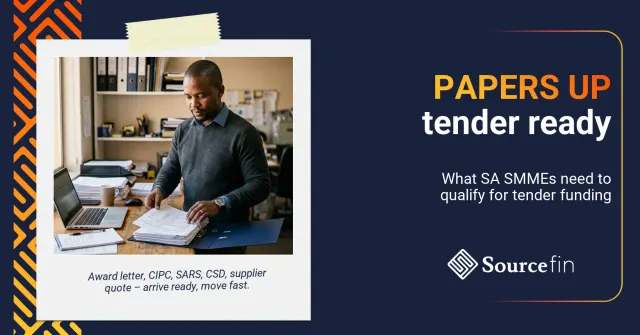
Eligibility criteria: Who can apply. Common requirements include CIDB grading (for construction), B-BBEE level, SARS tax clearance, and registration on the Central Supplier Database (CSD). Confirm you meet these before investing time in the full bid.
Closing date and submission method: When bids are due and how to submit them. Late or incorrectly submitted bids are disqualified regardless of quality.
Evaluation criteria: How bids are scored. Most government tenders use either the 80/20 or 90/10 preference point system. The 80 or 90 points cover price competitiveness. The remaining 20 or 10 points are allocated to B-BBEE status. Understanding this scoring model helps you assess where you're competitive.
If a tender document references legislation or technical standards you're not familiar with, take the time to understand them before bidding. Procurement officials notice when bid responses are generic. Responses that directly address the specification earn higher scores.
Building a Pipeline: Why One Tender Isn't Enough
The goal isn't to win one tender. The goal is to have 5–10 relevant opportunities in your pipeline at any given time. This changes your relationship with the process entirely.
When you're tracking one opportunity, rejection feels like a setback. When you're tracking ten, it's part of the rhythm. Unsuccessful bids build knowledge – of specifications, of pricing, of evaluation committee preferences. Many SMMEs win their second or third bid after being passed over on the first, because the feedback and experience they gathered improved their approach.
A consistent pipeline also makes you more credible to funders. If you can demonstrate a history of bids submitted, tenders applied for, and a pattern of serious participation in government procurement, alternative funders have a much clearer picture of your business. As covered in the guide on why South African SMMEs get rejected for funding, one of the most common reasons for rejection is an absence of track record. A tender pipeline is how you build that record systematically.
TenderCentral makes maintaining this pipeline practical. Your saved filters surface new opportunities continuously. You review, prioritise, and bid on those that fit. The ones that don't fit, you note for future reference as your capacity grows.
From Tender Discovery to Funding: How the Two Connect
TenderCentral is the discovery tool. Sourcefin is what makes delivery possible once you've won.
Government tender work has a structural cash flow challenge: the contract is awarded, the goods or services must be delivered, and payment comes weeks or months later. Most SMMEs don't have the capital to cover supplier costs, labour, and operating expenses in that window. That's not a credit problem – it's a timing problem, and it's exactly what purchase order funding is designed to solve.
When your tender is awarded, Sourcefin reviews the contract, assesses the opportunity, and – if it qualifies – provides the working capital you need to deliver. You use the funding to cover your costs. When the government department pays, the funding is settled. Your business keeps the margin.
This is also why TenderCentral includes a direct link to apply for tender funding from within the platform. The two are designed to work together. Find the opportunity on TenderCentral. Win it. Deliver it with Sourcefin's backing.
For SMMEs who are exploring options beyond traditional banking – including those researching purchase order funding with bad credit – this combination of discovery and funding offers a practical, low-barrier path into government contracting. The platform is free. The funding assessment is obligation-free. The barrier to starting is lower than most SMMEs expect.
If you're ready to take the next step, submit a funding application or explore the full range of tender funding options available in South Africa. For a deeper look at how tendering works from registration through to award, the complete guide to tendering in South Africa covers each stage in detail.
The starting point is straightforward: register on TenderCentral, set your filters, and start building the pipeline that makes everything else possible.
Sources & References
- SMEs South Africa – 2025 MSME Access to Finance Report (Finfind): 85.6% of all South African funding applications come from micro-enterprises
- National Treasury – Budget 2026: South Africa plans to spend over R1 trillion on infrastructure over the medium-term expenditure framework, with SMMEs targeted through preferential procurement
Frequently asked questions
Is TenderCentral really free to use?
Yes. TenderCentral is completely free for SMMEs. There is no subscription fee, no cost to access the full database, and no premium tier required to receive email alerts. Sourcefin developed the platform specifically to give small businesses free access to government tender opportunities across South Africa – municipal, provincial, and national – in one place.
What types of tenders does TenderCentral list?
TenderCentral aggregates tenders from municipal, provincial, and national government sources across South Africa. This includes procurement notices from government departments, state entities, and local municipalities. You can filter by industry category and geographic region to find tenders relevant to your specific business.
How do I know if I am eligible to bid on a government tender?
Each tender document includes eligibility criteria. Common requirements are CIDB grading for construction work, a valid B-BBEE certificate, SARS tax clearance, and registration on the Central Supplier Database (CSD). You should check these criteria before investing time in a full bid response. TenderCentral surfaces the tender details so you can assess fit quickly.
What is the 80/20 preference point system in government tenders?
The 80/20 preference point system is a scoring model used in many South African government tenders. Eighty points are awarded for price competitiveness and twenty points for B-BBEE status. For higher-value tenders the system becomes 90/10. Understanding how bids are scored helps you assess where your business is competitive and how to price your submission accurately.
How does TenderCentral connect to funding?
Once a government tender is awarded, TenderCentral gives you direct access to apply for purchase order funding through Sourcefin. Purchase order funding provides the working capital to deliver your contract – covering supplier and operational costs – before government pays. The two platforms are designed to work together: find the opportunity on TenderCentral, then fund the delivery through Sourcefin.
How many tenders should I be tracking at once?
The target is 5–10 relevant tenders in your pipeline at any time. This gives you enough active opportunities that a single unsuccessful bid does not stall your momentum. Consistent participation builds experience, institutional knowledge, and the track record that funders look for when assessing a business's capacity to deliver government contract work.
Can I use TenderCentral if my business has limited credit history?
Yes. TenderCentral is open to all registered South African SMMEs regardless of credit history. The platform is purely a discovery tool. What matters for tendering is your B-BBEE level, CIDB grading where applicable, and SARS compliance status. Building a tender track record through consistent participation can also strengthen your position when applying for alternative funding later.

Sourcefin is a South African alternative finance provider that offers purchase order funding and invoice discounting to SMMEs, enabling businesses to fulfil confirmed purchase orders or tenders and unlock cash flow without collateral. Unlike traditional lenders or banks, Sourcefin also provides end-to-end support including supplier sourcing, logistics, project management, and risk oversight.