
Government Tender Commodities South Africa: 5 Proven Wins
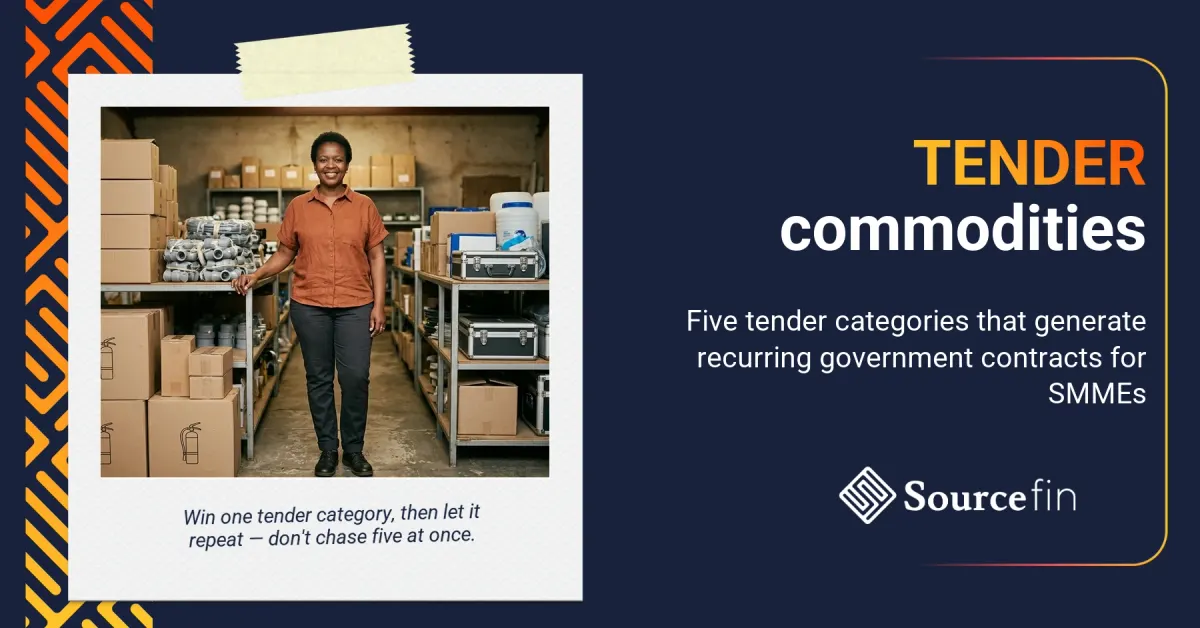
South Africa's most reliable government tender opportunities aren't glamorous – fire, water, power, roads, and print are things buyers need every year.
On this page
- Key Takeaways
- The Procurement Market Never Stops
- 1. Fire Equipment and Fire Compliance Servicing
- 2. Water Tanks, Tanker Units, and Water Storage Systems
- 3. UPS Systems, Batteries, and Backup Power
- 4. Road Marking Materials and Road Safety Items
- 5. Printer Fleet Consumables and Managed Print Environments
- Where to Find These Government Tender Commodities in South Africa
- Government Tender Commodities South Africa: Win One Category, Then Scale
- Frequently asked questions
Government tender commodities South Africa's SMMEs most often overlook are also some of the most reliable sources of recurring income – not because they're secret, but because they don't look exciting at first glance. Fire compliance servicing, water storage, backup power, road marking, and managed print all share one quality that matters most for a growing business: buyers need them repeatedly, year after year, and the requirement doesn't go away.
Key Takeaways
- These five tender commodity categories are repetitive by nature – winning one contract is often the beginning of a multi-year supply relationship
- Fire equipment servicing, water tanks, UPS and batteries, road marking, and managed print are consistently advertised on e-tenders and SITA
- Many of these categories have very few Black-owned SMMEs competing, which makes the opportunity more accessible for prepared suppliers
- Compliance requirements vary by category – certifications and registrations should be obtained before submitting, not after
- Winning a tender creates a cash flow timing problem – purchase order funding covers upfront costs, invoice discounting bridges the payment gap
- Put in serious effort at the start to position your business in one category, then let the contract cycle do the work
The Procurement Market Never Stops
Thousands of RFQs and tenders are published across South Africa every single day – national departments, municipalities, SOEs, and private sector buyers, all procuring goods and services they need to keep operating. The procurement market doesn't take breaks and it doesn't pause for economic cycles.
The challenge for most SMMEs isn't finding opportunities. It's identifying the right categories to focus on – ones where the demand is structural and the competition is manageable. The government tender commodities South Africa's procurement system advertises most consistently are not the big-ticket infrastructure headlines. They're the compliance items, maintenance services, and operational supplies that keep government facilities running every day.
The five categories below draw on the expertise of Lerato Sebata, founder and CEO of ROI Integrated Group, a strategic procurement and supplier development consultancy she established in 2016. With nearly two decades of cross-sector procurement experience, Sebata is one of South Africa's most respected voices on government tendering for SMMEs – and these are the categories she recommends for businesses looking for reliable, repeating income.
If you're new to government tendering or looking to expand your supply portfolio, our complete guide to tendering in South Africa covers the full process from registration to submission.
1. Fire Equipment and Fire Compliance Servicing
Every construction site, office building, hospital, school, and government facility in South Africa is legally required to have compliant fire equipment – and that equipment must be serviced and certified on a regular basis. This isn't discretionary spend. It's a compliance obligation.
What this category includes: servicing and inspection of fire extinguishers, replacement of expired or damaged extinguishers, fire hoses, fire suppression cylinders, smoke and heat sensors, and fire detection system maintenance. Even small companies and medium-sized offices need this done annually – which means the service is repetitive by its very nature.
Among the government tender commodities South Africa's health and safety regulations make unavoidable, fire compliance sits at the top. Larger buyers – construction companies, mines, Eskom substations, manufacturing plants, hospitals – often issue 24-month or 36-month service contracts. Win one of those, and the contract largely runs itself. Government departments and municipalities publish these RFQs regularly on e-tenders.gov.za, and dedicated platforms like Tender Bulletins aggregate them in one place.
Requirements typically include relevant health and safety certifications and proof of prior service delivery. Get those in place before you start bidding, not during the process.
2. Water Tanks, Tanker Units, and Water Storage Systems
Water supply challenges are not going away in South Africa. Municipalities, community facilities, schools, mines, and construction sites frequently need to source, install, or replace water storage infrastructure – mobile tanks, bulk storage tanks ranging from 2,500 litres to 10,000 litres and beyond, tank stands, pumps, hoses, and fittings.
The demand is consistent for a simple reason: water is essential. When supply infrastructure fails or capacity needs to increase, buyers can't wait weeks for a procurement process – they need suppliers who are registered, compliant, and ready. That's an advantage for a small business that has already done the preparation work.
Municipal buyers in particular issue RFQs for this category repeatedly. Water purification and treatment services sit adjacent to this category and are similarly in demand. Many of these opportunities appear on e-tenders and through municipal procurement offices. If water infrastructure is within your capability, this is a category worth registering for properly.
3. UPS Systems, Batteries, and Backup Power
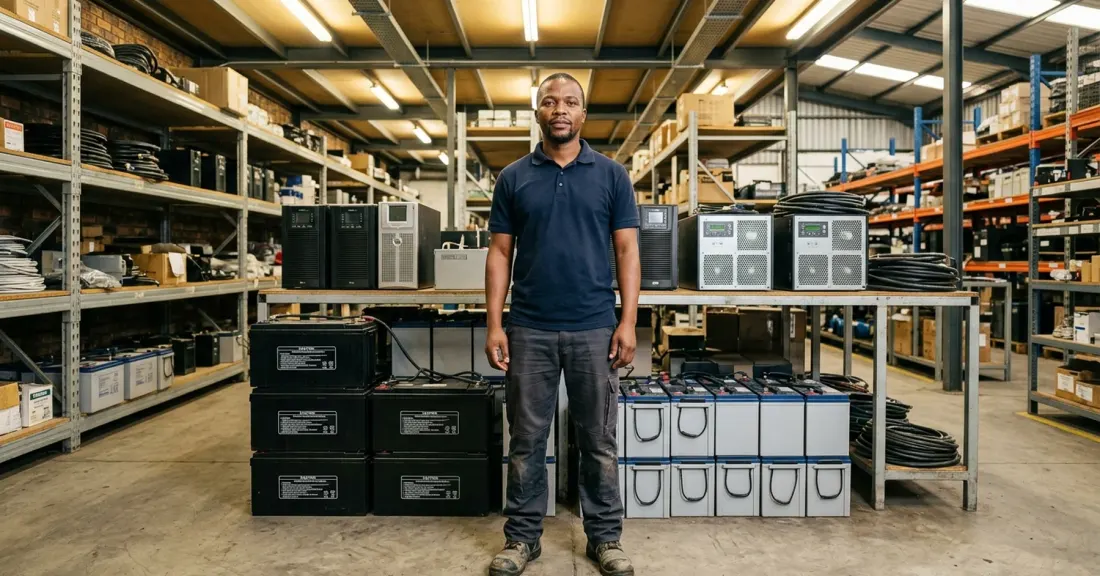
South Africa's telecommunications network runs on batteries. Every BTS (base transceiver station) – the infrastructure that keeps mobile networks running in towns, townships, and rural areas – depends on sealed lead-acid batteries and UPS systems to stay operational when the grid fails. These batteries have a finite lifespan, and when they're stolen or reach end-of-life, they're replaced. That replacement cycle never ends.
The opportunity for SMMEs is substantial, and underutilised. This is one of the government tender commodities South Africa's supply base is most skewed in – most of the businesses currently supplying telecoms companies with battery replacement, UPS commissioning, and site maintenance are large, established players. Very few Black-owned small businesses operate in this space – which means the gap is real for a prepared supplier with the right product access and credentials.
Beyond telecoms, UPS systems are in constant demand across government data centres, substations, hospitals, and any facility where power continuity is critical. Both public sector tenders (via SITA and e-tenders) and private sector procurement channels are active in this category. If you can supply and install UPS units and lead-acid battery banks, this is one of the highest-frequency categories on the market.
Substation battery tenders, generator maintenance, and backup power commissioning work are all adjacent services worth exploring once you're established in the category.
4. Road Marking Materials and Road Safety Items
South Africa's road network requires ongoing maintenance, and road markings deteriorate. Every major road, highway, airport runway, and municipal street eventually needs re-marking – white lines, yellow lines, pedestrian crossings, and directional markings all fade and must be reapplied. This is not a once-off event. It's a maintenance cycle.
The category includes road marking paint, thermoplastic marking material, line-marking equipment, road studs, signage, and related road safety items. Municipal contracts for road marking are typically multi-year arrangements, and the work repeats on a predictable schedule. Airport and industrial facility work adds further volume to an already active tender category.
One underappreciated dimension of this category is its cross-border potential. Road infrastructure across SADC countries – Botswana, Lesotho, Swaziland, and others – faces similar maintenance demands, and South African SMMEs with the right credentials can pursue opportunities beyond the domestic market. The entry requirements for neighbouring country procurement are often lower than many assume.
For SMMEs already in the construction or civil works space, road marking is a natural adjacent service. Look for multi-year municipal tenders and national roads agency work via e-tenders and provincial procurement bulletins.

5. Printer Fleet Consumables and Managed Print Environments
This one surprises people, but the volumes are significant. Government departments, SOEs, and large private sector organisations don't just buy printers – they lease entire managed print environments. Multi-function network printing devices, ink and toner cartridges, drums, maintenance kits, and full leasing arrangements for 3 to 5 years are all regularly tendered through ICT procurement channels.
SITA (State Information Technology Agency) is the primary procurement channel for government ICT infrastructure, including print environments. Many SITA tenders for network printing devices run for 3-year terms with renewal options, making them reliable medium-term income once secured. Provincial departments and municipalities also issue their own print-related contracts.
This category requires an understanding of ICT procurement processes and the ability to supply or subcontract print device brands that government specifications call for. For SMMEs already operating in office technology or ICT supply, this is a natural extension with high contract value and long durations.
Where to Find These Government Tender Commodities in South Africa
The practical starting point for all five government tender commodities South Africa's public sector buyers advertise is TenderCentral – Sourcefin's dedicated tender discovery platform. Rather than manually searching multiple government portals that each use different search conventions, TenderCentral lets you filter live tenders by sector and province in one place. If you're a water storage supplier in Gauteng, filter to water and sanitation in Gauteng and see what's live immediately. If you're in fire compliance, filter to health and safety. The platform pulls from national, provincial, and municipal sources and updates in real time – no subscription fee, no guesswork.
Beyond TenderCentral, the following official channels cover all five categories:
- e-tenders.gov.za – National Treasury's official portal for national, provincial, municipal, and SOE tenders. Use broad search terms – buyers don't always describe requirements the way suppliers would phrase them, and a narrow search misses real opportunities.
- SITA (sita.co.za) – The primary channel for government ICT procurement including print environments, UPS, and network infrastructure. SITA now runs an online tendering platform for supplier registration and submission.
- Office of the Chief Procurement Officer (OCPO) – Publishes advance procurement plans for government departments and entities. Checking this before tenders are formally advertised gives you time to prepare a strong submission.
- Transnet iSupplier portals – For SOE-related supply including rail, port, and pipeline infrastructure categories.
- Tender bulletins – Provincial tender bulletins consolidate opportunities from departments and municipalities that don't always publish to the national portal in time.
For a deeper look at how to search and track tender opportunities effectively, see our guide to finding government tenders in South Africa.
Government Tender Commodities South Africa: Win One Category, Then Scale
The government tender commodities South Africa's most successful SMME suppliers have built income from are not five at once – they are one, done well. The most common mistake SMMEs make in procurement is spreading themselves too thin. Five categories, ten portals, twenty applications – and none of them done well enough to win. The smarter approach is to pick one category from this list, register properly, get the required certifications, and submit consistently until you win your first contract.
Once you win, a new challenge appears: cash flow. Many of these tenders require you to purchase stock or materials before you deliver, and government buyers often pay 30 to 60 days after invoicing. That gap can stall a business that has just won a good contract.
Purchase order funding covers your upfront costs – supplier payments and procurement – before you deliver. Invoice discounting releases the cash tied up in your outstanding invoices so you don't wait 60 days to access money you've already earned. Together, they let you take on contracts that your current cash position alone couldn't support. The tender funding service page sets out how these are structured for an awarded commodity contract.
For a full overview of your funding options when a tender comes through, see our guide to tender funding options for South African SMMEs.
Sources & References
Frequently asked questions
What are the most repetitive government tender commodities in South Africa?
The five most consistently repetitive tender categories for South African SMMEs are fire equipment and compliance servicing, water tanks and storage systems, UPS systems and batteries, road marking materials, and printer fleet consumables and managed print environments. All five are driven by ongoing compliance or infrastructure maintenance requirements, meaning the demand recurs whether or not a new budget announcement is made.
Where can I find government tenders for these categories?
The National Treasury's e-tenders portal (etenders.gov.za) is the primary source for national, provincial, and municipal tenders. SITA (sita.co.za) covers ICT and print-related government procurement. The Office of the Chief Procurement Officer publishes advance procurement plans. Tender aggregator platforms and Sourcefin's TenderCentral consolidate opportunities across multiple portals for easier searching.
Do I need special certifications to bid on fire equipment tenders?
Yes. Fire equipment compliance work typically requires health and safety certifications, proof of prior service delivery, and in some cases accreditation with relevant industry bodies. The specific requirements are published with each tender or RFQ. It's important to obtain these certifications before submitting bids, not after – missing a compliance document is one of the most common reasons SMMEs are disqualified.
How do I fund a tender once I've won it?
Most tender-related cash flow challenges fall into two categories. If you need to buy stock or pay suppliers before you deliver, purchase order funding covers those upfront costs against your confirmed order. If you've already delivered and are waiting 30 to 60 days for government payment, invoice discounting releases that cash immediately. Using the right funding tool for the specific timing gap prevents a good contract from becoming a cash flow problem. For a wider explanation of the model, see our invoice discounting pillar guide.
Is it possible to do business across South African borders in these categories?
Yes. Road marking, water infrastructure, and fire compliance work are in demand across SADC countries including Botswana, Lesotho, and Swaziland. South African SMMEs with the right credentials and a track record of delivery can pursue cross-border procurement opportunities. Government-to-government frameworks and the DTIC's trade expansion programmes provide structured entry points for businesses ready to expand regionally.

Sourcefin is a South African alternative finance provider that offers purchase order funding and invoice discounting to SMMEs, enabling businesses to fulfil confirmed purchase orders or tenders and unlock cash flow without collateral. Unlike traditional lenders or banks, Sourcefin also provides end-to-end support including supplier sourcing, logistics, project management, and risk oversight.