
Fuel Levy Increase 2026 South Africa: Practical Guide
South Africa's fuel levy rose 21 cents per litre from 1 April 2026. What the R3 temporary relief means for businesses, and how to protect your margins.
On this page
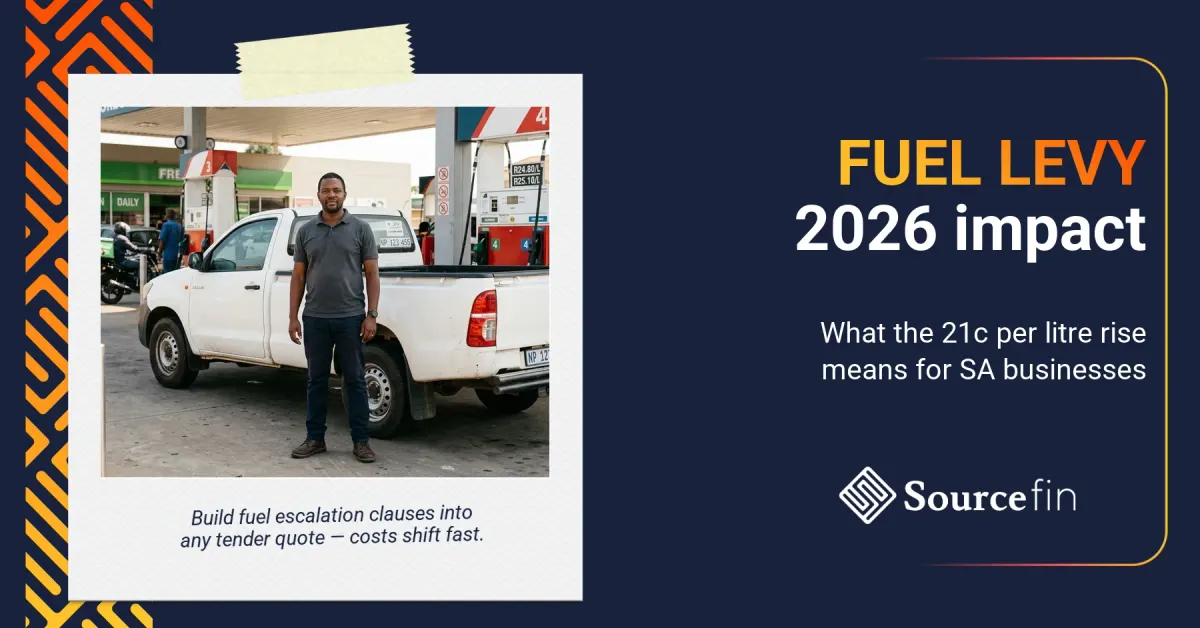
The fuel levy increase 2026 South Africa confirmed in the February budget takes effect 1 April 2026, adding 21 cents per litre to both petrol and diesel. This covers a 9-cent rise in the General Fuel Levy, a 7-cent rise in the Road Accident Fund levy, and a further 5-cent increase from the carbon fuel levy. A temporary R3 per litre reduction ran from 1 April to 5 May 2026 in response to global oil market disruption – but the base increases remain in place once that relief ends, and any business that hasn't updated its cost model is now running on the wrong numbers.
Key Takeaways
- The fuel levy increase 2026 South Africa adds 21 cents per litre to petrol (9¢ GFL + 7¢ RAF + 5¢ carbon) effective 1 April 2026
- Diesel receives a matching 21 cents per litre increase (8¢ GFL + 7¢ RAF + 6¢ carbon)
- The R3 per litre temporary relief (1 April to 5 May 2026) was a short-term response to global oil market disruption – not a structural change
- The cascade effect into freight, logistics, and construction supply chain costs is real and takes weeks to fully appear in supplier quotes
- Tender quotes submitted before April without escalation clauses are now potentially underpriced – review them before delivery begins
- Invoice discounting provides a buffer for transport and logistics SMMEs absorbing higher operating costs between delivery and payment
Fuel costs affect every South African business that moves goods, delivers services, or quotes for work that involves logistics. The fuel levy increase 2026 South Africa introduced is not the largest in recent years – but it compounds existing pressure on SMME margins, and the temporary relief that followed can create a false sense of stability. Understanding exactly what changed, what the relief means, and where cost increases will appear in your operations is the starting point for protecting your margin. For the full picture of what the 2026 budget means for SMMEs beyond fuel, read our Budget 2026 South Africa SMME guide.
What the Fuel Levy Increase 2026 South Africa Adds to Your Costs
The 2026/27 budget confirmed increases to three components of the fuel levy, all effective 1 April 2026. For petrol, the General Fuel Levy rises by 9 cents per litre (from R4.01 to R4.10), the Road Accident Fund levy rises by 7 cents per litre (to R2.25), and the carbon fuel levy adds 5 cents per litre. Combined: 21 cents per litre on petrol.
For diesel, the increase is structured slightly differently. The GFL rises by 8 cents per litre (to R3.93), the RAF levy rises by 7 cents, and the carbon levy adds 6 cents. Combined: 21 cents per litre on diesel as well.
To put this in practical terms: a business running a 500-litre diesel tank – a common capacity for a 6-ton rigid truck – faces an additional R105 per fill from 1 April 2026. A fleet running ten such vehicles fills weekly costs R1,050 more per week, or approximately R4,500 more per month in fuel levy alone, before any movement in the underlying crude price.
The RAF levy component is worth noting separately. Critics have pointed out that the Road Accident Fund carries a large and growing unfunded liability, with levies continuing to increase despite the fund's well-documented structural insolvency. The increase is legally confirmed regardless – but it is worth understanding that a portion of every litre you fill is funding a broken institution with no current reform path.
The R3 Temporary Relief – What It Is and Why It Ends
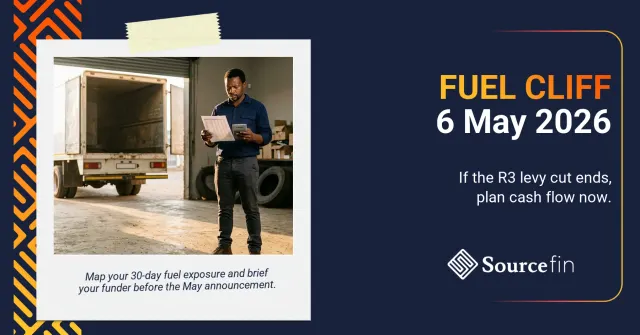
On 1 April 2026, the same day the permanent levy increases took effect, Government announced a temporary R3 per litre reduction in the General Fuel Levy in response to disruption in global oil markets following escalating US-Iran tensions. This ran from 1 April to 5 May 2026.
The net effect for that five-week period: the GFL was reduced to approximately R1.10 per litre for petrol and R0.93 per litre for diesel – masking the structural increase. At the forecourt, pump prices during this period were lower than many consumers and business owners expected. This is where the confusion enters. Some businesses updated their cost models based on April pump prices and did not account for the post-relief reversal.
The relief cost the fiscus approximately R6 billion in foregone revenue. It was not designed to be permanent and Government was explicit about this. From 6 May 2026, the temporary reduction ends and the full post-increase GFL applies. If your tender pricing, logistics quotes, or transport contracts were calculated using April pump prices as a baseline, they are now underpriced against actual May-onwards operating costs.
The Cascade Effect – How the Fuel Levy Increase Hits Beyond the Pump
Direct fuel costs are only the first layer. The fuel levy increase 2026 South Africa confirmed flows through your supply chain in ways that take weeks to fully materialise.
Freight and logistics contractors adjust their rates on contract renewal cycles or after a threshold of price movement – not immediately. If your business relies on third-party transport for materials, stock delivery, or product distribution, expect freight rate increases to appear in revised quotes from May onwards. Suppliers absorbing higher transport costs will pass them through in product pricing, often with a lag of 30 to 60 days.
For businesses operating their own vehicles, the adjustment is immediate. Construction SMMEs buying aggregates, concrete, or steel from yards that add a delivery component to pricing will see those charges rise. Any tender submitted before April that included a materials-delivery component – quoted at pre-April transport rates – is now working against a higher cost base. Review those contracts for escalation clauses before delivery commences. If there are none, speak to your accountant about how to manage the margin exposure.

Protecting Your Margins When Fuel Costs Rise
The most important action for any tender-active SMME is to review all outstanding quotes and live contracts for escalation provisions. A well-drafted escalation clause links your delivery pricing to the official fuel price index – if the pump price moves by more than an agreed threshold, your invoiced rate adjusts accordingly. Without it, you carry the full cost movement on your margin. Our guide on managing fuel price increases in your South African business covers how to structure these provisions and protect your quotes.
Fleet-operating businesses have additional levers: route optimisation, load efficiency, service scheduling, and driver behaviour monitoring. These measures don't eliminate the levy impact, but they reduce the volume of fuel consumed per delivery, which scales the saving. Our transport fleet fuel cost management guide goes deeper on each of these.
For transport and logistics SMMEs specifically, the gap between delivering and being paid creates a compounding problem when fuel costs rise. You spend more per trip on day one, but collect payment 30 to 60 days later. The higher your fuel cost base, the more working capital you need to bridge that gap. Invoice discounting converts confirmed invoices into immediate cash – you deliver, raise an invoice, and access most of the value once the invoice is verified rather than waiting for the payment cycle. Read more about how invoice discounting helps transport businesses manage fuel price exposure.
If you are currently managing a fuel-sensitive business and your working capital is under pressure from the April increases, apply for funding – or read the broader government relief context in our piece on government fuel levy relief measures for businesses. And if you are using an invoice discounting facility to manage cash flow between deliveries, confirm your facility limit reflects your higher operating cost base – a facility sized at last year's cost structure may be insufficient for this year's actuals.
Sources & References
Frequently asked questions
How much did the fuel levy increase in South Africa's 2026 budget?
The 2026 budget confirmed a combined 21 cents per litre increase for both petrol and diesel, effective 1 April 2026. For petrol, this comprises a 9-cent rise in the General Fuel Levy, a 7-cent rise in the Road Accident Fund levy, and a 5-cent carbon fuel levy increase. Diesel has a matching 21-cent total: 8 cents GFL, 7 cents RAF, and 6 cents carbon levy.
What is the R3 temporary fuel levy relief and when does it end?
A R3 per litre temporary reduction in the General Fuel Levy was applied from 1 April to 5 May 2026, in response to global oil market disruption following US-Iran tensions. This reduced pump prices significantly during that period. The relief cost the fiscus approximately R6 billion in foregone revenue. From 6 May 2026, the full post-increase GFL applies and the temporary reduction ends.
How does the 2026 fuel levy increase affect freight and transport costs for businesses?
Direct fuel costs rise immediately for any business running its own vehicles. Third-party freight and logistics contractors typically adjust rates on contract renewal cycles, so transport cost increases flow into supplier quotes within 30 to 60 days. Businesses with materials delivery components in tender quotes submitted before April need to check whether those contracts include escalation clauses – if not, the margin exposure sits with you.
What is a fuel escalation clause and should I include one in tender quotes?
A fuel escalation clause links your quoted delivery pricing to an official fuel price index. If pump prices move by more than an agreed threshold during the contract period, your invoiced rate adjusts accordingly. Without one, you absorb cost increases on your margin for the duration of the contract. For any tender with a transport or logistics component lasting longer than one month, an escalation clause is strongly advisable.
What is the Road Accident Fund levy and why does it keep increasing?
The RAF levy is a per-litre charge on petrol and diesel that funds compensation for road accident victims. In the 2026 budget, it rose by 7 cents per litre to R2.25 per litre. Critics point out that the RAF has accumulated a liability exceeding R600 billion and is structurally insolvent – the levy increases continue regardless, as the fund remains in operation pending reform that has not materialised.
How can invoice discounting help a transport or logistics business manage higher fuel costs?
Higher fuel costs increase the working capital required between delivering and being paid. Invoice discounting for SA SMMEs converts confirmed invoices into immediate cash – typically within days of raising the invoice – rather than waiting 30 to 60 days for the payment cycle. For transport businesses, this means higher fuel spend on day one is matched by faster access to revenue, reducing the working capital gap that rising costs create.

Sourcefin is a South African alternative finance provider that offers purchase order funding and invoice discounting to SMMEs, enabling businesses to fulfil confirmed purchase orders or tenders and unlock cash flow without collateral. Unlike traditional lenders or banks, Sourcefin also provides end-to-end support including supplier sourcing, logistics, project management, and risk oversight.